
6 Days / 5 Nights
Specific Tour
Unlimited
English, Espanol
In the year 711, a group of travellers crossed the Strait of Gibraltar and stepped onto the southern shore of the Iberian Peninsula. They did not know it yet, but they were about to give birth to one of the most remarkable civilisations in human history. For nearly 800 years, the cities you are about to visit were the intellectual, artistic, and spiritual capitals of the Western world.
The Andalusian Gems takes you on a six-day journey through the three cities that defined the golden age of Al-Andalus: Seville, where the Almohad caliphs raised a minaret so beautiful that its conquerors could not bring themselves to tear it down; Córdoba, home to the Great Mosque whose 850 columns transformed architecture into something closer to mathematics, and to the lost palace-city of Medina Azahara, buried beneath the earth for a thousand years; and Granada, where the Nasrid dynasty built the Alhambra — not merely a palace, but a meditation on paradise made real through water, light, geometry, and the most beautiful Arabic calligraphy ever carved into stone.
What sets this tour apart from anything else on the market is the academic depth behind every step. The tour is designed by Sh. Mohammad Idrissi Alcaraz, rector of the Islamic University of Spain Al-Andalusia — a scholar who has spent decades studying this civilisation and who reads its inscriptions as fluently as the morning newspaper. You will also be invited to visit the Madrasah Al-Andalusia campus in Seville, where the scholarly tradition of Al-Andalus continues to this day. This is not a museum visit. It is a living chapter of the story.
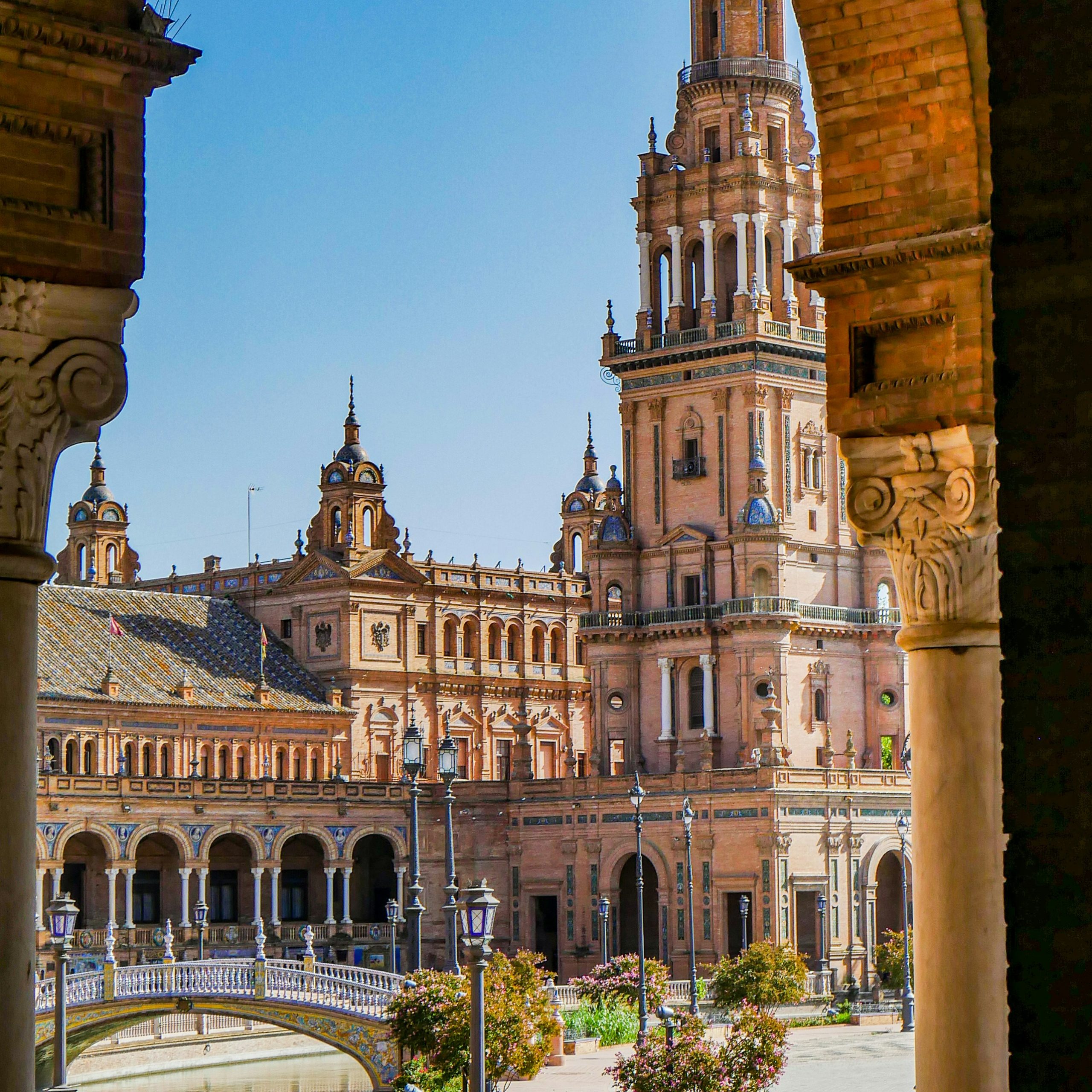
You will spend two days walking through the Almohad capital — La Giralda, the Real Alcázar, the Torre del Oro, and the courtyards of Barrio Santa Cruz. You will travel to Córdoba, stand among the 850 columns of the Mezquita, and cross the Roman Bridge that has carried travellers for two thousand years. On your way to Granada, you will pause at Medina Azahara, the UNESCO World Heritage palace-city that Caliph Abd al-Rahman III built to rival Baghdad, destroyed in civil war, and lost beneath the soil for nearly a millennium. And then, in Granada, you will pray Jumua at the Mezquita Mayor — where the call to prayer has returned to the Albaicín after five centuries of silence — before entering the Alhambra in the afternoon light, the way it was always meant to be seen.
Throughout these six days, you will not be tourists. You will be travellers in the deepest sense — walking through the cities that shaped Europe, listening to the voices of the scholars, poets, and craftsmen who once filled these streets, and leaving with a new understanding of the civilisation that once made this corner of the world the centre of human knowledge.
This is the tour for those who do not want to merely see Al-Andalus — but to begin to understand it.
"You step off the plane, and a thousand years of history begin to unfold around you"
Your journey opens in Seville, the city that was the crown jewel of the Almohad dynasty in the 12th century and remains one of the most enchanting capitals in Europe. Arrive at Seville-San Pablo Airport (SVQ) at your own pace during the day.
Our team will welcome you at the airport and transfer you to your hotel in the historic centre, within walking distance of the Cathedral, the Real Alcázar, and the labyrinth of Barrio Santa Cruz. After checking in, the afternoon is yours — to rest, to wander the old streets, to sit by the Guadalquivir and watch the light change on the Torre del Oro.
In the evening, the group gathers for a welcome dinner in a traditional Sevillian setting, where you will meet your fellow travellers and your guide. Over a meal that carries traces of the Moorish table — almonds, saffron, citrus, slow-cooked lamb — the story of Al-Andalus officially begins.
Did you know? The name "Sevilla" comes from the Arabic Ishbiliya (إشبيلية), which in turn derives from the Roman Hispalis. Three civilisations are embedded in a single word — and the city has been continuously inhabited for over 2,800 years.
Overnight in Seville
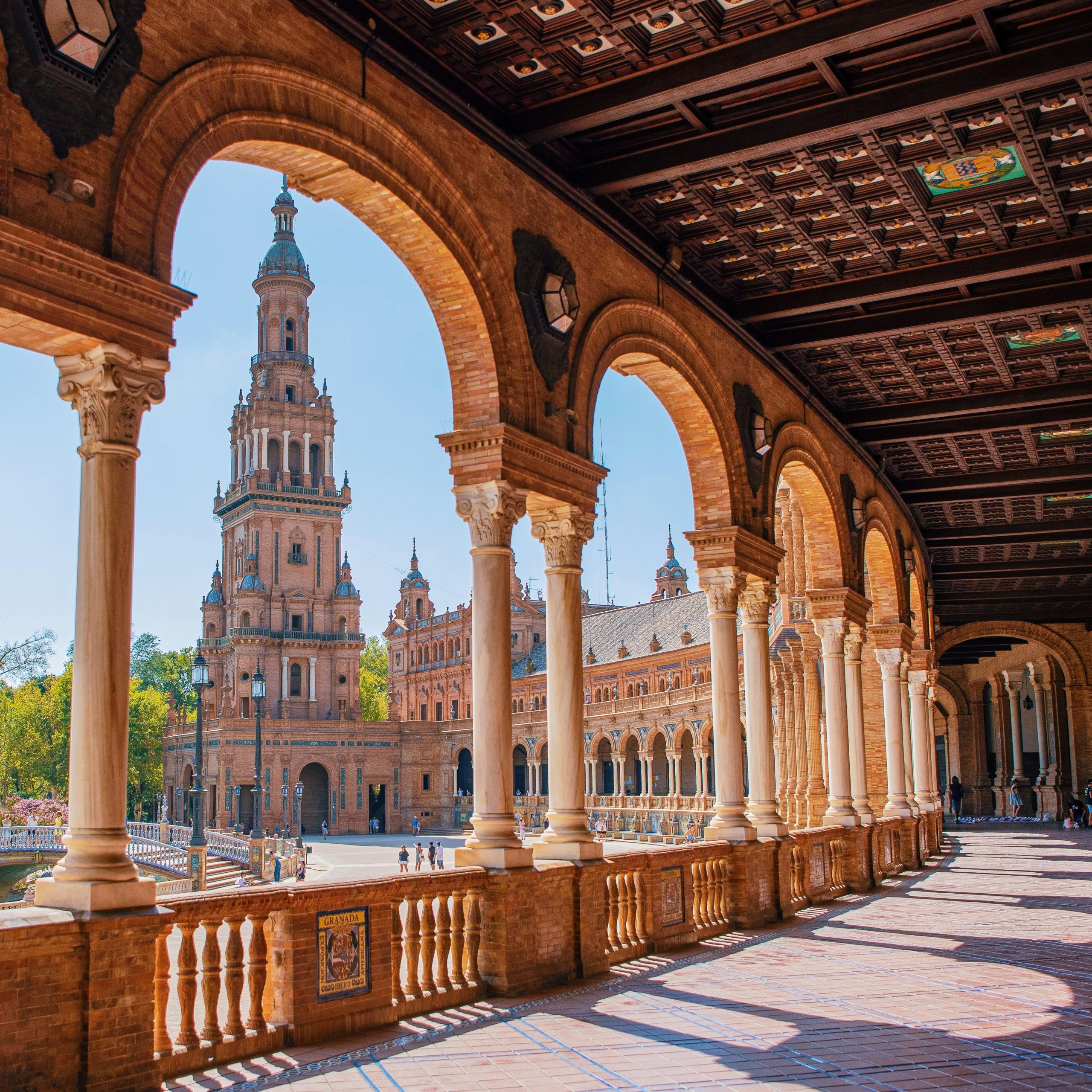
"Walk where caliphs prayed, where poets recited under orange trees, and where the scholarly tradition of Al-Andalus is still alive today"
Seville's Islamic heritage hides in plain sight — woven into the fabric of a city that has continued to evolve for eight centuries since the Almohad period. Today, your guide will show you how to read it.
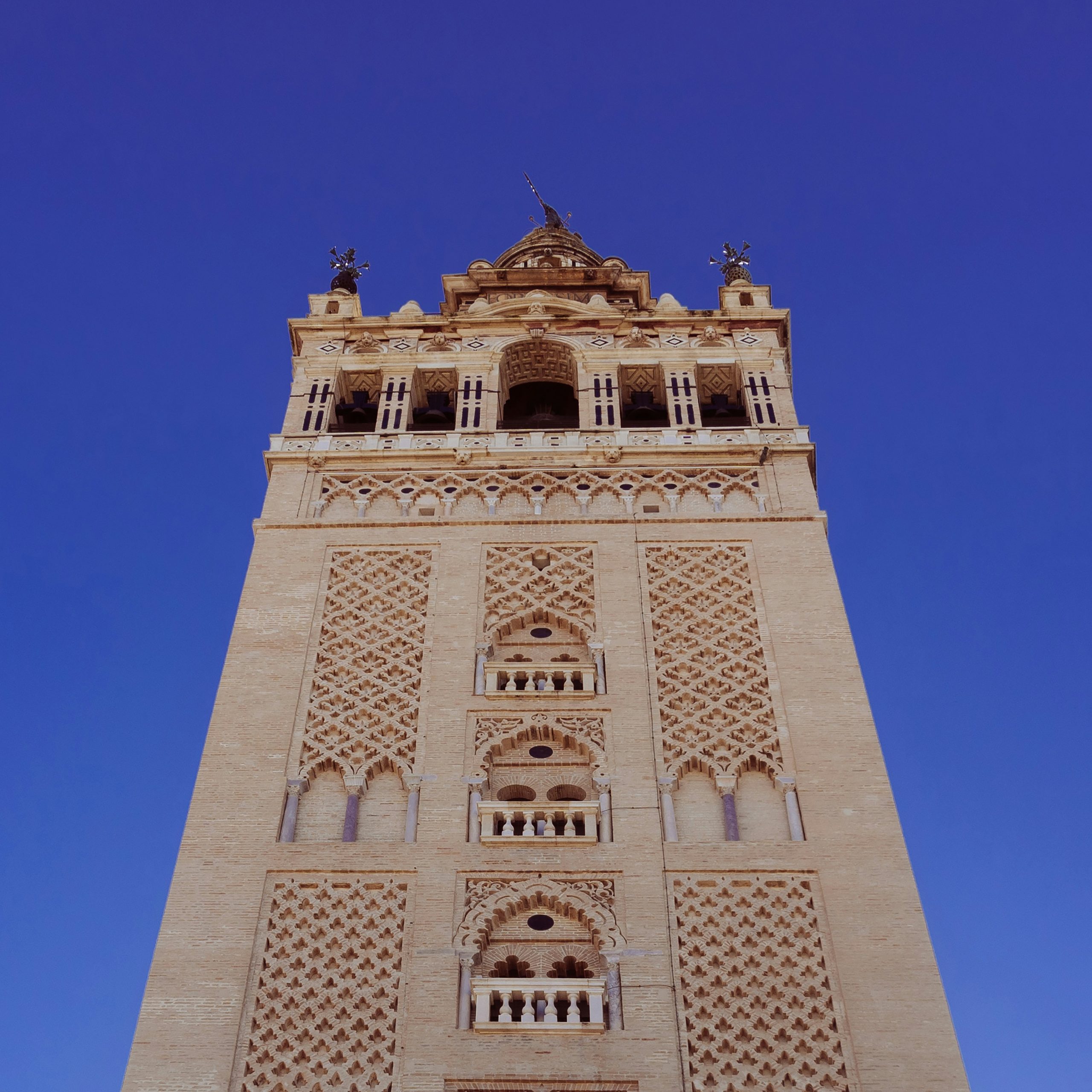
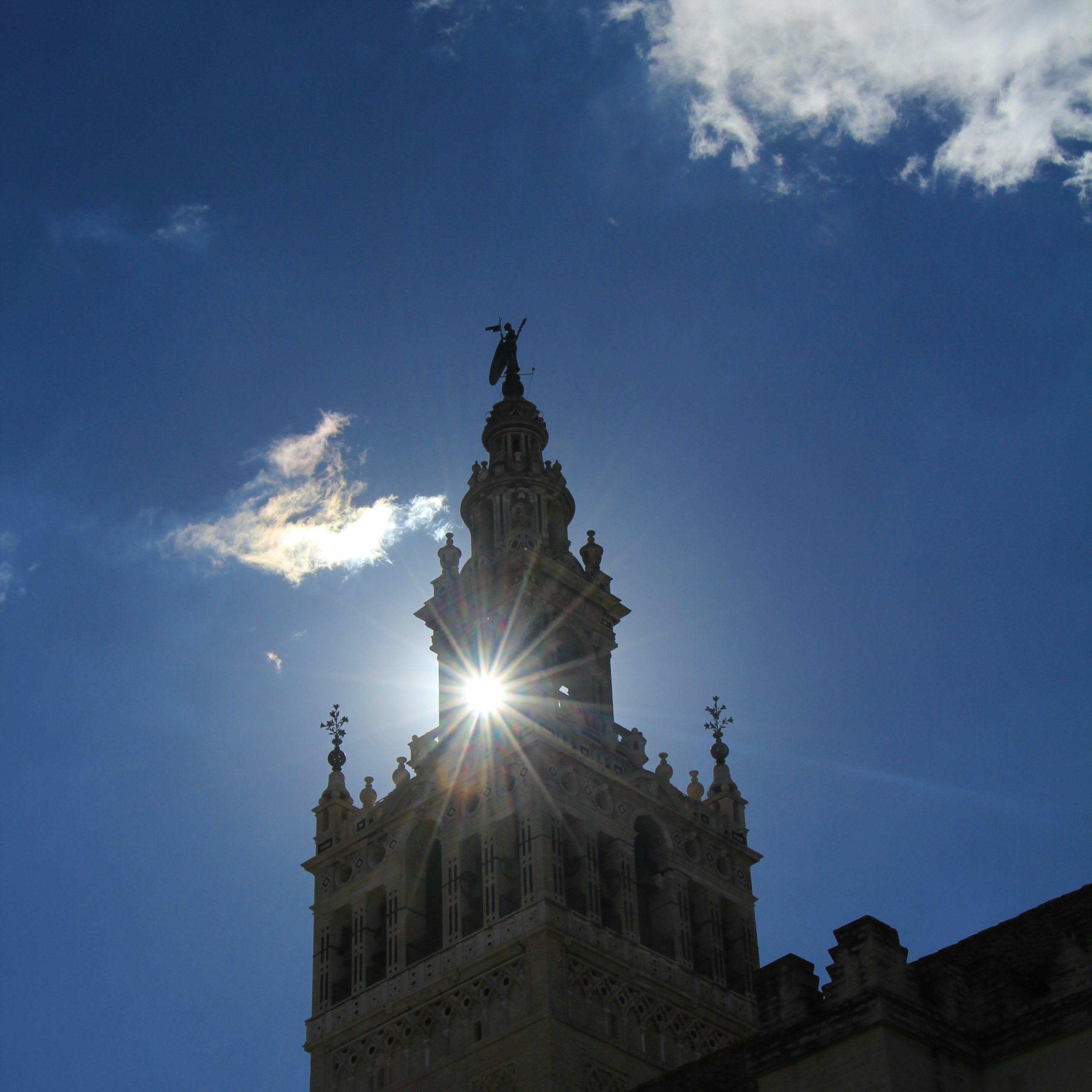
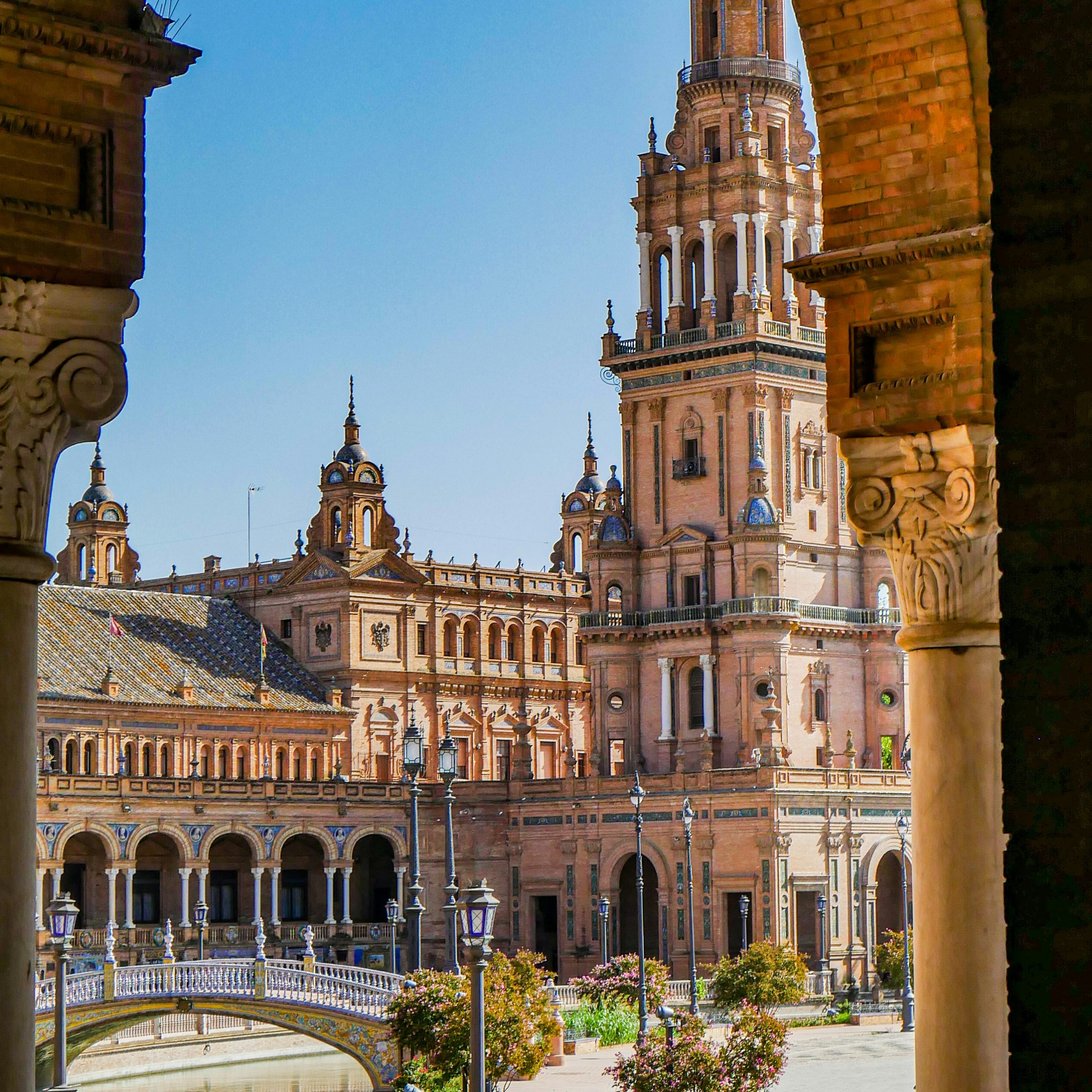
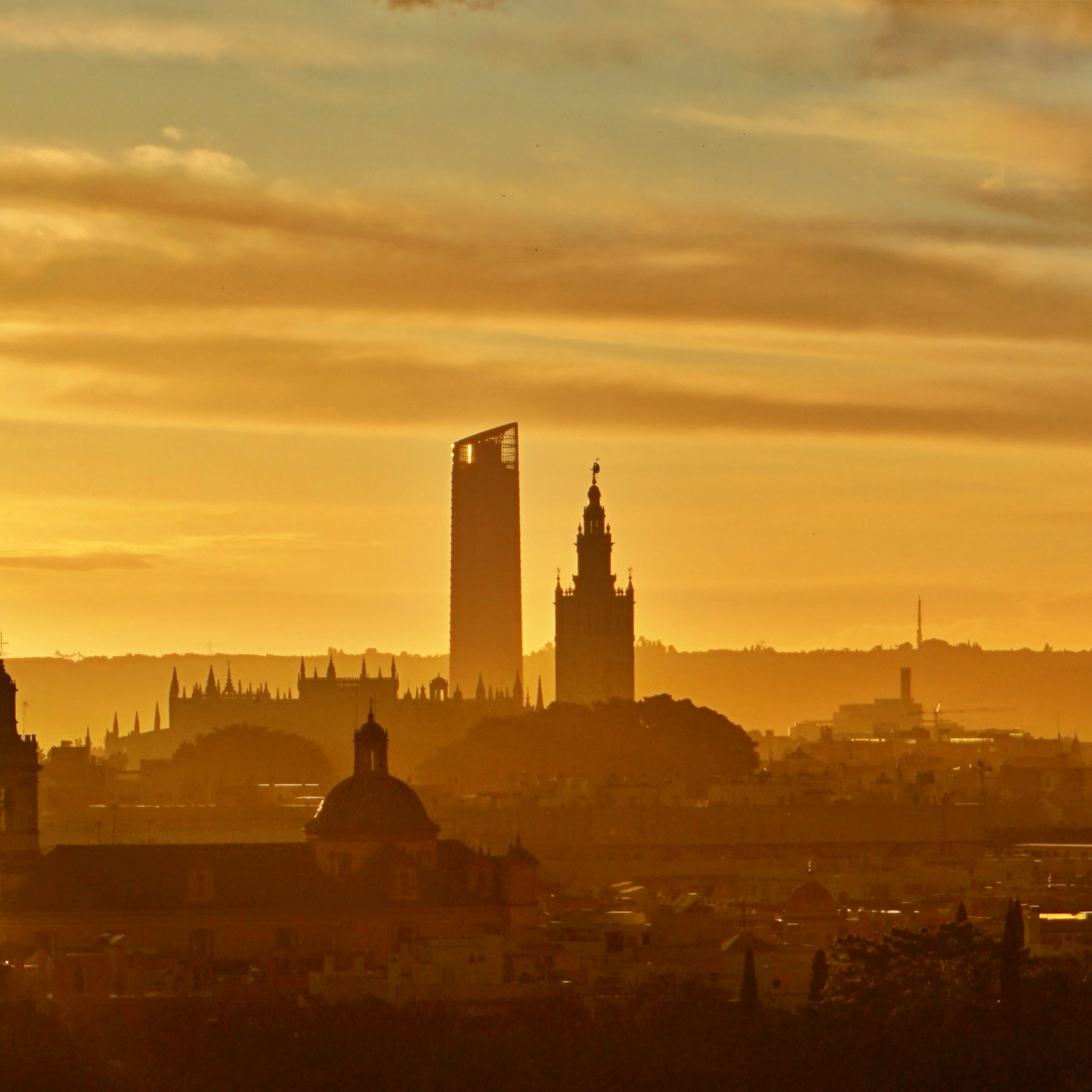
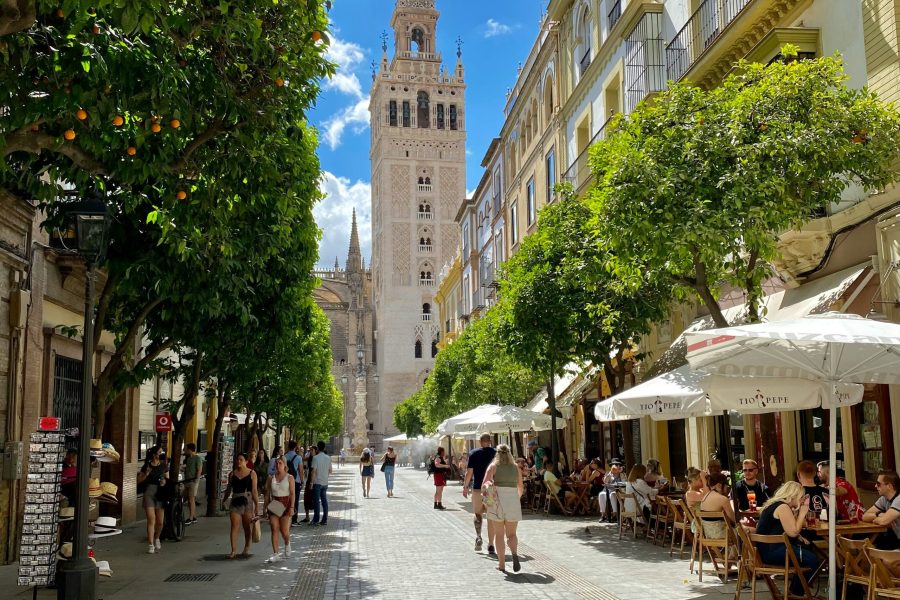
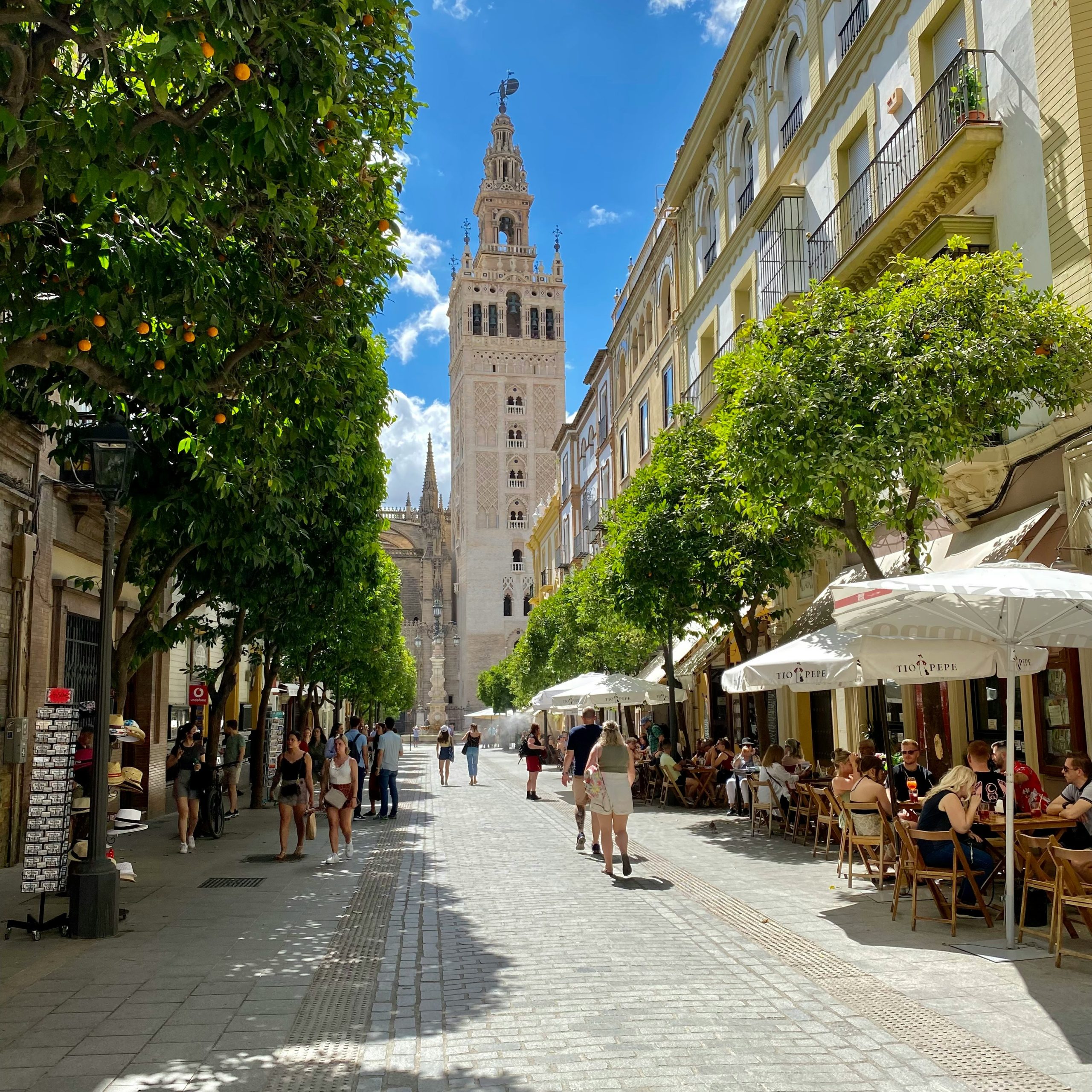
Morning: Begin at La Giralda and the Cathedral. Your guide will reveal how the cathedral's courtyard — the Patio de los Naranjos — was once the ablution courtyard of the Great Almohad Mosque, and how its rows of orange trees still follow the geometry of an Islamic prayer hall. Stand beneath La Giralda — the 12th-century minaret so perfectly proportioned that the Castilian conquerors could not bring themselves to demolish it. They added a Renaissance bell tower on top and gave it a new name. But the minaret remains. The internal ramp — designed so that the muezzin could ride a horse to the summit — is still there, and you will climb it.
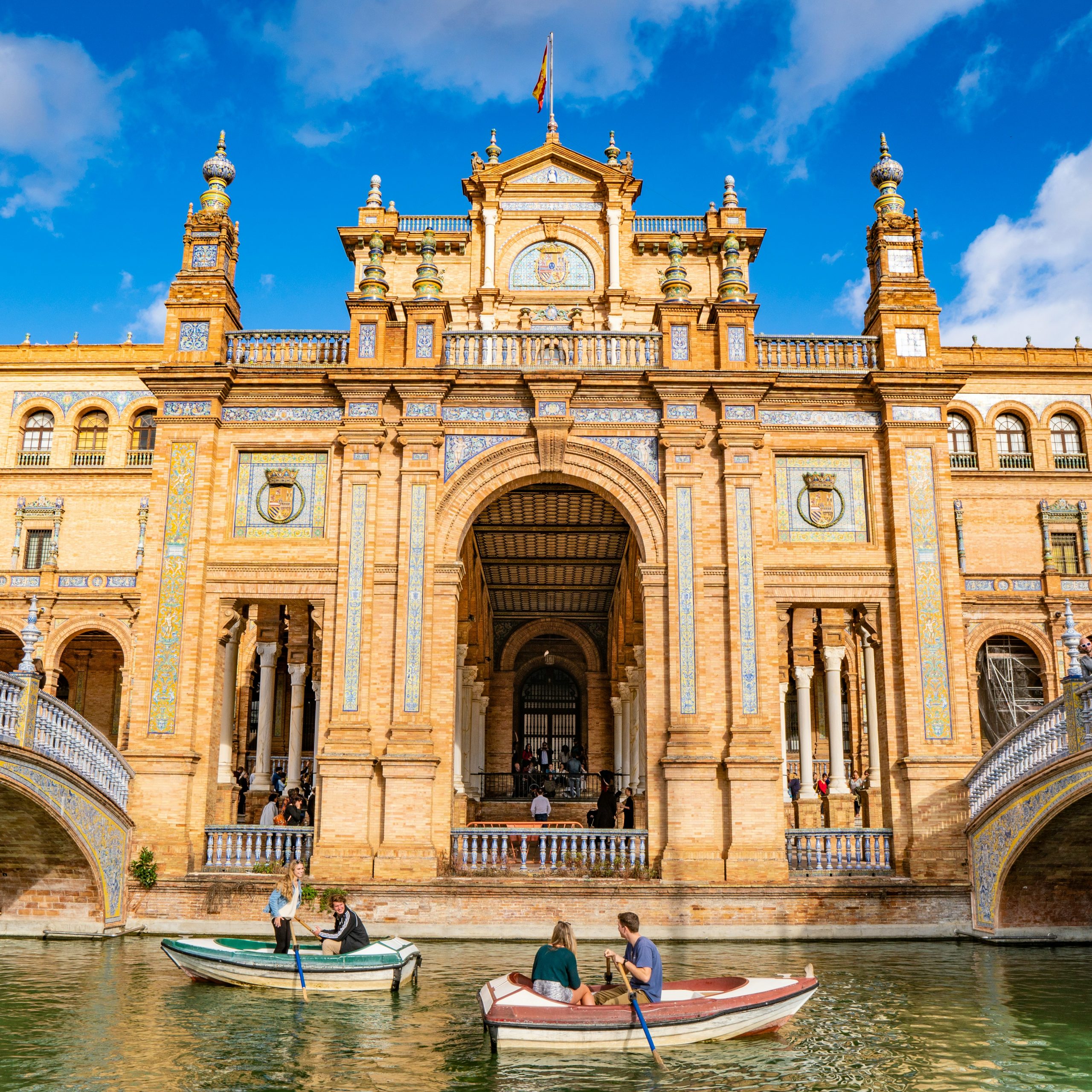
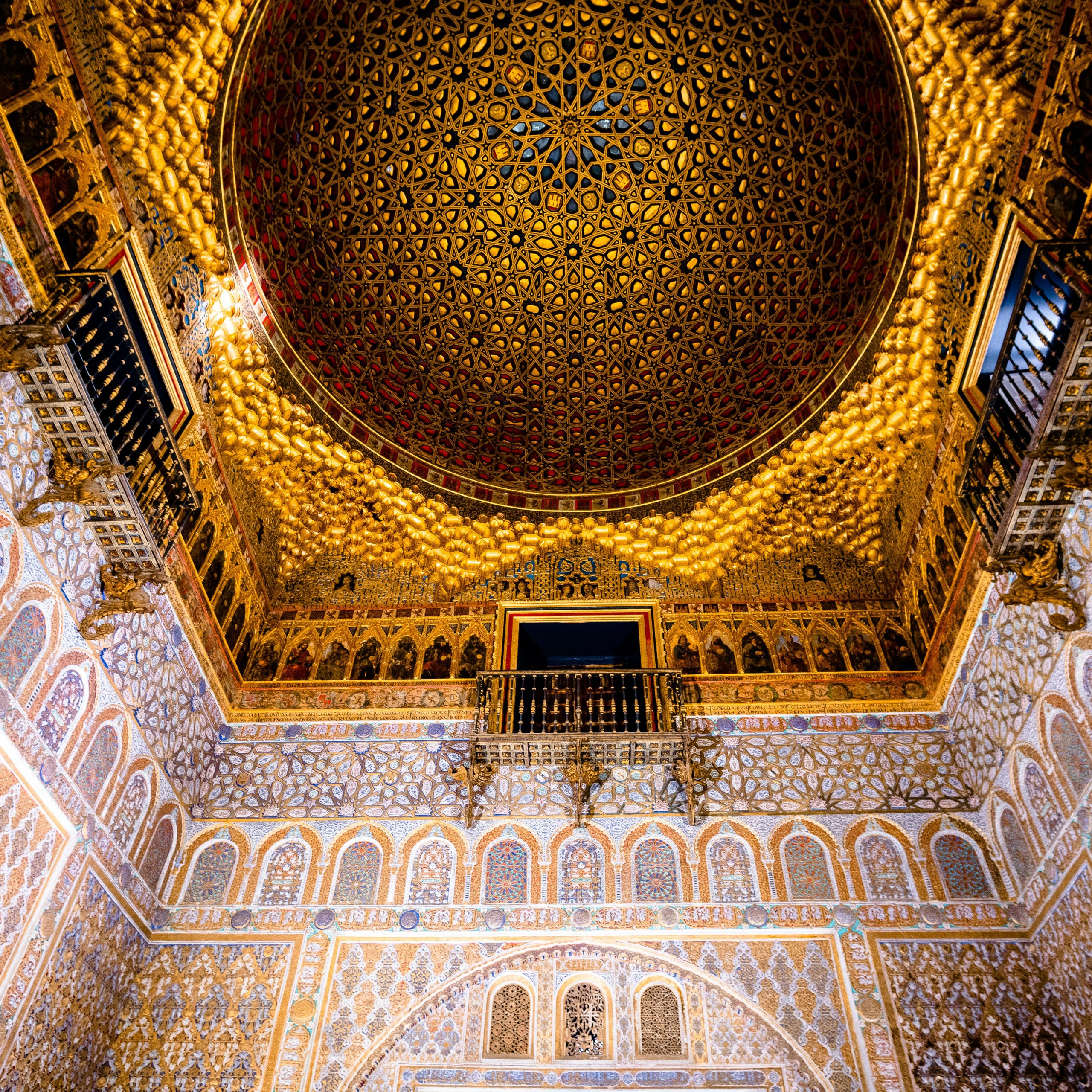
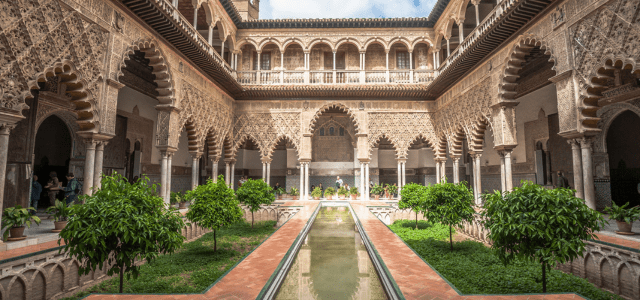
Continue to the Real Alcázar, the royal palace built by Christian kings who so admired Islamic art that they hired Muslim craftsmen to create their residence. The result is one of the most stunning examples of Mudéjar architecture in the world — a building where the boundaries between Islamic and Christian art dissolve in courtyards of carved stucco, geometric tilework, and reflecting pools.
Visit the Torre del Oro, the 13th-century Almohad watchtower that once protected the port of Seville, and walk along the Guadalquivir — the great river that the Arabs called al-wādi al-kabīr ("the great river"), and whose name they gave to the entire waterway.
Afternoon: Explore Barrio Santa Cruz, the old Jewish quarter where Muslims, Jews, and Christians lived side by side for centuries. Narrow lanes, hidden courtyards filled with jasmine, and the smell of orange blossom carry the atmosphere of a city that has not entirely forgotten its medieval past. End the afternoon at Las Setas (Antiquarium) — where, beneath a strikingly modern wooden structure, you can walk through the perfectly preserved Roman streets that the Visigoths inherited, the Muslims built upon, and the centuries buried.
Evening: A visit that no other tour can offer — the Madrasah Al-Andalusia, the campus of the Islamic University of Spain. Here you will meet Sh. Mohammad Idrissi Alcaraz (rector) and the community of scholars and students who continue the intellectual tradition that once defined Al-Andalus. This is not a museum. It is the living continuation of a thousand-year story — and your invitation to step inside it.
Did you know? The orange trees that line the streets of Seville were first planted by the Almohads in the 12th century. The bitter Seville orange — used in British marmalade and in the famous agua de azahar (orange blossom water) — is a direct culinary legacy of Al-Andalus.
Overnight in Seville
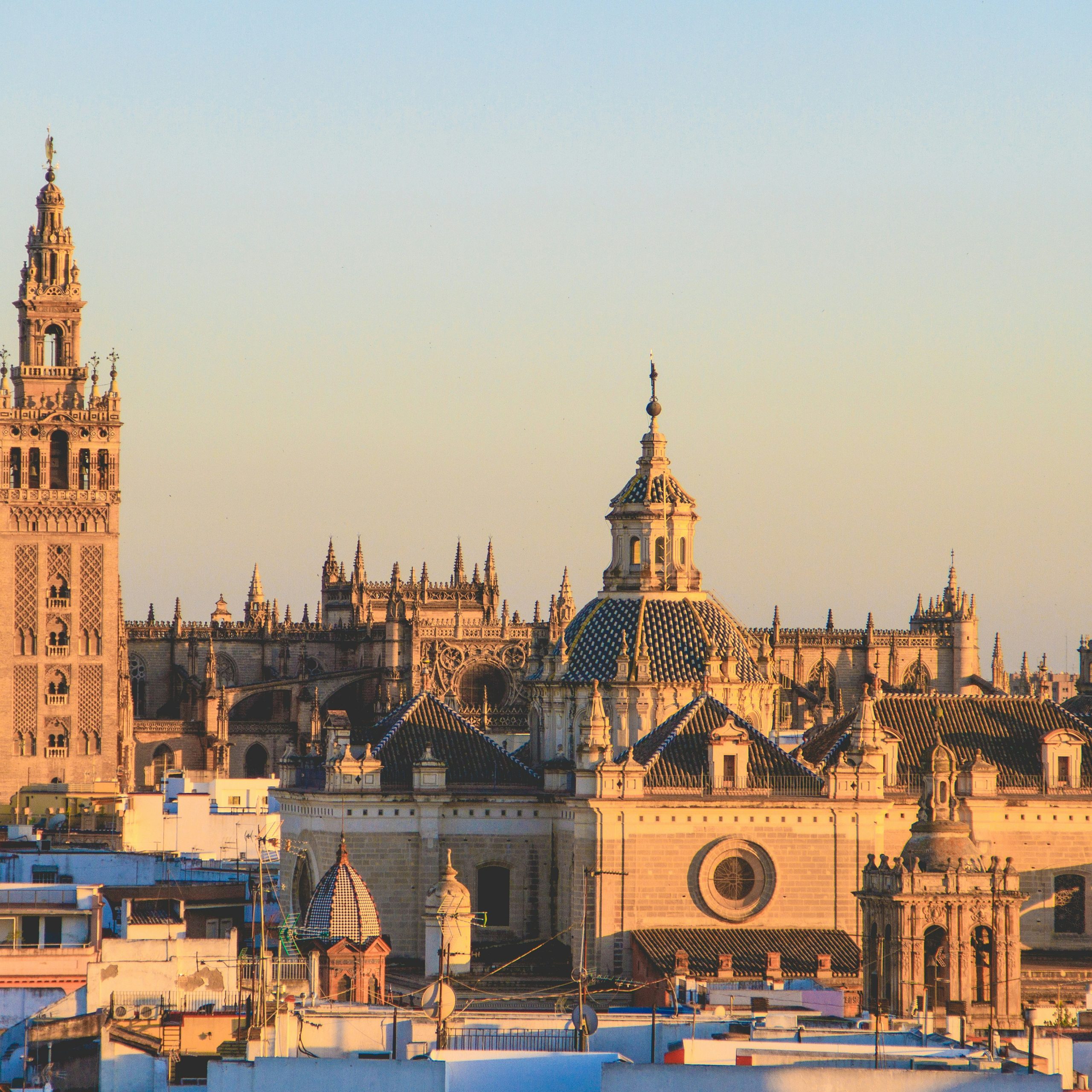
"In the 10th century, this was the most advanced city in Europe. Today, it is the most beautiful chapter of its own memory."
After breakfast, depart Seville and travel northeast through the olive groves of the Guadalquivir valley to Córdoba (~1.5 hours).
In the 10th century, Córdoba was the largest and most advanced city in Western Europe — half a million inhabitants, paved and lit streets, running water in private homes, 70 libraries, and the most important translation movement of the medieval world. Here, the works of Aristotle, Galen, and Ptolemy were rescued from oblivion and rendered into Arabic. From Arabic, centuries later, they would pass into Latin — and become the foundation of the European Renaissance.
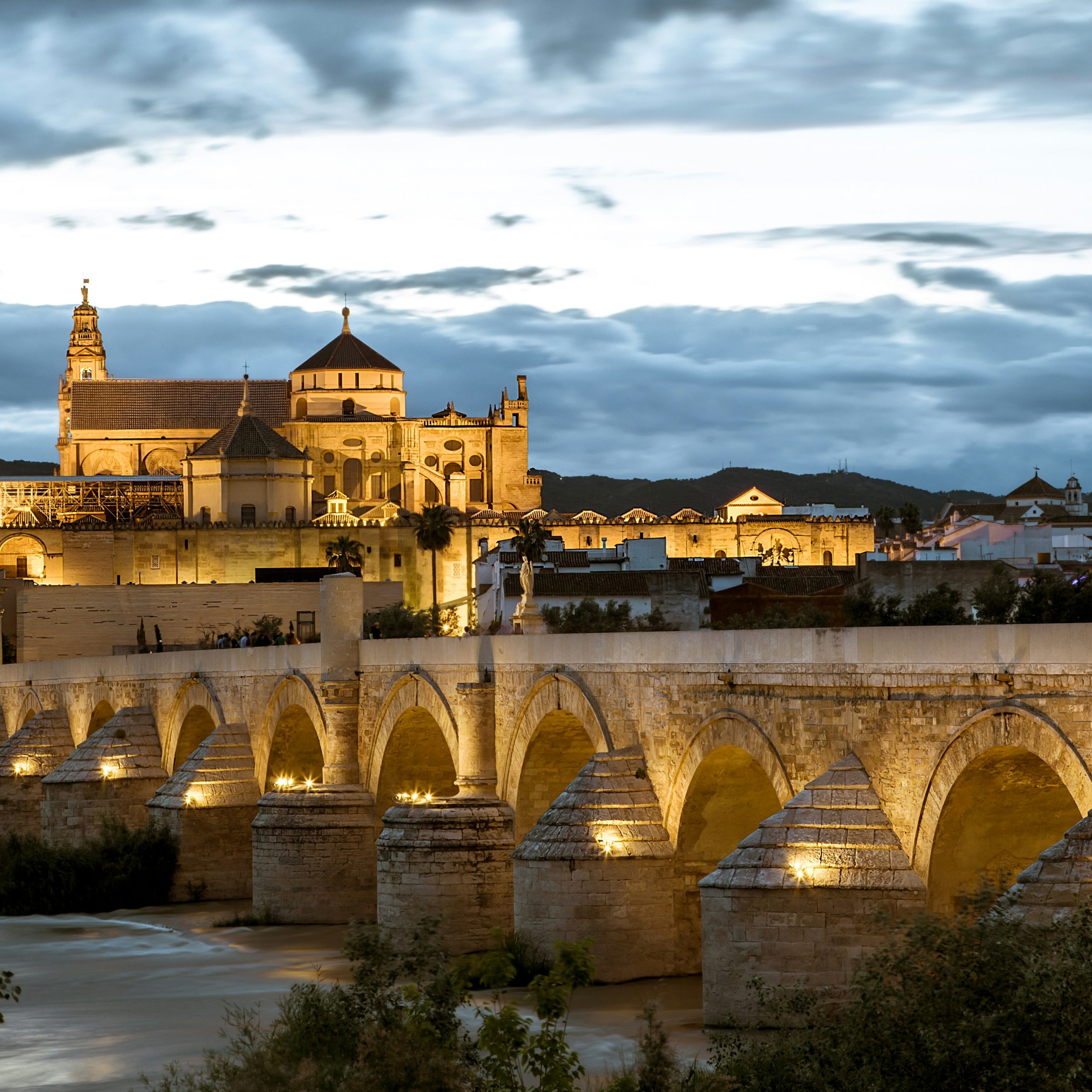
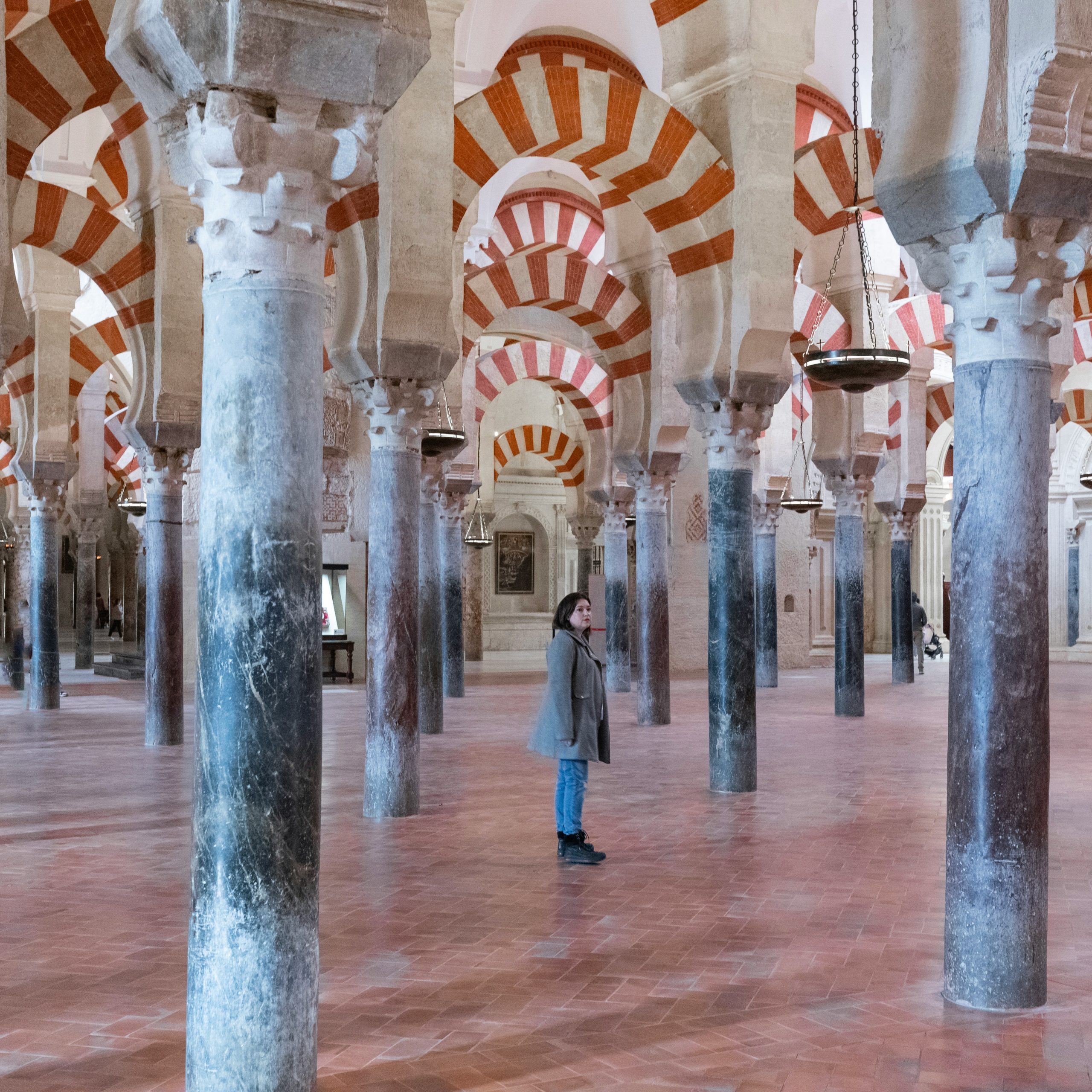
Morning – Afternoon: The day centres on the Mezquita-Catedral, the Great Mosque of Córdoba — one of the most extraordinary buildings in the history of architecture. Step inside and over 850 columns of jasper, onyx, marble, and granite rise around you, supporting a ceiling of red and white double arches that seem to multiply infinitely, like a mathematical equation rendered in stone.
Your guide will tell you the story of Abd al-Rahman I, the young Umayyad prince who escaped the massacre of his family in Damascus, crossed deserts and seas, and arrived in Spain with nothing but his lineage and his memory. The Mezquita he built was, in part, an act of remembrance — a recreation of the Great Mosque of Damascus in a new land, a way of saying to history: we are still here.
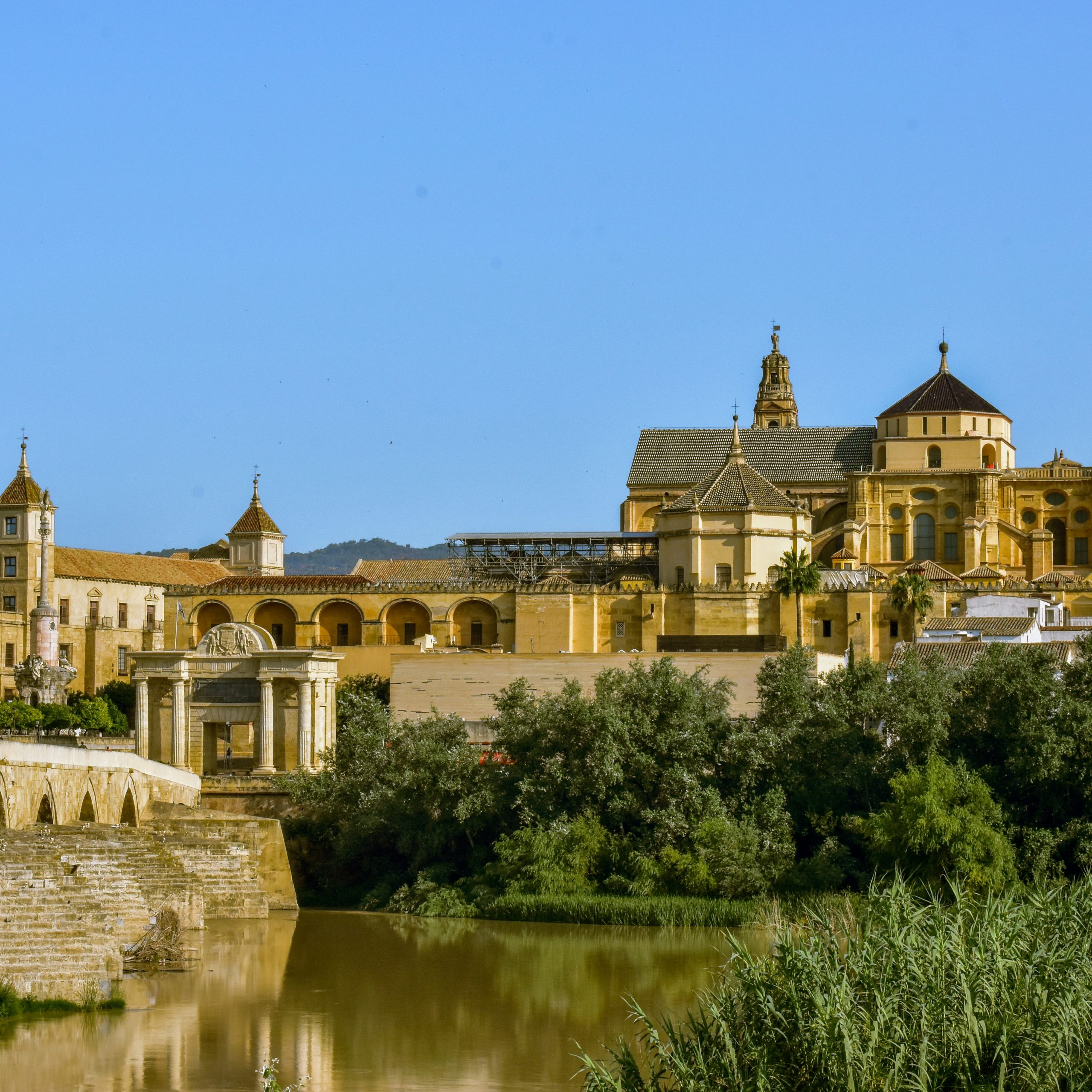
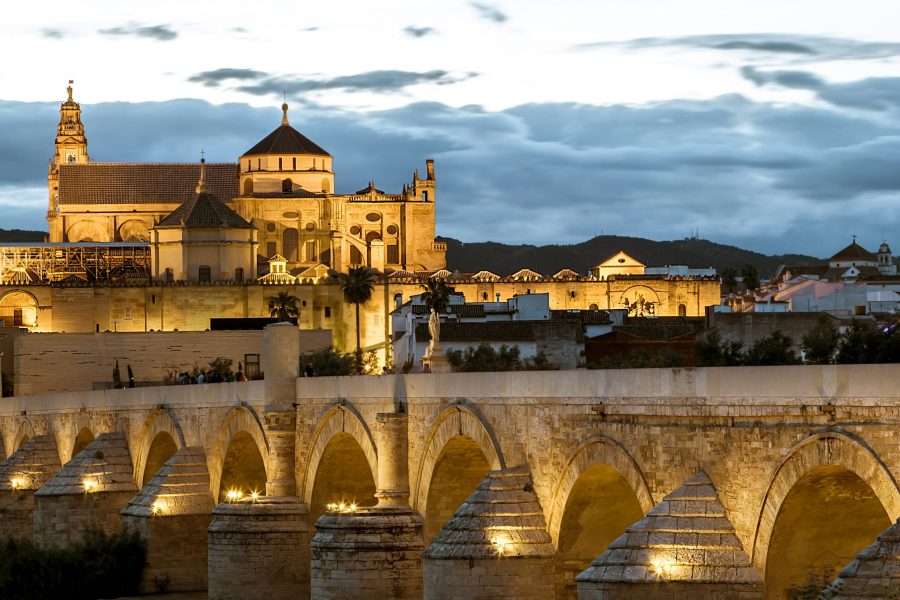
Cross the Puente Romano, the Roman bridge that has carried travellers, pilgrims, scholars, and caliphs across the Guadalquivir for two thousand years. Visit the Torre de la Calahorra at the far end — now a museum dedicated to the three cultures (Muslim, Jewish, Christian) that built medieval Córdoba together.
Walk through the Jewish Quarter, where the philosopher Maimonides — born in Córdoba under Muslim rule — developed ideas that would shape Jewish, Christian, and Islamic thought for centuries. Visit the Synagogue (one of only three medieval synagogues surviving in Spain) and wander the Calleja de las Flores, the most photographed lane in Andalusia.
Evening: Free time in Córdoba. Wander the old quarter as the heat of the day begins to lift, the lanterns come on, and the courtyards fill with the smell of jasmine.
Did you know? The library of Caliph Al-Hakam II in 10th-century Córdoba contained over 400,000 manuscripts — at a time when the largest library in northern Europe held fewer than 1,000 books. The catalogue alone filled 44 volumes. Among the librarians and scribes were women, including the celebrated Lubna of Córdoba, who was simultaneously a poet, a mathematician, and a court secretary.
Overnight in Córdoba
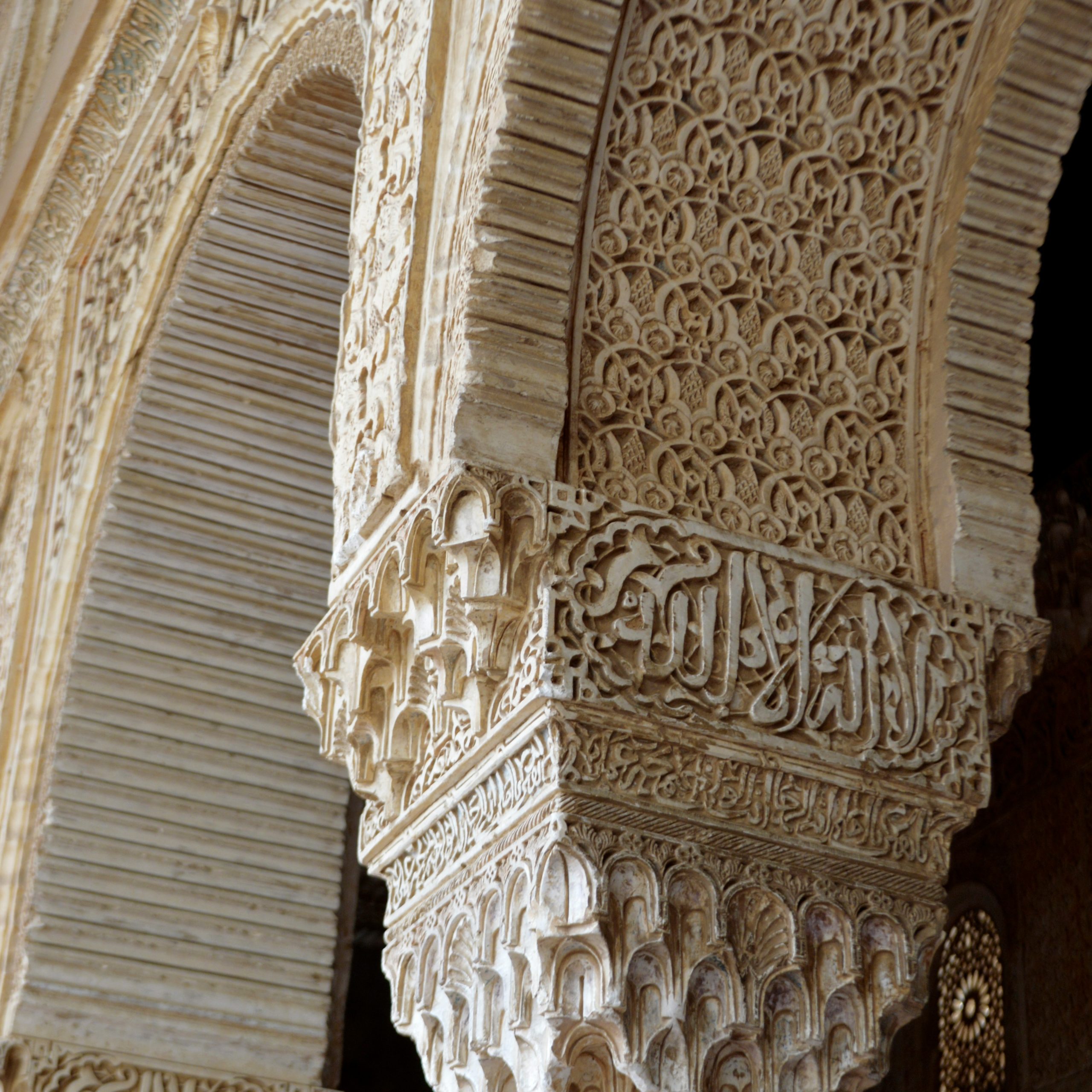
"Stand among the ruins of a city built to rival Baghdad — and then drive toward the city where Al-Andalus made its final stand"
Morning: Just outside Córdoba lies one of the most remarkable archaeological sites in Europe — Medina Azahara (Madinat al-Zahra). In 936, Caliph Abd al-Rahman III ordered the construction of a new palace-city to be the administrative capital of the Caliphate of Córdoba and a statement of power to rival the Abbasids in Baghdad. Over 10,000 workers laboured for decades. The complex held audience halls with walls of gold and crystal, gardens with mechanical fountains, and a famous pool filled with mercury that scattered sunlight across the ceilings like liquid stars.
Then, in 1010, during the fitna (civil war) that tore the Caliphate apart, Medina Azahara was sacked, burned, and systematically stripped. Over the centuries, the ruins disappeared beneath soil and vegetation. For nearly a thousand years, the greatest palace complex in Western Europe was simply… forgotten. It was not rediscovered until 1911. In 2018, UNESCO declared it a World Heritage Site, and excavation continues to this day — less than 10% of the original city has been uncovered.
Your guide will walk you through the grand reception hall, the gardens, the residential quarters — and help you imagine this place as it once was: a city of marble and water, designed to demonstrate that civilisation could be built at what was then the edge of the known world.
Afternoon: Begin the scenic drive south-east to Granada (~2.5 hours), through landscapes that have inspired poets for a thousand years — rolling hills, olive groves, and the slow approach of the snow-capped peaks of the Sierra Nevada.
Arrive in Granada in the late afternoon and check into your hotel. After a moment to rest, set out on a first orientation walk through the old town. Visit the Madrasa of Yusuf I, the Islamic university founded in 1349 — the only Nasrid-era educational institution whose original prayer hall has survived, its stucco walls preserved beneath later layers. Walk through the Alcaicería, the reconstructed old silk market, and pass the Corral del Carbón — the only surviving Nasrid-era caravanserai (merchants' inn) in the Iberian Peninsula.
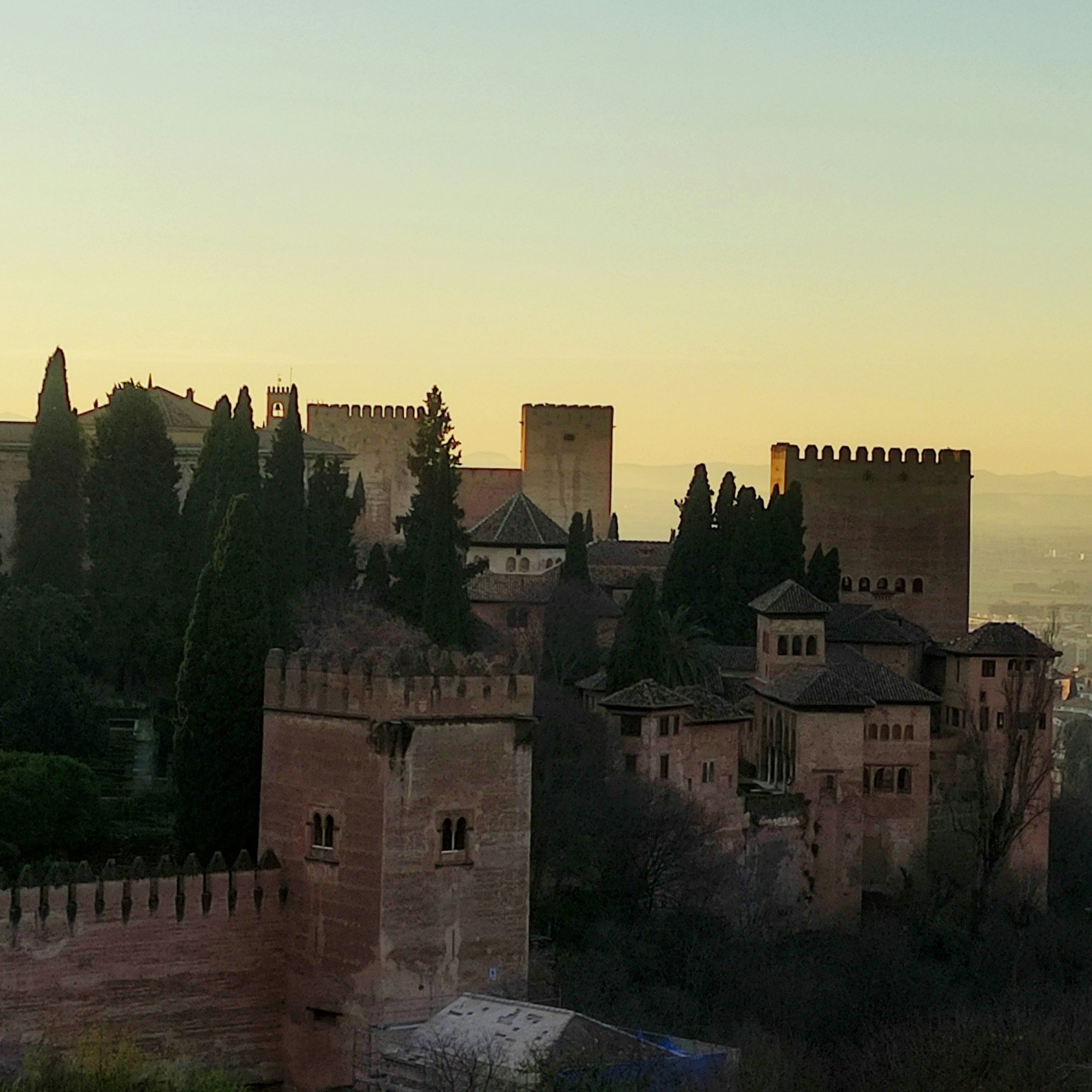
End the day at a viewpoint as the sun sets behind the Alhambra. The palace turns from white to gold to amber against the Sierra Nevada. Understand why the Nasrid poets wrote that Granada was "a piece of the sky that fell to earth."
Did you know? When ambassadors from the Byzantine Empire visited Medina Azahara in the 10th century, they were reportedly so overwhelmed by its beauty that they fell to their knees. The caliph's throne room is said to have had a ceiling that rotated to follow the movement of the sun — an engineering wonder whose mechanism is still debated by historians today.
Overnight in Granada
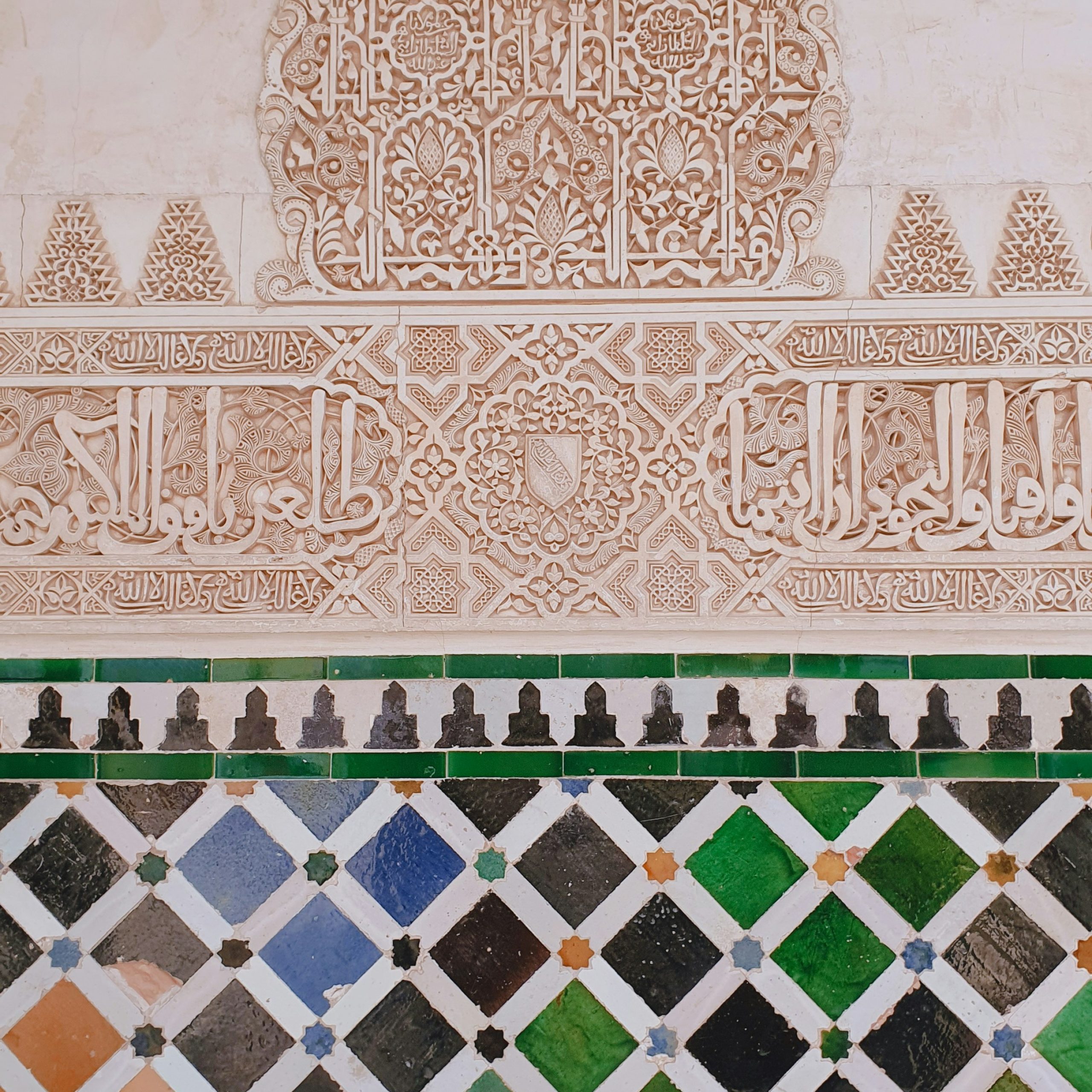
"In the morning, the call to prayer returns to the Albaicín. In the afternoon, you walk inside the most beautiful palace ever built."
When the schedule aligns with a Friday, today is the spiritual and emotional heart of the journey.
Morning: Walk through the old streets of the Albaicín — Granada's old Moorish quarter and a UNESCO World Heritage Site — toward the Mezquita Mayor de Granada, the first purpose-built mosque in Granada since 1492. The mosque sits at the very top of the Albaicín hill, directly facing the Alhambra across the valley of the Darro River, with one of the most extraordinary views in the world.
Here, those who wish may pray the Jumua (Friday congregational prayer) — and stand on the terrace afterward as the sound of the adhan echoes off the walls of the old Moorish quarter. For many travellers, this is one of the most emotionally powerful moments of any journey through Al-Andalus — the sound of history coming full circle, after five centuries of silence.
(On non-Friday departures, the morning is dedicated to an in-depth exploration of the Albaicín: the Mezquita Mayor, the Mirador de San Nicolás, the Aljibe del Rey — the largest Islamic cistern in Granada — and the carmenes hidden behind whitewashed walls.)
A relaxed lunch follows in the Albaicín — perhaps at one of the teterías (Moroccan-style tea houses) on the Calderería Nueva, where the flavours of North Africa meet the streets of Granada.
Afternoon: Enter the Alhambra and the Generalife. Your guide will walk you through the Nasrid Palaces — and nothing prepares you for this. Every surface is covered in decoration, but "decoration" is the wrong word. What you see is language. Arabic calligraphy flows across every wall: verses from the Qur'an, lines of poetry, praises of the sultans, and the Nasrid motto — Wa la ghalib illa Allah — "There is no victor but God" — repeated so many times that it becomes a kind of architectural breath, a constant exhalation of humility at the peak of human artistry.
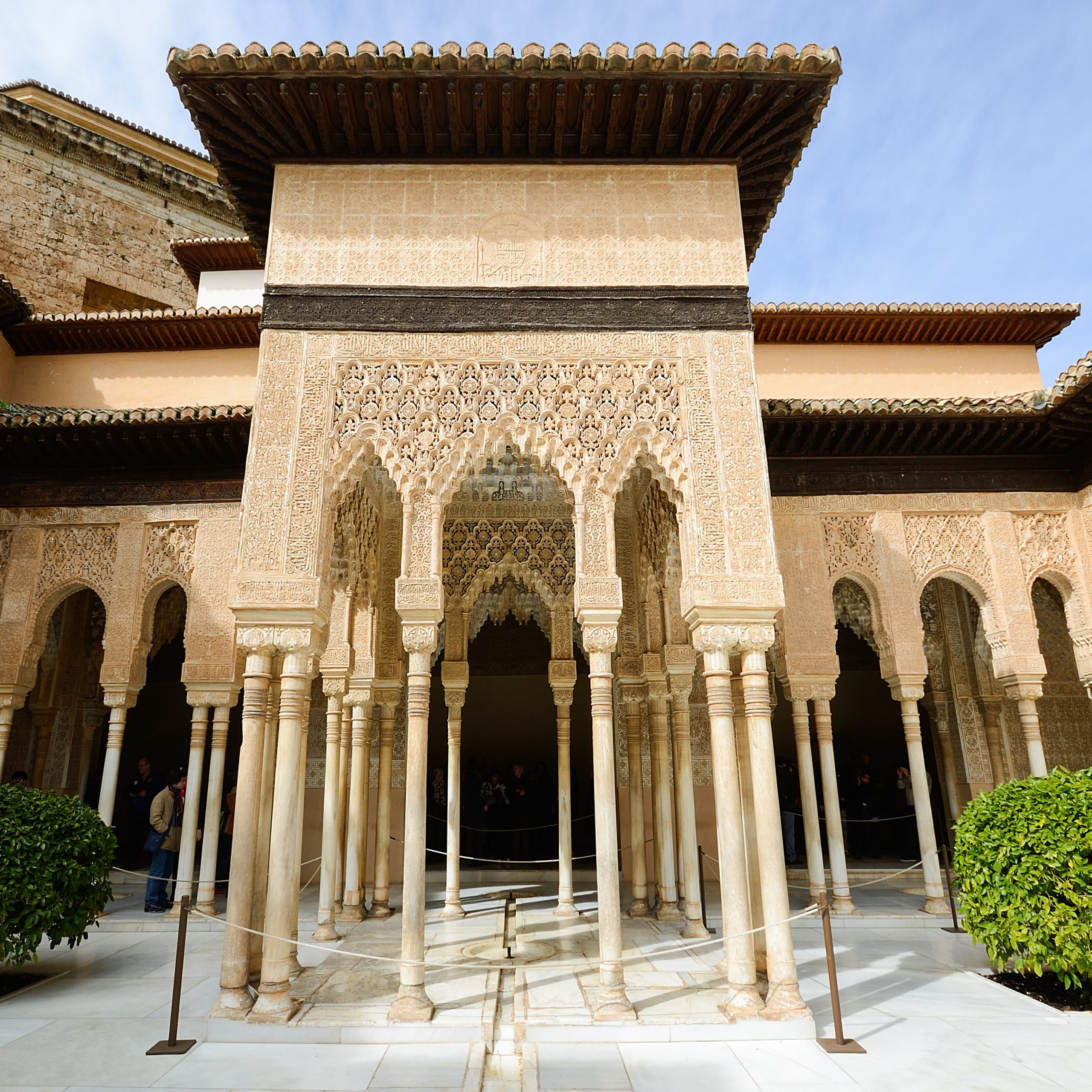
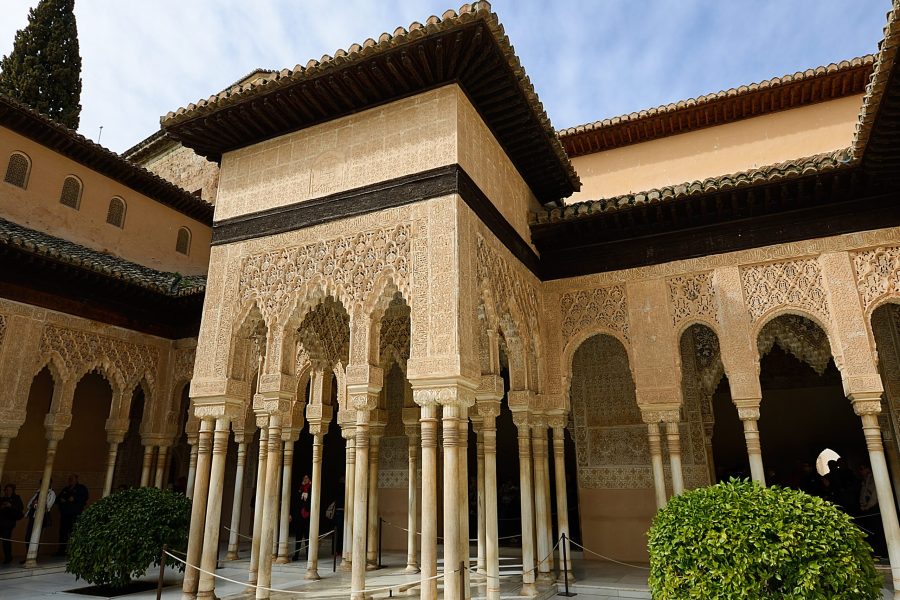
You will pass through the Mexuar (the council hall), the Comares Palace (whose throne-room ceiling, made of 8,017 pieces of inlaid cedarwood, maps the seven heavens of Islamic cosmology), and the Palace of the Lions — where twelve marble lions once supported a hydraulic clock that told the hours through the flow of water.
In the muqarnas — the honeycomb-like vaulted ceilings — your guide will reveal the hidden mathematics. These are not random shapes. They are based on geometric principles that Islamic mathematicians had been refining for centuries, anticipating concepts that Western mathematics would not formalise until the 20th century.
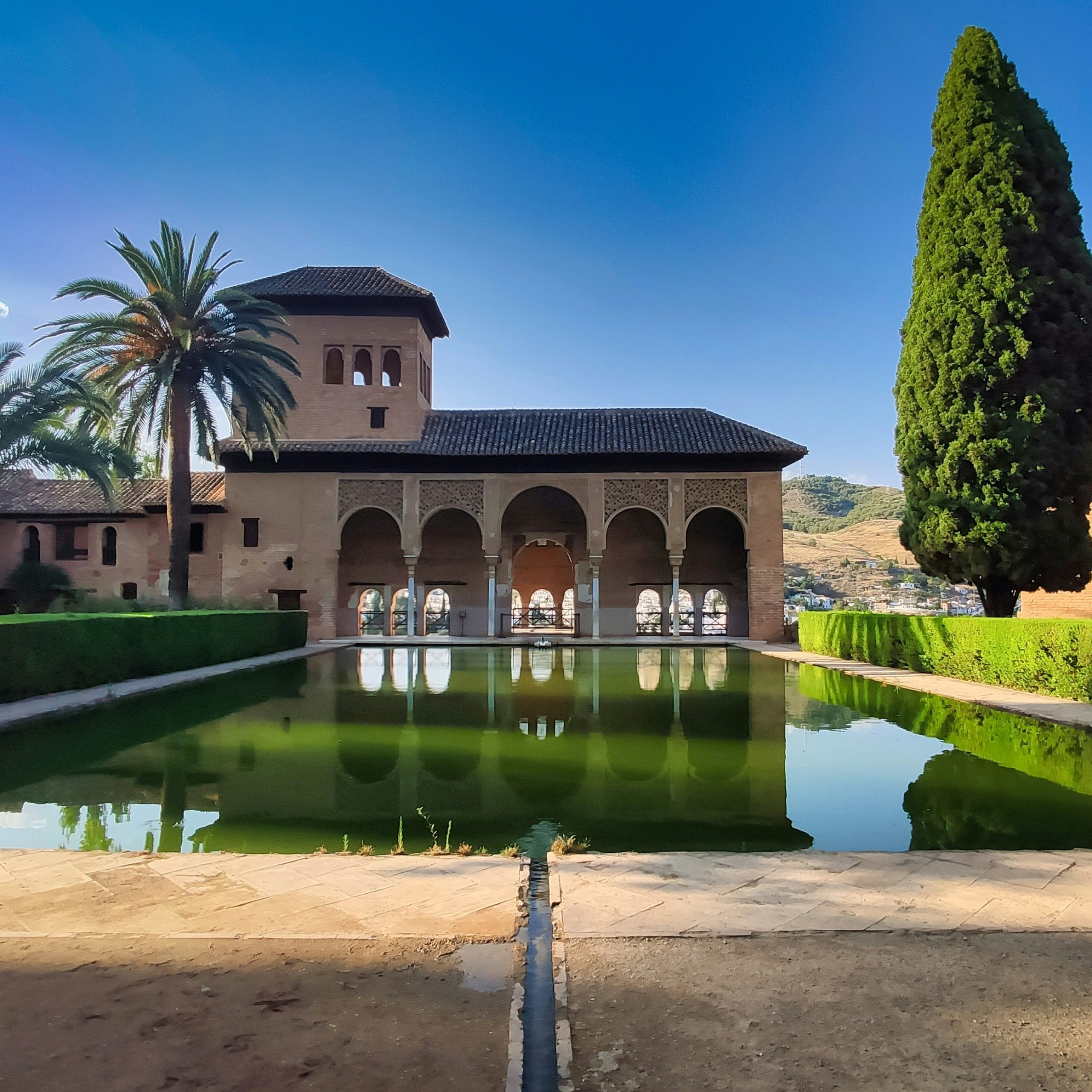
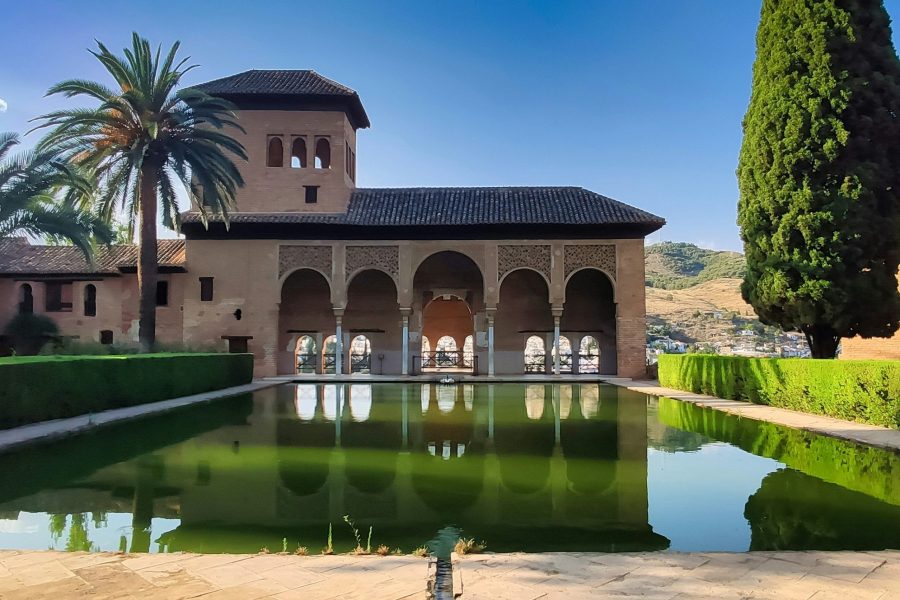
Continue to the Generalife — the summer palace and gardens of the sultans. Here, water is not just for irrigation. It is architecture. Channels run through the centre of walkways, fountains create rhythm, and reflecting pools turn the sky into a floor. The Generalife demonstrates one of the most profound principles of Islamic garden design: that paradise is not a destination, but an experience that can be built — here and now — with water, light, and the scent of jasmine.
Evening: A farewell dinner with the group, in a restaurant with views of the Alhambra glowing in the night.
Did you know? The famous inscription repeated throughout the Alhambra — Wa la ghalib illa Allah ("There is no victor but God") — was the motto of the Nasrid dynasty. It is inscribed thousands of times across the walls of the palace, in a constant reminder of humility at the very height of artistic and political achievement.
Overnight in Granada
"You leave Al-Andalus — but you take it with you"
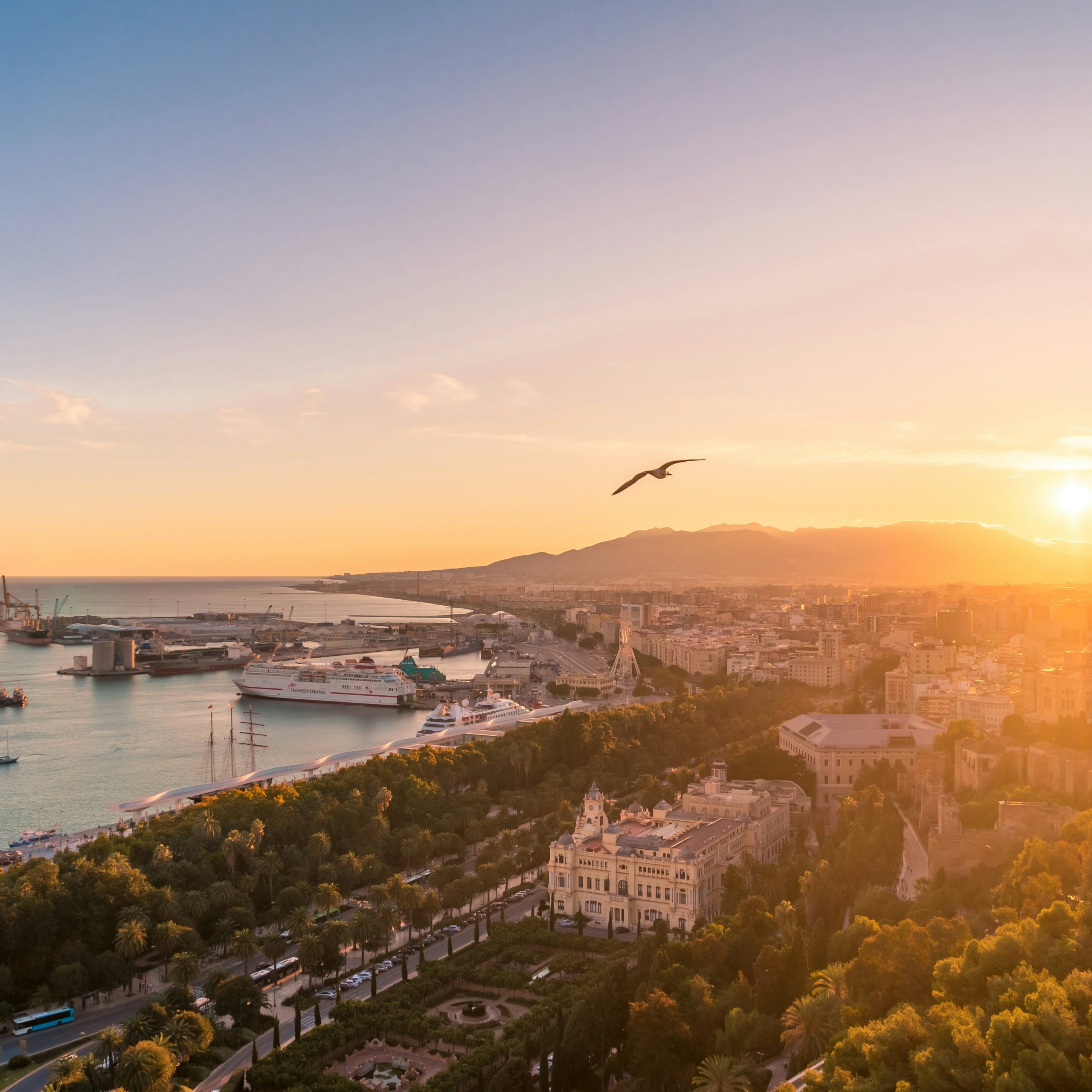
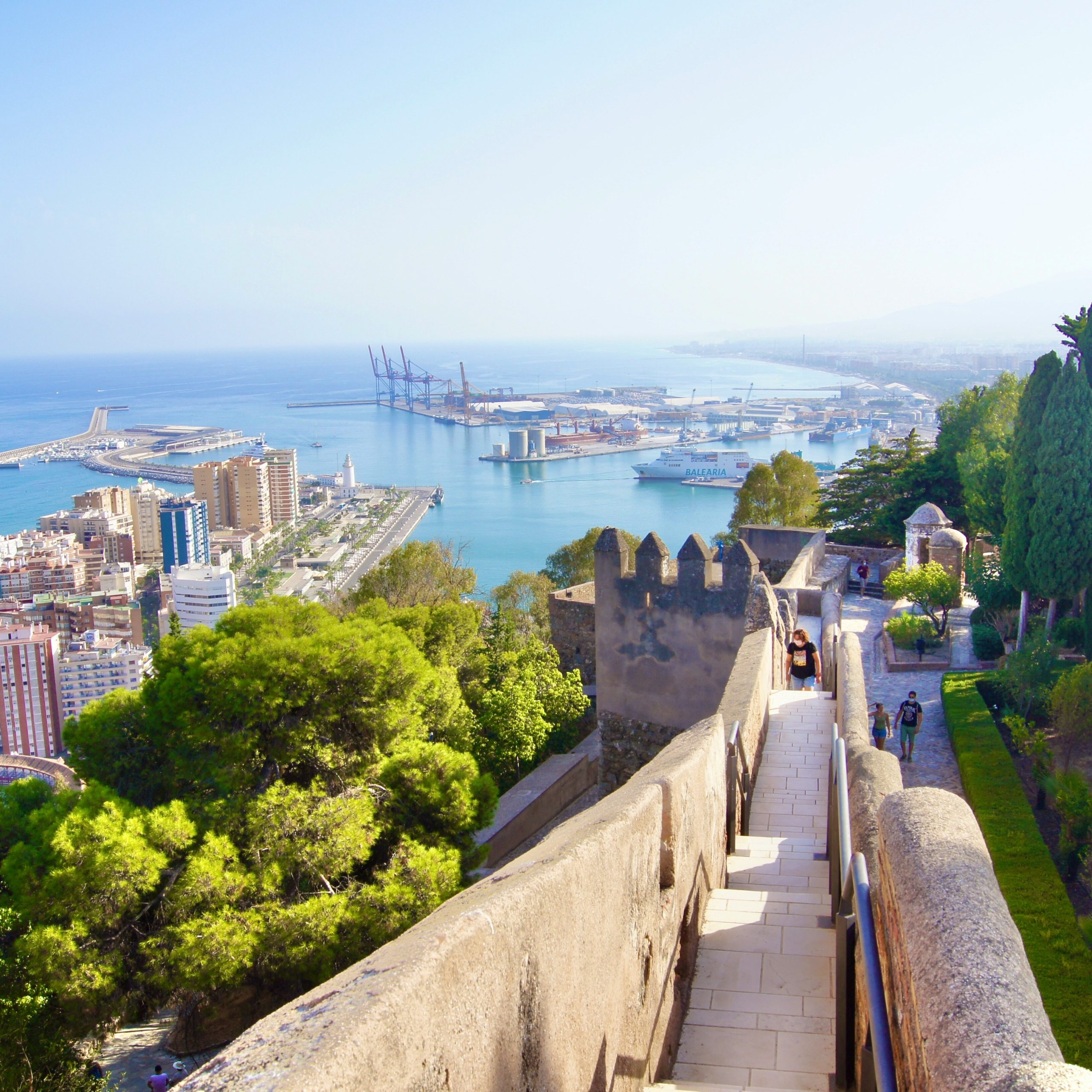
After breakfast and a final morning to walk the streets of the Albaicín or sit on a quiet terrace overlooking the Alhambra one last time, the group transfers south to Málaga (~1.5 hours).
Depending on your flight schedule, there may be time for a brief stop in Málaga itself — a glance at the Alcazaba (the 11th-century Hammudid citadel above the harbour), a final walk along the Mediterranean, or simply a quiet coffee before your departure.
Transfer to Málaga-Costa del Sol Airport (AGP) for your flight home.
Did you know? The acequia irrigation channels that still feed the gardens of the Alhambra, and that you saw flowing through the Generalife yesterday, follow the original system designed by Muslim engineers over 1,000 years ago. UNESCO has recognised this as one of the most important examples of historical hydraulic engineering in Europe.
Absolutely. While the tour highlights the Islamic heritage of Al-Andalus and respects Islamic prayer times, the entire itinerary is built around the shared cultural heritage of Al-Andalus — a civilisation that belongs to all of humanity. Many of our most enthusiastic guests are travellers of other faiths and backgrounds who are fascinated by this often-overlooked chapter of European history. The Friday prayer (Jumua) is optional for those who wish to attend.
The Andalusian Gems Express is a more compact itinerary, starting and ending in Málaga and moving at a faster pace. The Andalusian Gems gives you an extra day, starts in Seville, and includes elements that the Express does not have: the visit to the Madrasah Al-Andalusia campus, Medina Azahara, and (when the schedule aligns) Jumua at the Mezquita Mayor de Granada. The Andalusian Gems is the deeper, more reflective version of the journey.
Both options are available. We run scheduled group departures throughout the year, and we can also arrange private departures for individuals, couples, families, or affinity groups — on any dates you choose.
Yes. Every meal arrangement is made with halal dining in mind. Seville, Córdoba, and Granada all have established halal restaurants, and our team handles the logistics so you can focus on the experience.
Moderate. You should be comfortable with daily walking on cobblestone streets and uneven terrain. The Alhambra visit involves around 3 hours of walking, much of it uphill. We build in rest time and the pace is relaxed — designed for absorption, not exhaustion.
We can arrange alternative transfers from Madrid (MAD), Málaga (AGP), or Seville (SVQ). Tell us your flight plans when booking and we will adjust.
Please refer to our Terms & Conditions page for full details.

Member Since 2026