

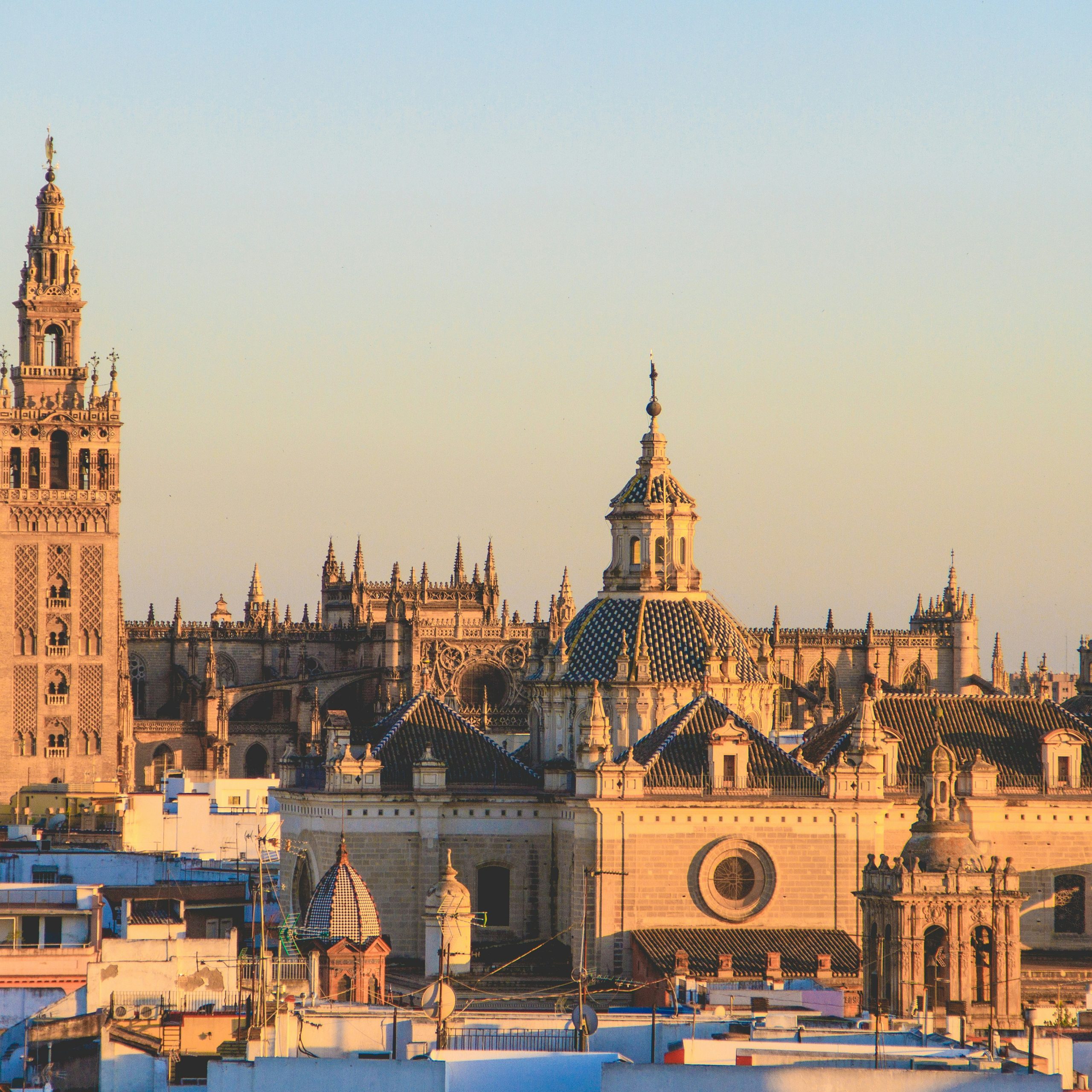

You’re in Seville, you look up… and it happens. That instant “wow” when the tower seems to float above the streets like it’s been watching the city breathe for centuries.
If you’ve ever wondered why it’s called the Giralda, the answer is surprisingly poetic. It’s not just a name. It’s a little story about movement, meaning, and how Seville became Seville.
So… why is it called “the Giralda”?
The tower wasn’t originally called the Giralda.
The name comes from a rotating figure placed on top in the 16th century: El Giraldillo, a weather vane. Because it turns with the wind, people started calling the tower “La Giralda” — basically, “the one that turns.”
And just like that, Seville’s most famous landmark got a name that isn’t about height or stone… but about motion.
The detail most visitors miss
The tower’s identity is a blend: the base is rooted in Al-Andalus, and the upper Renaissance belfry reflects the later Christian era. The Giraldillo sits at the very top like a symbolic “seal” of a new chapter — but the tower beneath it still speaks the older language of Islamic geometry and craftsmanship.
What the Giralda used to be: the minaret of the Great Mosque
Long before it became a cathedral bell tower, the Giralda was built as the minaret of the Great Mosque of Seville, during the Almohad period in Al-Andalus.
If you’ve seen minarets in North Africa, the vibe will feel familiar — and that’s not a coincidence. The Almohads were master builders, and Seville was one of their shining statements in the west.
Why the ramps matter (and why you’ll appreciate them)
Inside, the Giralda doesn’t make you climb a narrow spiral staircase the whole way up. Instead, it uses ramps. Historically, these ramps were designed so access could be easier — even allowing ascent on horseback.
Today, that means the climb feels more like a slow rise through time, not a punishment.
A quick timeline (so the story clicks)
- Almohad era: Built as the mosque’s minaret (late 12th century).
- After 1248: Seville is taken by Christian forces and the city’s main mosque is transformed and later replaced by the cathedral.
- Renaissance addition: A belfry is added on top, turning the former minaret into a bell tower.
- 1568: The weather vane statue El Giraldillo is placed at the summit — and the name “Giralda” becomes the name everyone remembers.
Seville is one of those places where history isn’t hidden in museums. It’s layered in plain sight.
How to “read” the Giralda like a local (without needing to be an expert)
1) Look at the surfaces, not just the silhouette
From a distance, it’s iconic. But up close, the real magic is in the patterns and brickwork — the geometry, the rhythm, the way the tower feels both strong and elegant.
2) Notice how it connects worlds
Most towers belong to one era. The Giralda is different. It doesn’t erase what came before — it carries it. That’s why people feel something when they see it, even if they don’t know the whole story.
3) Take your time on the way up
Because it’s ramps, not just stairs, you can pause, breathe, and let your eyes adjust as the city opens below you. Seville reveals itself slowly — and the Giralda rewards that pace.
A small reflection (the kind you remember later)
There’s something quietly powerful about a name born from turning.
The Giralda has seen empires, prayers, bells, processions, and ordinary mornings that looked just like yours. And at the top, the wind still arrives, and the Giraldillo still responds — turning, calmly, without drama.
Maybe that’s why this tower feels so Seville: beauty with patience, strength with grace, and a city that keeps moving without forgetting.
If you want to experience Seville beyond the checklist
If you ever want to explore Seville through the lens of Al-Andalus — the stories, the architecture, the “hidden” details that make everything more meaningful — we can help you build a route that fits your pace.
No pressure. Just tell us your dates and what kind of experience you enjoy (slow & cultural, photo-focused, family-friendly, deep history…), and we’ll point you in the right direction.
Because the best trips don’t feel like tourism. They feel like you finally understood the place.
0 Comment