


While European kingdoms fought in forests and built fortifications of mud and timber, a civilization in the south was writing libraries into existence. It was so advanced, so refined, so utterly different from what surrounded it, that historians still struggle to explain how it happened. This is the story of Al-Andalus—and it might just rewrite what you thought you knew about medieval Europe.
From 711 to 1492, Al-Andalus existed. That’s 781 years. To put that in perspective: the United States has existed for 250 years. The Roman Empire lasted roughly the same span. Yet how many people have heard the name? Why did this massive, transformative civilization vanish from popular memory?


The Conquest No One Expected
In 711, a small army led by Tariq ibn Ziyad crossed the Strait of Gibraltar. Their mission was straightforward—or so they thought. Within seven years, nearly the entire Iberian Peninsula had fallen under Muslim rule. The Visigothic Kingdom, which had controlled Spain for three centuries, crumbled. Not because it faced an unstoppable force, but because the new rulers brought something the Visigoths had lost: opportunity.
The earliest Muslims who arrived weren’t conquerors bent on erasure. They were administrators, merchants, engineers, and philosophers. They took the existing infrastructure and improved it. Roads became networks. Fields became gardens. Towns became cities. The population wasn’t expelled—it was integrated into a new system that offered possibilities many had never imagined.
This is crucial to understanding Al-Andalus. The conquest wasn’t the beginning of a story—it was a transformation of what already existed.
The Capital That Outshone Baghdad
By the 10th century, Córdoba had become the most populous city in Europe—with an estimated 300,000 to 500,000 inhabitants. To comprehend what this meant, consider the competition:
Paris in 980 AD? Approximately 25,000 people.
London? Roughly 13,000 inhabitants.
Rome? A shadow of its former self with perhaps 35,000 residents.
Córdoba wasn’t just larger—it was incomparably larger. It was the world’s knowledge capital, and that distinction wasn’t accidental.
The Numbers That Tell the Story
The Caliphate library held over 400,000 volumes. Not in fragments. Not in a single collection. Across the entire city system, there were hundreds of thousands of books—at a time when most European cities had zero public libraries. Zero. When a medieval European bishop wanted access to classical texts, he didn’t consult his local library because none existed. He sent scholars to Córdoba.
The city supported:
27 schools where children learned to read and write
50 hospitals equipped with physicians, surgeons, and pharmacists (Britain had none)
600 public baths, each heated with sophisticated water systems
1,000 mosques (even accounting for exaggeration in historical accounts, this reveals density of religious infrastructure)
80,000 shops lining bazaars and markets
213,000 houses, suggesting a population supporting complex urban infrastructure
These figures come from medieval chroniclers, and historians debate their precision. But even if we reduce them by half, the picture is still extraordinary. Córdoba was functioning at a level of urban sophistication that wouldn’t be matched in Europe for another 500 years.
The Scientific Revolution You Didn’t Learn About
In Córdoba’s libraries and medical schools, something was happening that medieval Europe couldn’t match. Physicians were studying anatomy. Astronomers were calculating the movements of celestial bodies. Mathematicians were developing new numerical systems. Philosophers were translating and preserving Greek knowledge that would otherwise have been lost.
Consider this: while European monks were carefully hand-copying Latin biblical texts in isolated monasteries, Córdoba had established the first major libraries dedicated to preserving and organizing human knowledge. The concept of cataloguing books, creating indices, and organizing information by subject—these were innovations developed in Al-Andalus.
Two of the greatest medieval philosophers were born in Córdoba:
Maimonides (1135-1204): A Jewish philosopher whose work shaped both Islamic and Christian theology, and whose medical texts remained authoritative until the 16th century.
Ibn Rushd (Averroes, 1126-1198): A Muslim philosopher whose commentaries on Aristotle became the foundation of Western philosophy for centuries.
These weren’t isolated geniuses. They were products of a system that valued intellectual achievement. That system was Al-Andalus.
The Convivencia: Three Faiths, One City
What made Al-Andalus truly revolutionary wasn’t just its buildings or books. It was its people. Muslims, Christians, and Jews didn’t just coexist—they worked together. Built together. Created together.
This period is called the Convivencia—literally, “living together.” Christian communities were protected under Islamic law as dhimmis (People of the Book). Jews, who had faced persecution across Europe, found sanctuary. Synagogues were built. Churches remained open. Mosques echoed with prayer. And in the courtyards between them, philosophers debated, physicians healed, and poets wrote verses that are still quoted today.
The Reality of Religious Pluralism
It’s important to be honest: it wasn’t perfect. No society is. There were tensions. Periods of conflict. Moments of violence. Certain restrictions were in place—non-Muslims paid special taxes, had limited legal recourse in certain matters, and sometimes faced discrimination.
But here’s what’s historically significant: these restrictions existed within legal frameworks. A Christian or Jewish person in 10th-century Córdoba had more legal protections than they would have in contemporary Christian Europe. In most Western European kingdoms, religious minorities simply didn’t exist as tolerated populations. They were either forced to convert or driven out.
Al-Andalus offered a third option: coexistence.
Jewish communities particularly flourished. Sephardic Judaism—the distinctive Jewish culture that emerged from Spain—was born in cities like Córdoba and Granada. Hebrew poetry reached new heights. Jewish scholars made contributions to Islamic philosophy and vice versa. When you read about the “Golden Age” of Spanish Jewry, you’re reading about Al-Andalus.
The Slow Twilight
The story of Al-Andalus is also a story of fragmentation. In the early 11th century, the unified Caliphate began to splinter. Power devolved from a central authority in Córdoba to smaller regional kingdoms called taifas. These kingdoms were culturally brilliant but politically vulnerable. One by one, they fell to Christian expansion from the north.
By 1090, Christian kingdoms controlled nearly a third of the peninsula. By 1250, they controlled two-thirds. By 1450, only Granada remained in Muslim hands.
What’s crucial to understand: this wasn’t inevitable. A more unified response, better military strategy, or different political circumstances might have altered the outcome. History is shaped by choices and chance, not predetermined pathways.
By 1492, when Granada fell, an entire civilization went into exile. Many Muslims and Jews fled to North Africa, the Ottoman Empire, and beyond. Those who stayed faced forced conversion. An era that had lasted 781 years was ending—or so it seemed.
What You’ll Feel When You Walk These Streets
When you visit Córdoba today and stand in the Mezquita—surrounded by those distinctive red and white arches, columns stretching in every direction—you’re not just seeing architecture. You’re touching a moment when the world was different. When a single city could contain multitudes of faiths, knowledge systems, and aesthetic values.
The Cathedral was carefully built inside the original mosque, preserving both structures. It’s not just a building. It’s a physical manifestation of what happened in Al-Andalus—the layering of different faiths, the preservation of what came before, the complex relationship between conqueror and conquered.
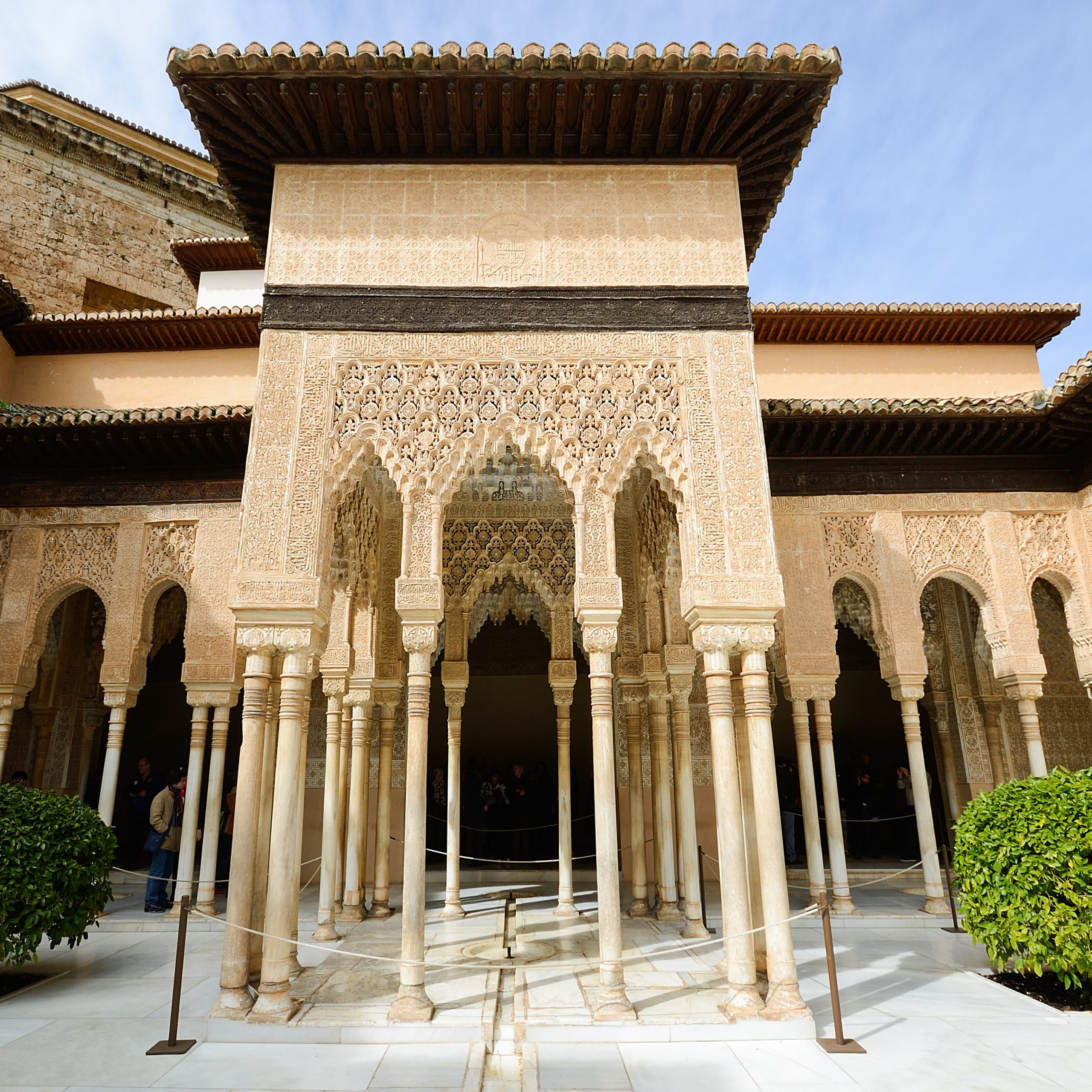
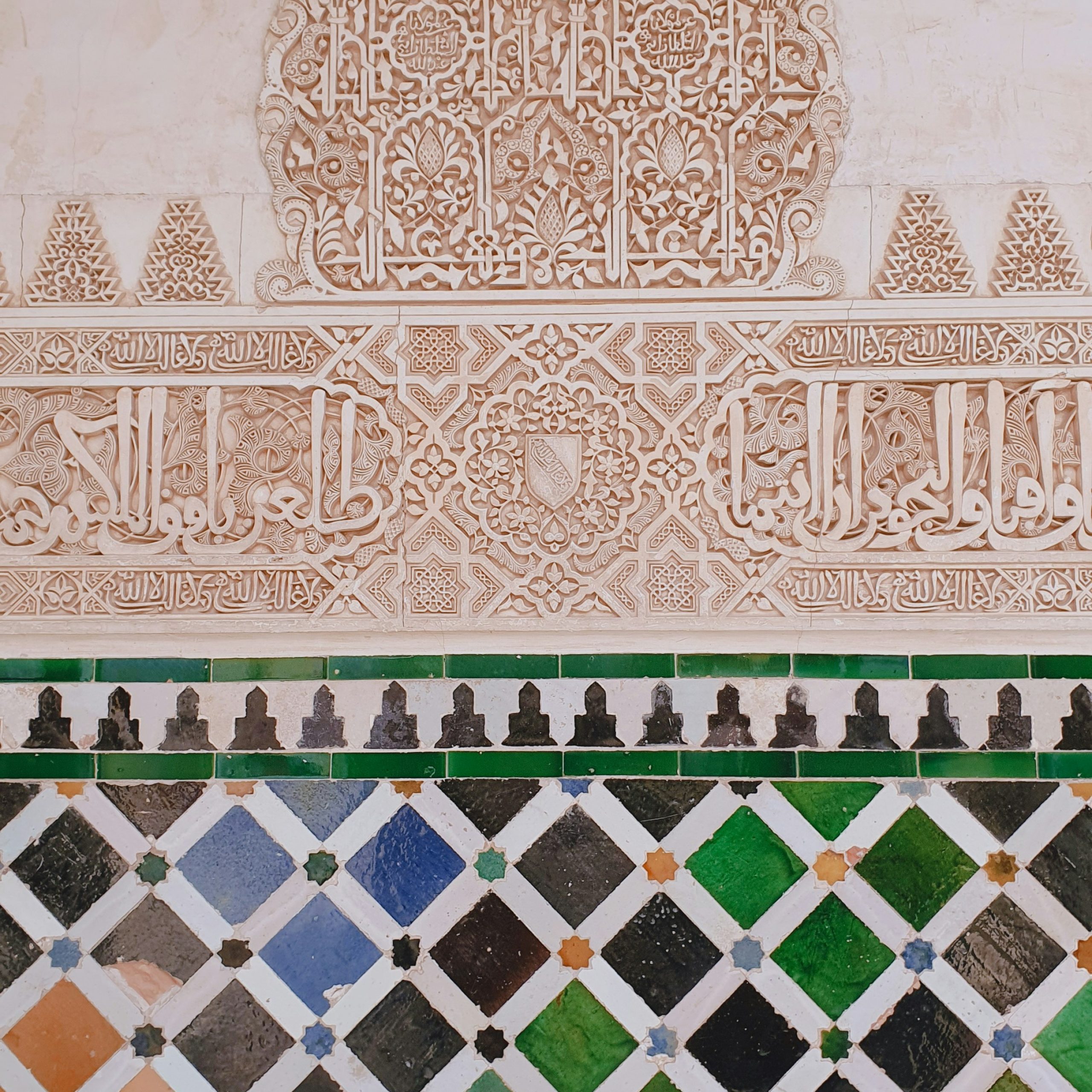
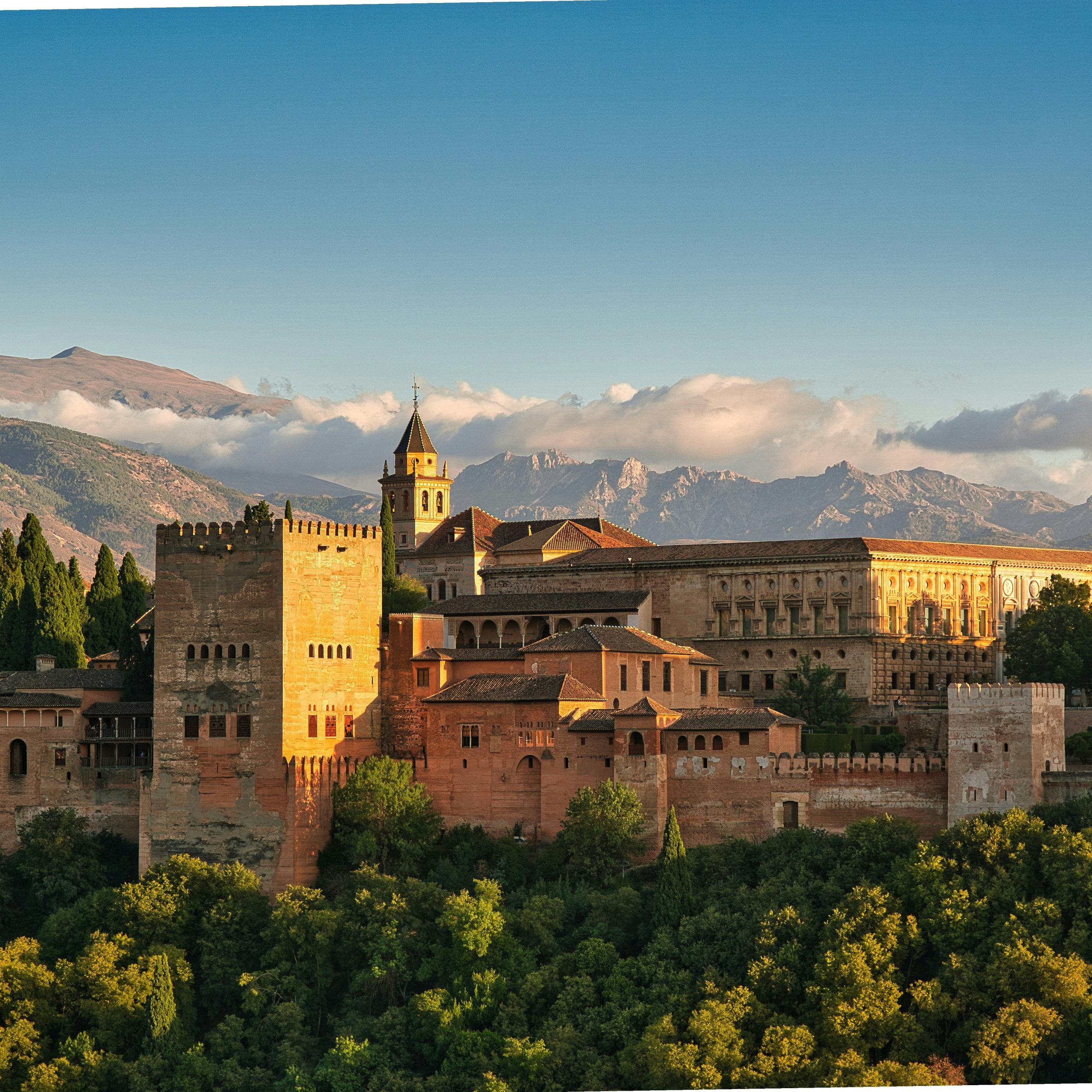
In Granada, when you walk through the Alhambra’s courtyards, the mathematical precision of every tile, every arch, every fountain reflects a civilization that believed beauty and function should never be separated. The Nasrid Dynasty, in their final centuries, didn’t build because they were confident about the future. They built despite knowing the future was uncertain. They created art while under siege.
In the Albaicín, the oldest neighborhood of Granada, narrow streets preserve the urban design of medieval Islamic cities. You can walk them and feel the texture of daily life from 600 years ago.
These aren’t ruins. They’re reminders. Reminders that Europe once had a different future. That coexistence was possible. That knowledge matters. That one city’s libraries could outshine an entire continent.
The Question We Should Be Asking
The question isn’t why Al-Andalus faded from memory. The question is: why did we ever forget?
For nearly 800 years, a civilization flourished in Spain. It made contributions to science, medicine, mathematics, philosophy, and the arts that shaped everything that came after. The Renaissance didn’t emerge from nothing—it emerged from knowledge preserved and transmitted by Islamic scholars, many of whom fled Al-Andalus when it fell.
The architects, physicians, philosophers, and poets of Al-Andalus shaped the world you live in. Their innovations in mathematics became the foundation of modern science. Their medical knowledge informed European practice for centuries. Their artistic principles influenced how we think about beauty and design.
Yet most people have never heard the name.
This isn’t accidental. For centuries, historical narratives in Europe emphasized conflict—the “Reconquista,” framed as Christian victory against Muslim invasion. That frame isn’t wrong exactly, but it’s incomplete. It emphasizes military conquest while minimizing cultural achievement. It highlights religious difference while downplaying centuries of collaboration.
When you truly understand Al-Andalus, you understand that history is more complex than the stories we tell about it.
Why This Matters in 2026
The story of Al-Andalus offers something our contemporary moment desperately needs: a historical example of religious and cultural pluralism that actually worked, at least for significant periods.
This isn’t to romanticize Al-Andalus. It had real problems. Violence occurred. Discrimination existed. But the mere fact that Muslims, Christians, and Jews maintained shared cities and worked across religious boundaries—that they developed legal frameworks allowing minority protections—that they produced collaborative intellectual work—this is historically significant.
It proves something our contemporary moment needs to understand: different peoples can live together, work together, and create together. The institutions and cultural values that allow this are fragile and require constant maintenance. They can be destroyed quickly through political choice. But they’re possible.
Al-Andalus is proof.
Experience the Truth Firsthand
Reading about Al-Andalus is fascinating. Walking through its streets is transformative.
When you stand in Córdoba’s Mezquita, you’re not just seeing 850 surviving columns—you’re understanding the mathematical precision of Islamic architecture. When you walk through the Alhambra, you’re not just viewing pretty tiles—you’re reading a palace as a text about power, aesthetics, and spiritual values. When you explore Granada’s Albaicín, you’re not just enjoying a charming neighborhood—you’re walking through preserved medieval Islamic urban planning.
At Explore Al-Andalus, we don’t just show you monuments. We help you understand the civilizations that built them. Our expert guides know these stories deeply. They can explain why the Cordoba Mosque was designed the way it was, what the geometric patterns in the Alhambra actually represent, and what daily life was like in these medieval cities.
More importantly, they can help you feel what it meant to live in a civilization where different faiths worked together. Where knowledge was valued above military power. Where beauty and function were understood as inseparable.
This isn’t a tour where you rush from monument to monument checking boxes. This is an experience where history becomes personal.
Plan Your Al-Andalus Journey
The first step is understanding why this civilization matters. Now that you know the scope—781 years of continuous rule, a capital city that outshone Baghdad, a model of religious coexistence that historians are still studying—you can approach your visit with deeper context.
The monuments will speak to you differently when you understand what they represent. The Mezquita isn’t just beautiful architecture—it’s a library carved in stone, representing an entire civilization’s values. The Alhambra isn’t just a palace—it’s a final masterpiece created while an empire knew its end was coming.
When you visit with Explore Al-Andalus, you’re not just seeing Spain. You’re connecting with a chapter of human history that shaped everything—from philosophy to medicine to art. You’re understanding why Europe became what it became.
And you’re experiencing, directly and viscerally, what it felt like to live in a civilization fundamentally different from the one that replaced it.
The question Al-Andalus poses isn’t just historical. It’s personal: What might we learn from a civilization that chose knowledge over warfare, coexistence over conquest, and beauty over domination?
0 Comment