
5 Days
Specific Tour
Unlimited
English, Espanol
In the year 929, while most of Europe still lived in darkness, Córdoba was the most advanced city in the Western world. Its streets were paved and lit at night. Its libraries held over 400,000 volumes. Its scholars translated the works of Aristotle, Ptolemy, and Galen into Arabic, preserving knowledge that would have otherwise been lost to humanity forever.
This is the land you are about to walk through.
The Andalusian Gems Express takes you on a five-day journey through the three cities that defined the greatest chapters of Al-Andalus: Seville, where the Almohad dynasty raised a minaret so beautiful that the Christians who conquered the city could not bring themselves to tear it down — today, we know it as La Giralda. Córdoba, where the Great Mosque stands as one of the most extraordinary buildings ever conceived, a forest of over 850 columns where the boundary between prayer and architecture dissolves entirely. And Granada, where the last Muslim dynasty built the Alhambra — not merely a palace, but a meditation on paradise made real through water, light, geometry, and calligraphy.
But this tour is not just about monuments. It is about stories. The story of Ibn Rushd (Averroes), who walked the same streets of Córdoba you will walk, and whose commentaries on Aristotle shaped European thought for centuries. The story of the Abbadid poets who turned Seville into a city of verse and music. The story of the Nasrid sultans who inscribed “There is no victor but God” across every wall of the Alhambra, a reminder of humility at the peak of human artistry.
Your journey ends in the Alpujarras, the mountain villages south of Granada where Moorish refugees sought shelter after the fall. Here, time seems to stand still. White-washed villages cling to the slopes of the Sierra Nevada, and the architecture, the irrigation systems, even the terraced farming — all of it still carries the fingerprint of Al-Andalus.
Throughout your five days, you will be guided by historians and scholars who don’t just describe what you see — they bring it back to life. You will hear the adhan that once echoed from the Giralda. You will understand the mathematics hidden within the geometric patterns of the Alhambra. You will taste the flavours that Al-Andalus gave to Spain and, through Spain, to the world.
This is not a standard sightseeing tour. This is a journey through one of the most remarkable civilisations in human history — compressed into five days that will stay with you for a lifetime.
"From the Mediterranean shore to the city that once sang in Arabic"
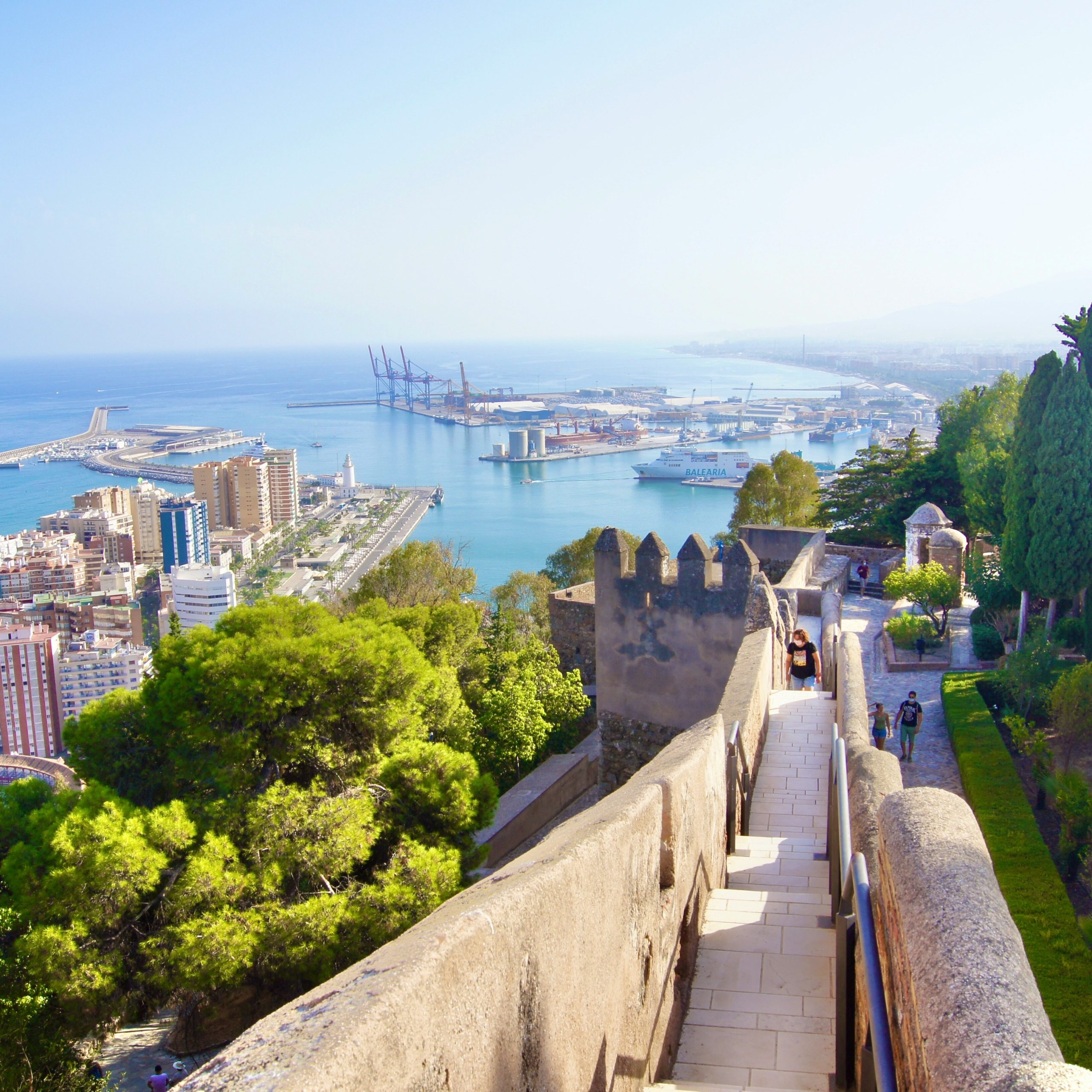
Your journey begins in Málaga, the sun-drenched port city where the Phoenicians once traded and where today one of Spain's most beautiful Alcazabas overlooks the sea. After your arrival at Málaga-Costa del Sol Airport (AGP), you will be met by our team and begin the scenic two-and-a-half-hour drive westward toward Seville.
As the landscape shifts from coastal hills to the olive groves of the Guadalquivir valley, your guide will set the stage — introducing you to the world of Al-Andalus, the civilisation that flourished here for nearly 800 years and whose legacy surrounds you at every turn.
Arrive in Seville in the late afternoon. Check in to your hotel, settle in, and enjoy a welcome dinner where you will meet your fellow travellers and get a taste — literally — of the culinary heritage that Al-Andalus left behind.
Did you know? The word "Seville" itself derives from the Arabic Ishbiliya, which in turn came from the Roman Hispalis. Every layer of this city's name tells the story of the civilisations that shaped it.
Overnight in Seville
"Walk where caliphs prayed and poets recited verses under orange trees"
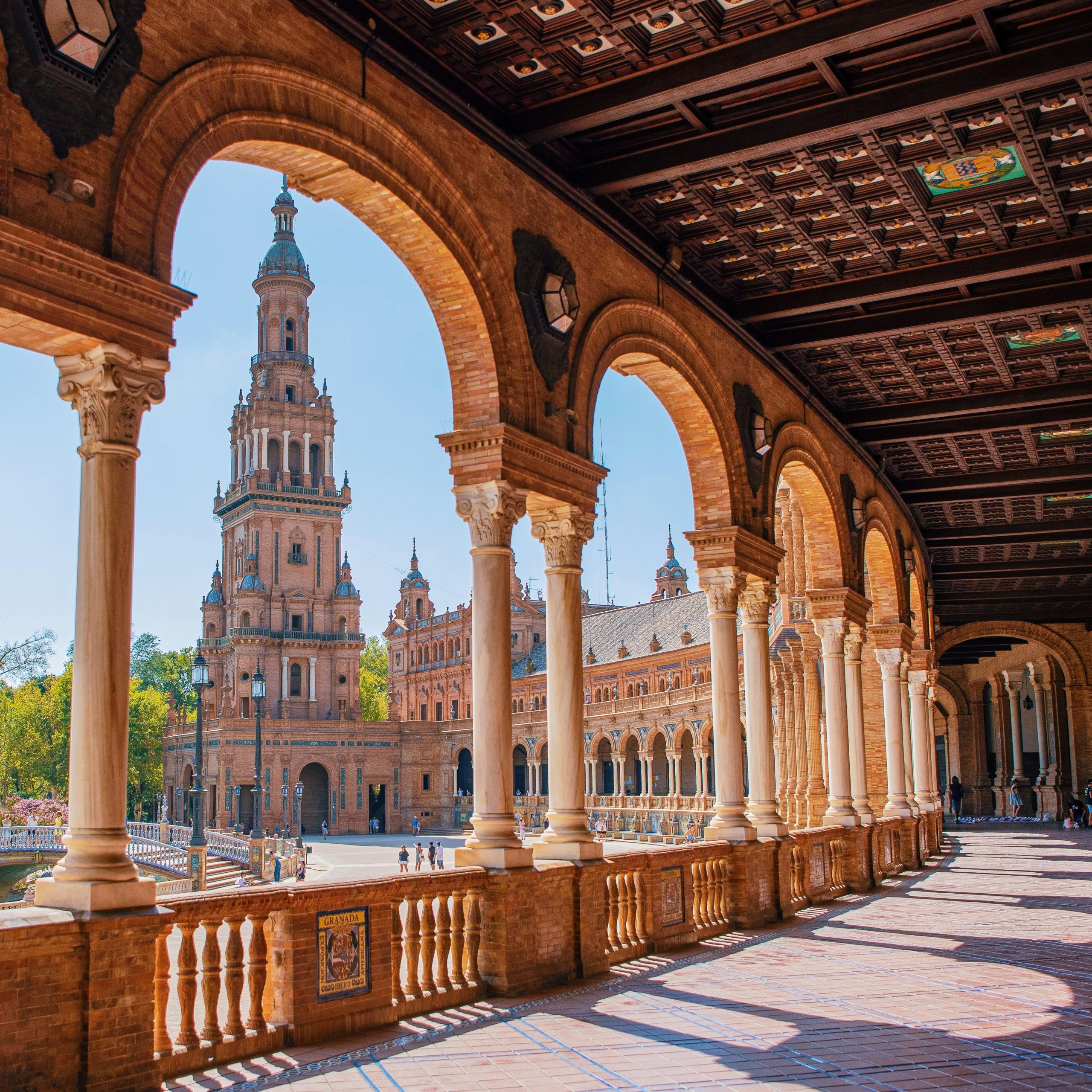
Seville was the crown jewel of the Almohad dynasty in the 12th century — a city of mosques, palaces, gardens, and a thriving intellectual life. Today, its Islamic heritage hides in plain sight, waiting for someone who knows where to look.
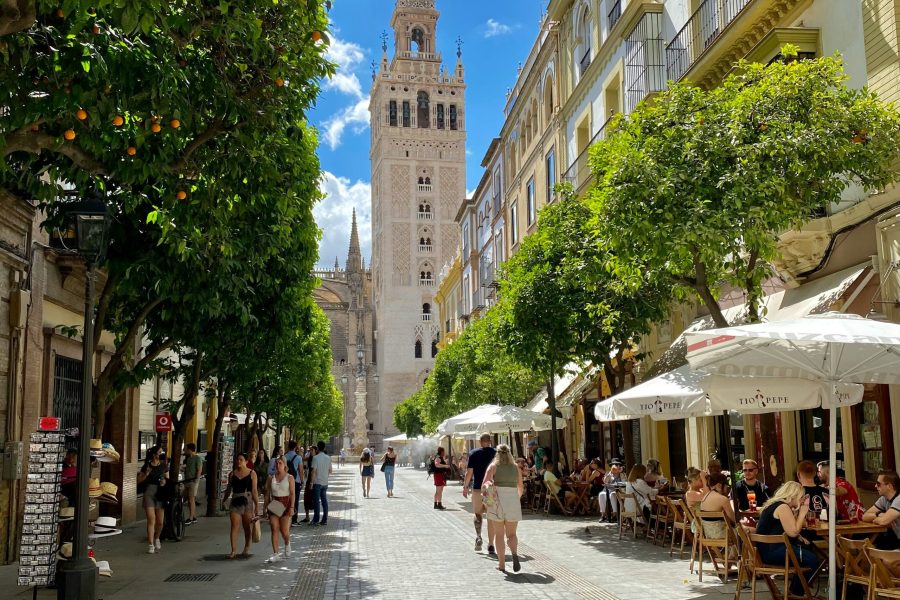
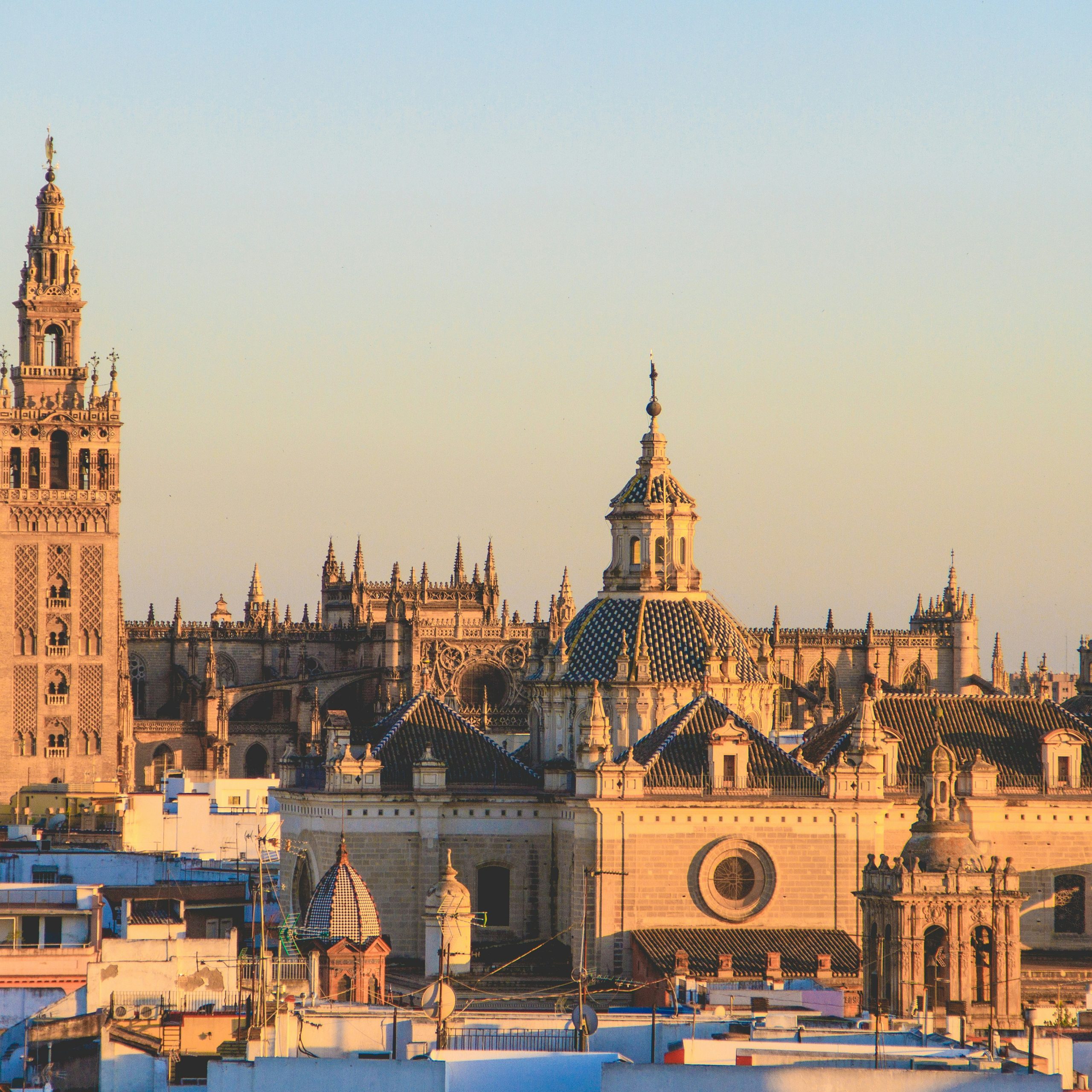
Morning: Begin at La Giralda and the Cathedral — but not as a typical tourist. Your guide will show you how the cathedral's courtyard, the Patio de los Naranjos, was once the ablution courtyard of the Great Almohad Mosque. You will stand beneath the Giralda and learn how this 12th-century minaret was so perfectly proportioned that the Castilian conquerors preserved it, adding only a Renaissance bell tower on top. The ramp inside — designed so that the muezzin could ride a horse to the top — is still there.
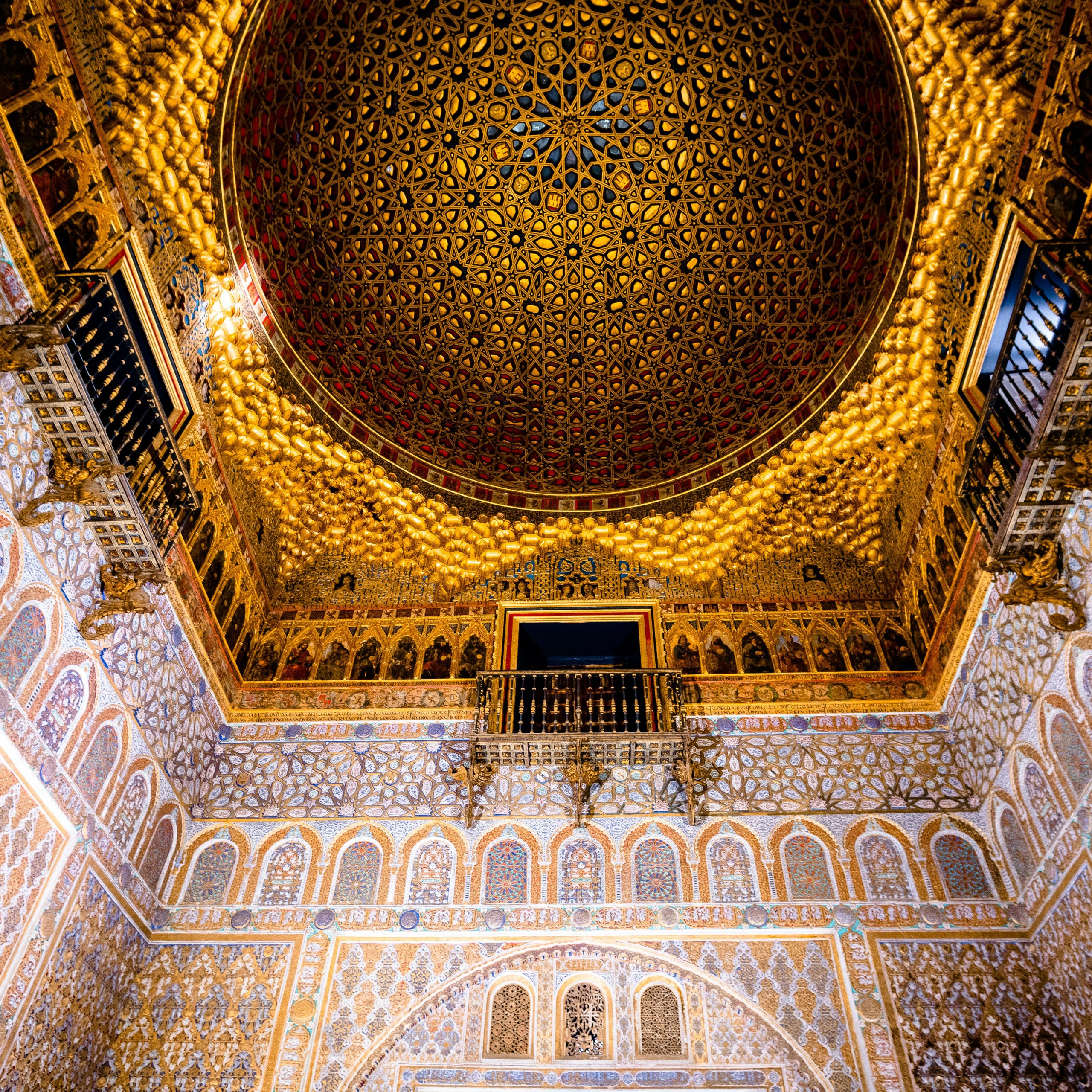
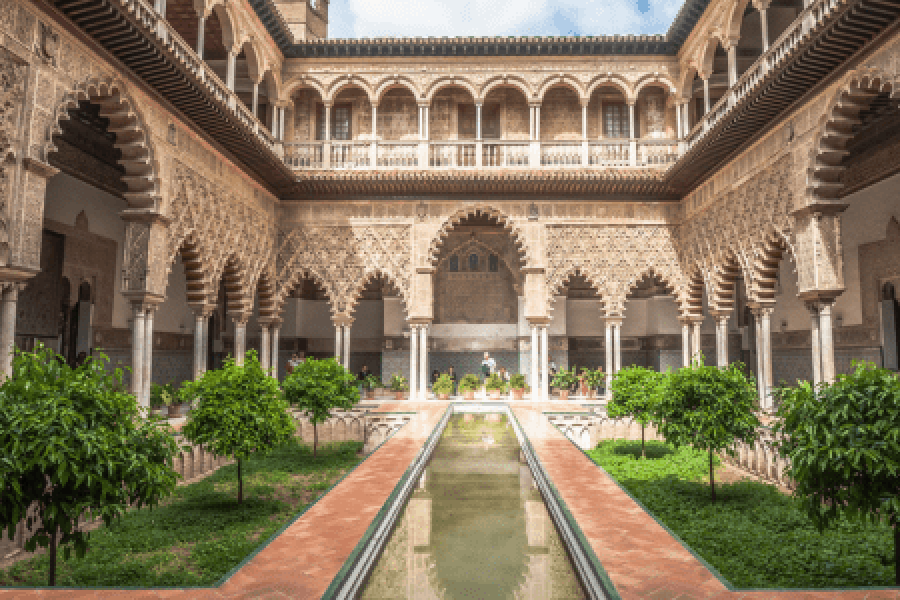
Continue to the Real Alcázar, one of the most stunning examples of Mudéjar architecture in the world. Built by Christian kings who so admired Islamic art that they hired Muslim craftsmen to create their palace, the Alcázar is living proof that beauty transcends borders.
Afternoon: Visit the Torre del Oro, the golden watchtower on the banks of the Guadalquivir, built by the Almohads to protect the city's river port. Then explore La Buhaira, the remains of an Almohad royal garden that once rivalled anything in the Islamic East.
Walk through Barrio Santa Cruz, the old Jewish quarter, where narrow lanes and hidden courtyards echo a time when Muslims, Jews, and Christians lived side by side. End with a visit to the Iglesia del Salvador, built directly on the foundations of the old Abbadid Mosque — one of the most fascinating architectural palimpsests in Spain.
Did you know? The orange trees that line the streets of Seville today? They were first planted by the Almohads. The bitter Seville orange — used in British marmalade — is a direct legacy of Al-Andalus.
Overnight in Seville
"Enter the forest of columns that changed the history of architecture"
An early morning drive takes you northeast to Córdoba, the city that was once the capital of the Western world. In the 10th century, Córdoba had a population of over 500,000 — larger than Paris, London, and Rome combined. It had 70 libraries, hundreds of mosques, public baths, and paved, illuminated streets.
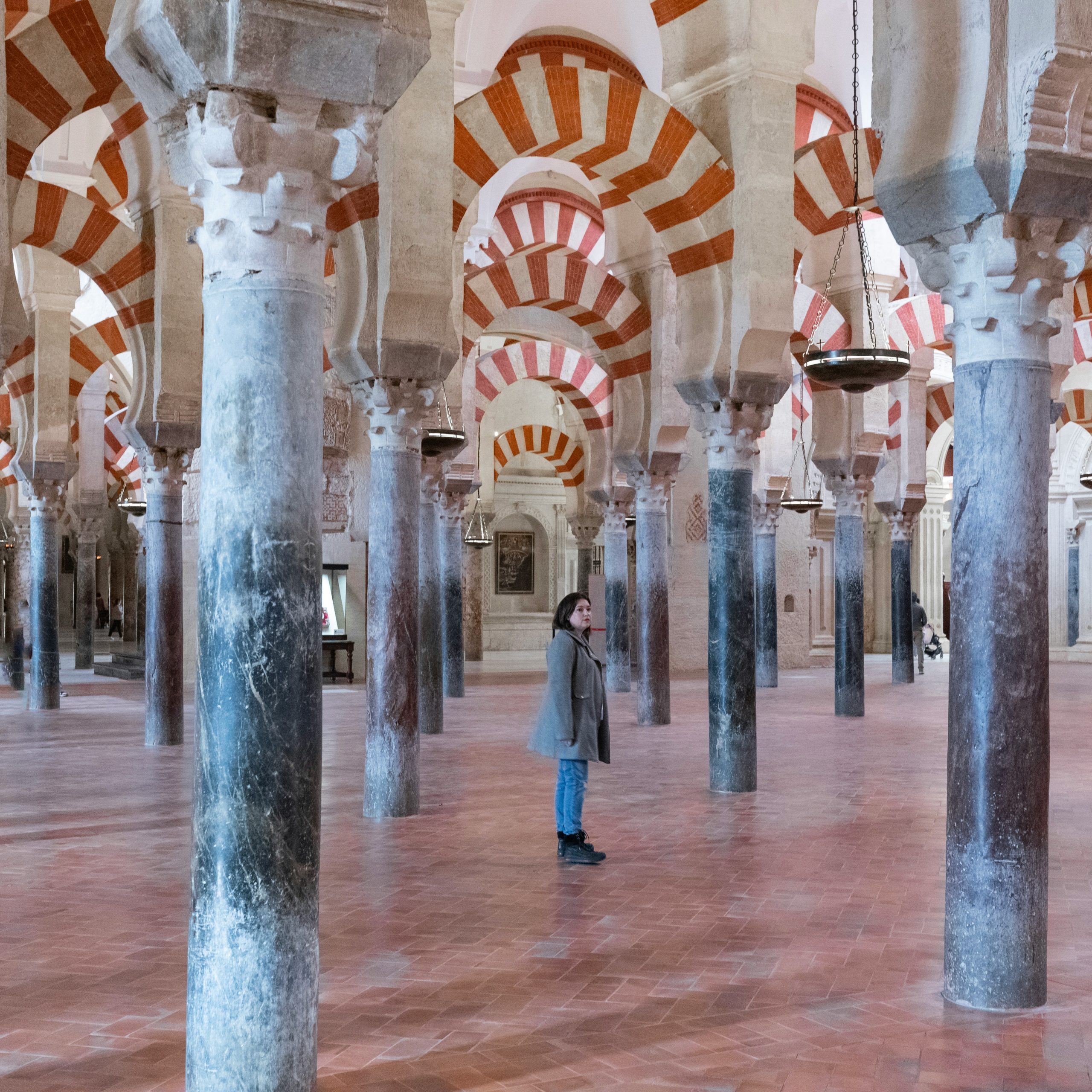
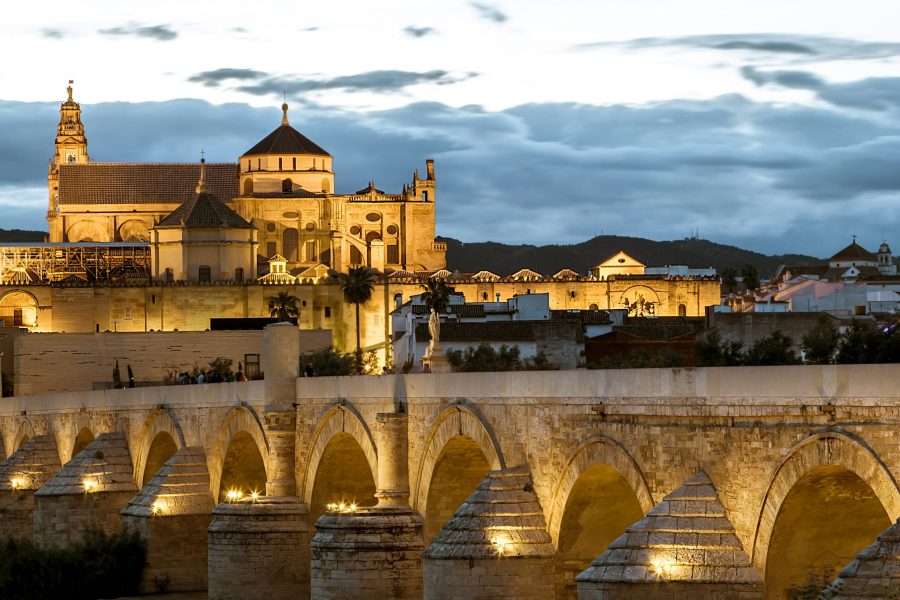
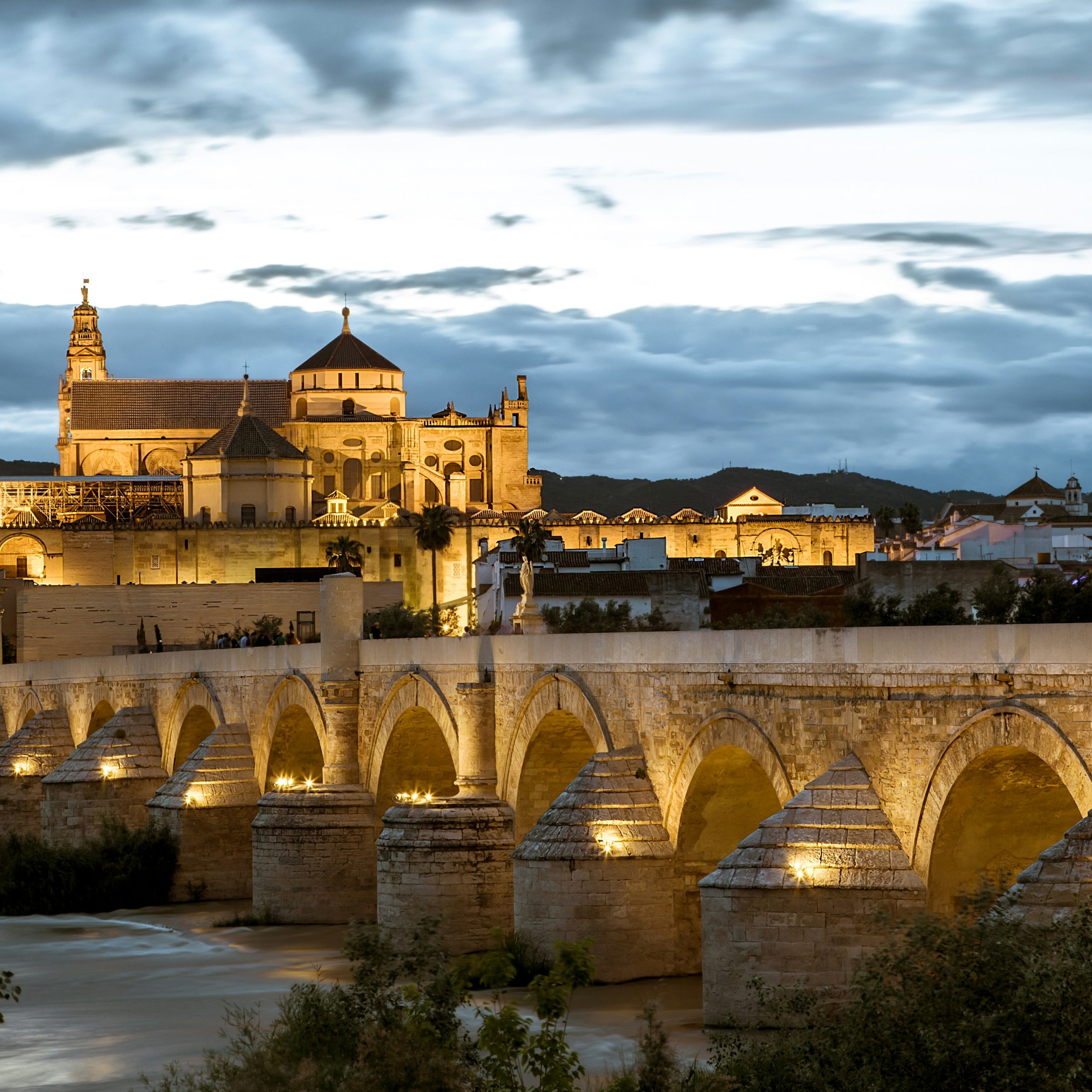
Morning: The day centres on the Mezquita-Catedral, the Great Mosque of Córdoba — one of the most important buildings in the history of architecture. Step inside and you will understand why. Over 850 columns of jasper, onyx, marble, and granite stretch in every direction, supporting a ceiling of red and white double arches that seem to multiply infinitely, like a mathematical equation made physical. Your guide will explain how Abd al-Rahman I, an Umayyad prince who escaped the massacre of his family in Damascus, built this mosque as an act of memory — recreating the Great Mosque of Damascus in a new land.
Cross the Puente Romano (Roman Bridge), one of the oldest bridges still standing in Europe, and visit the Torre de la Calahorra, now a museum dedicated to the three cultures that once coexisted in this city.
Afternoon: Wander through the Jewish Quarter, where the philosopher Maimonides — born in Córdoba under Muslim rule — developed ideas that influenced both Jewish and Christian thought for centuries. Visit the Synagogue, one of only three medieval synagogues surviving in Spain, a quiet testament to the diversity that once defined this city.
Your guide will also share the story of the great library of Al-Hakam II, which held an estimated 400,000 manuscripts — the largest library in Europe at the time — and employed women as scribes and translators.
Did you know? The system of street lighting in 10th-century Córdoba was not replicated in London until 700 years later.
Overnight in Córdoba or transfer to Granada
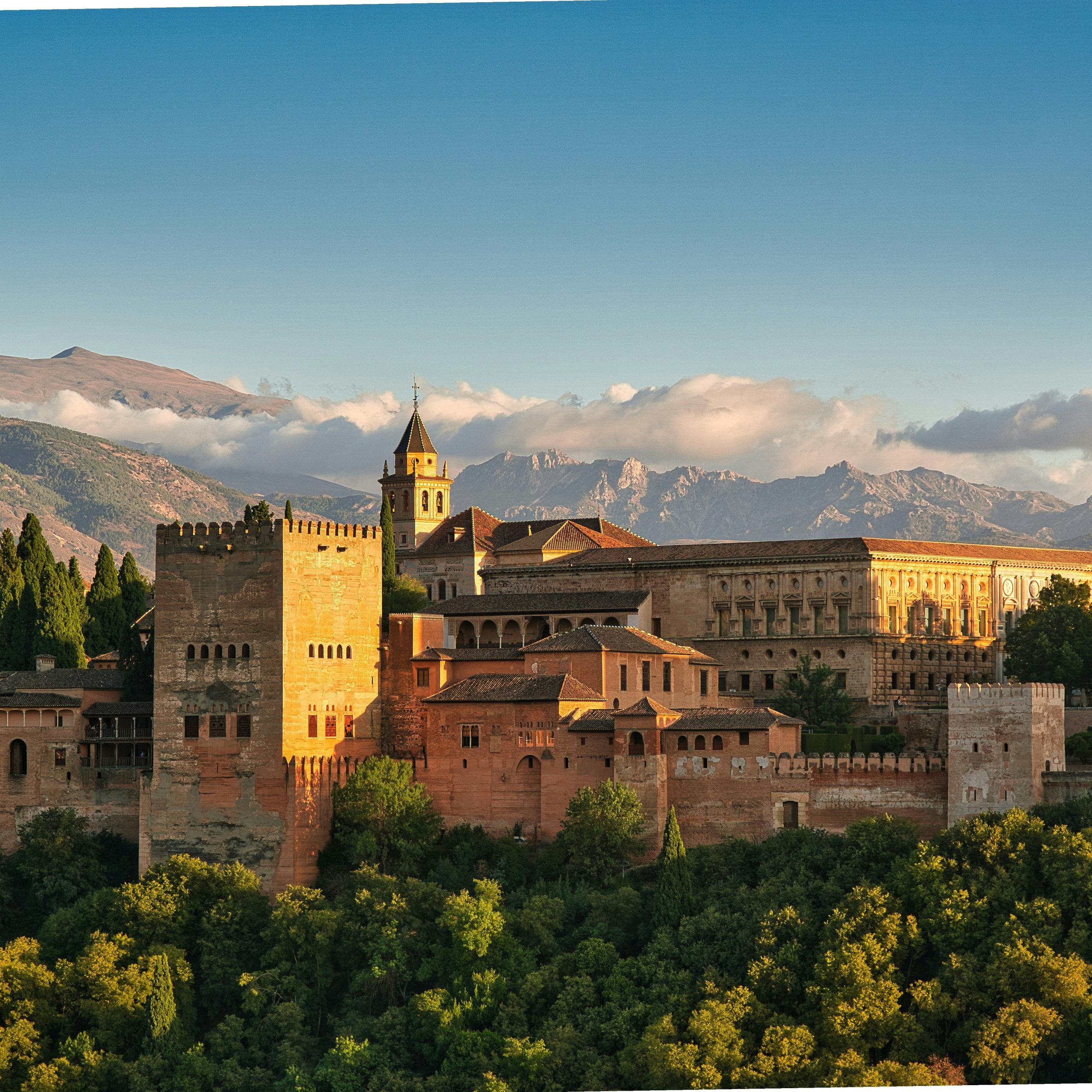
"Stand inside the poem that the Nasrids wrote in stone, water, and light"
Today you enter Granada, the city where Al-Andalus made its last and perhaps most beautiful stand.
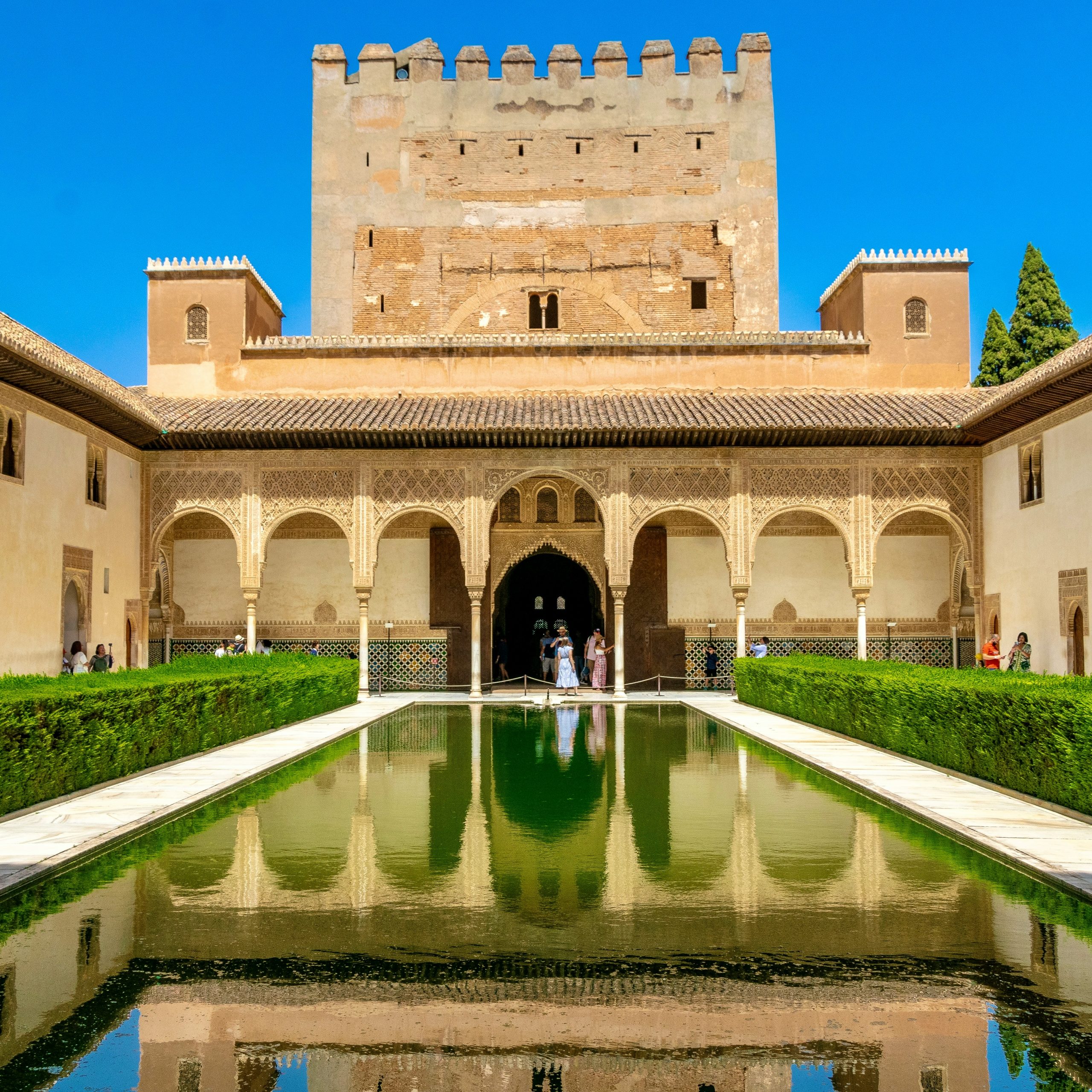
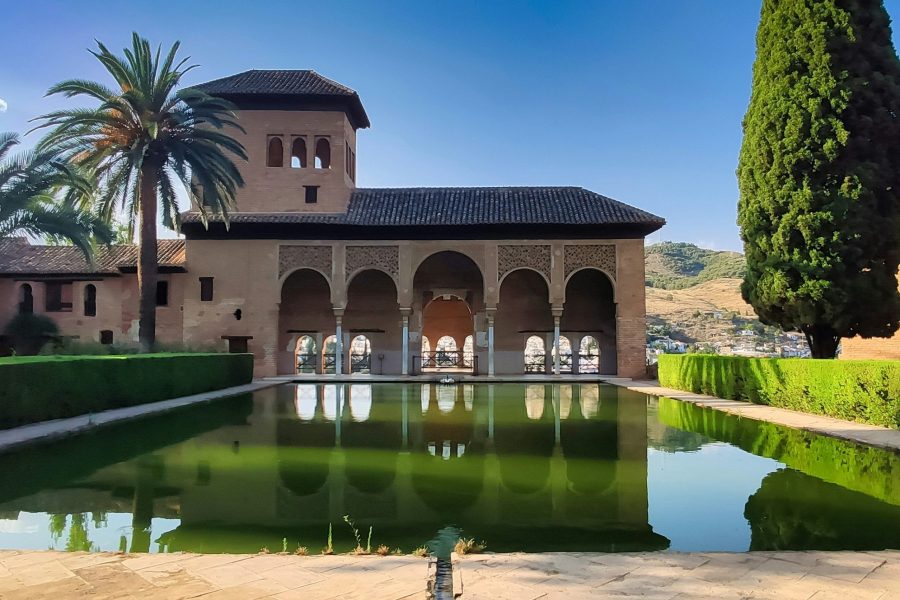
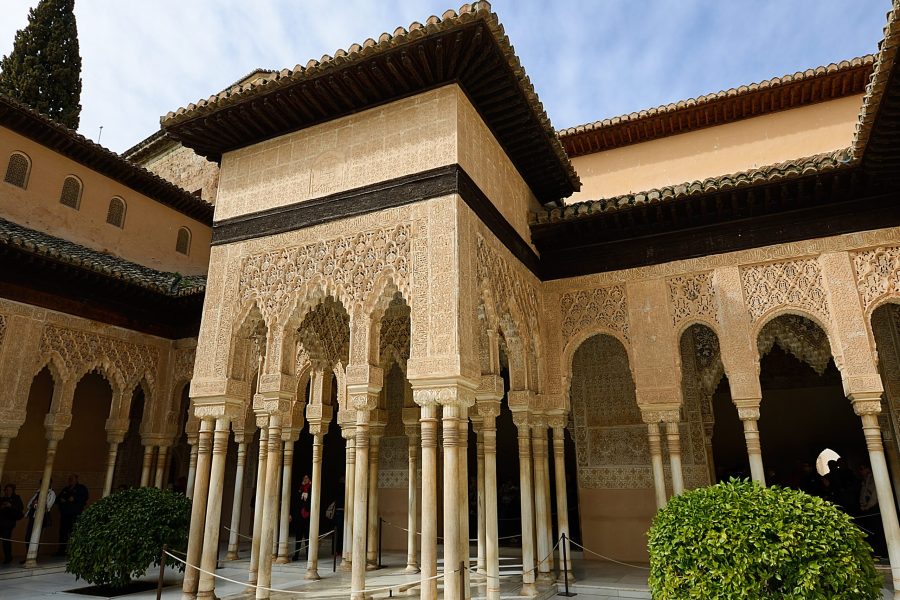
Morning: The entire morning is dedicated to the Alhambra and the Generalife — and no amount of photographs can prepare you for what you are about to experience. Your guide will walk you through the Nasrid Palaces, explaining how every surface — every carved stucco panel, every tile mosaic, every muqarnas vault — is not decoration, but language. The walls of the Alhambra are covered in Arabic poetry and Qur'anic verses, transforming the palace into a three-dimensional text that speaks of paradise, divine beauty, and the impermanence of earthly power.
The Generalife gardens, the sultans' summer retreat, demonstrate how Islamic landscape design used water not merely for irrigation, but as architecture itself — channels, fountains, and reflecting pools that turn the sky into a floor.
Afternoon: Descend into the Albaicín, Granada's old Moorish quarter and a UNESCO World Heritage Site. Walk through narrow streets that have barely changed in 500 years. Visit the Mezquita Mayor de Granada, where the call to prayer has returned to the Albaicín after five centuries of silence.
Explore the Alcaicería, the old silk market, and the Madrasa of Yusuf I, the Islamic university founded in 1349 — a reminder that Granada was not just a city of beauty, but of learning.
End the day at a mirador (viewpoint) overlooking the Alhambra at sunset — one of the most unforgettable sights in Europe.
Did you know? The famous inscription repeated throughout the Alhambra — "Wa la ghalib illa Allah" (There is no victor but God) — was the motto of the Nasrid dynasty, a constant reminder of humility inscribed at the very height of artistic achievement.
Overnight in Granada
"The mountain villages where Al-Andalus refused to disappear"
Your final day takes you south of Granada, into the Alpujarras — a region of stunning natural beauty and deep historical significance.
Morning: Drive into the foothills of the Sierra Nevada, passing through white-washed villages that cling to the mountainsides like clusters of sugar cubes. These villages — Pampaneira, Bubión, Capileira — were the last refuge of the Moriscos, the Muslim population that remained in Spain after the fall of Granada in 1492.
Walk through the narrow streets and notice the architecture: flat roofs (terraos), chimneys shaped like those in North Africa, and irrigation channels (acequias) that still follow the systems designed by Muslim engineers centuries ago. The Alpujarras are living proof that Al-Andalus did not simply vanish — it retreated to the mountains and embedded itself into the landscape.
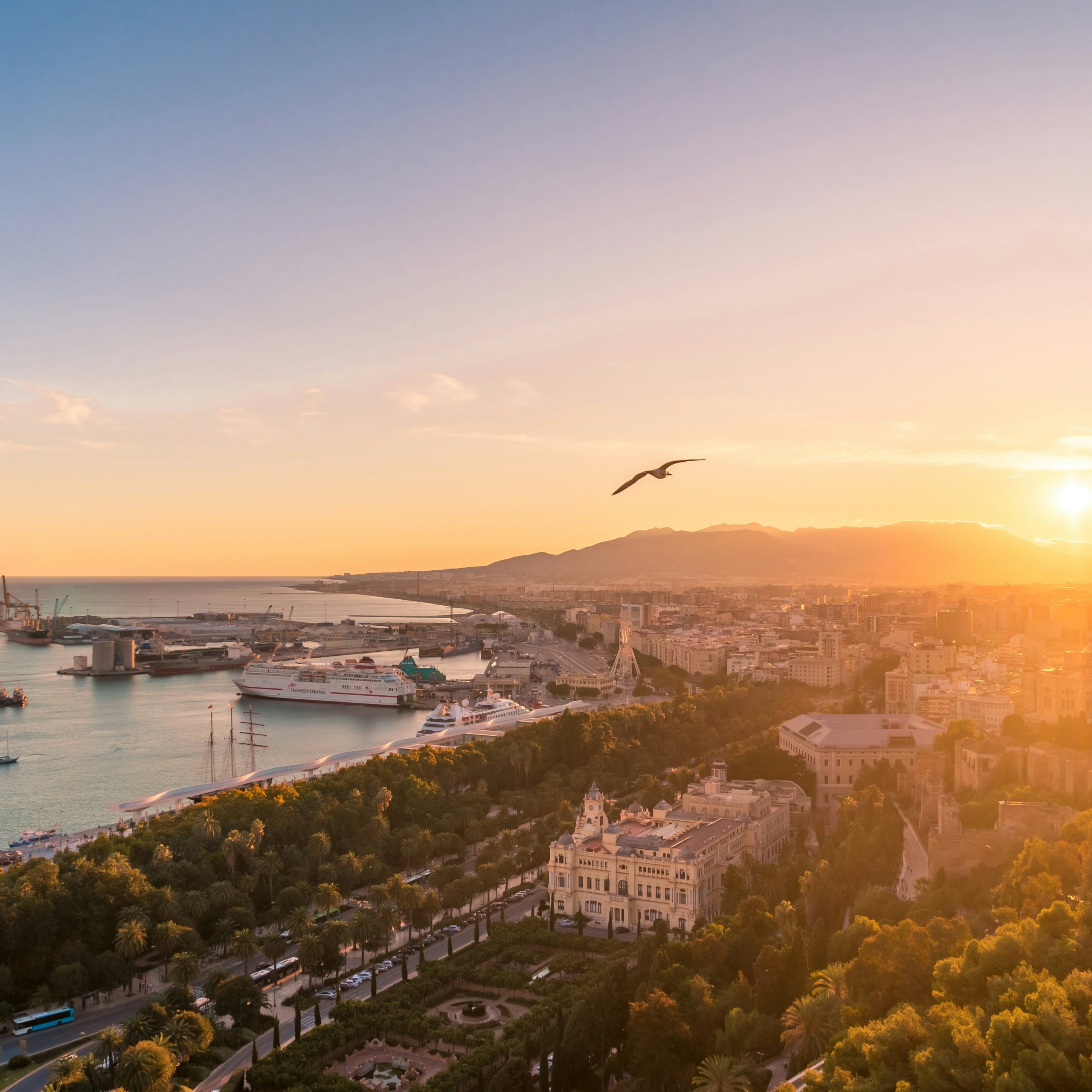
Afternoon: After a traditional lunch in one of the villages, begin the scenic drive south to Málaga (approximately 2 hours). Depending on your flight schedule, there may be time for a brief stop in the city — a walk along the port, a glimpse of the Alcazaba from below, or simply a moment to reflect on the journey you have just completed.
Transfer to Málaga-Costa del Sol Airport (AGP) for your departure.
Did you know? The acequia irrigation system still used in the Alpujarras today follows the original design laid out by Muslim engineers over 1,000 years ago. UNESCO has recognised it as one of the most important examples of historical water management in Europe.
Absolutely. While we highlight the Islamic heritage of Al-Andalus, our tours are designed to be enriching for everyone — historians, culture lovers, architecture enthusiasts, and anyone curious about one of the most remarkable civilisations in history. Many of our guests are non-Muslim travellers who are fascinated by this often-overlooked chapter of European history.
Both options are available. You can join one of our scheduled group departures, or we can arrange a private tour for individuals, couples, or families.
Yes. We ensure halal dining options at every stop. Seville, Córdoba, and Granada all have halal restaurants, and our team makes arrangements in advance so you never have to worry.
We can arrange alternative transfers from Madrid (MAD), Seville (SVQ), or other airports. Contact us and we will adjust the logistics to suit your travel plans.

Member Since 2026