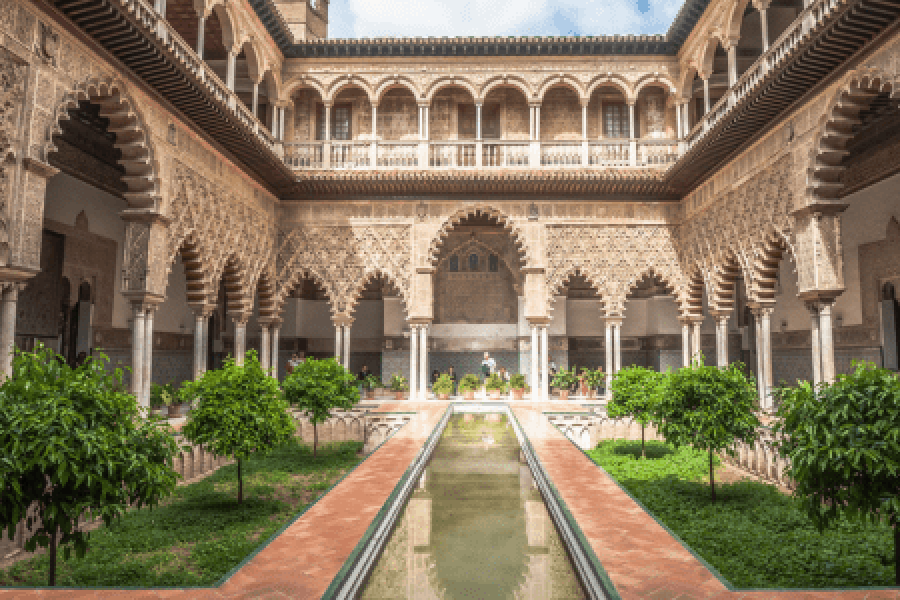

2-3 Days Relax
Daily Tour
Unlimited
English, Espanol
On the second of January, 1492, the last Muslim ruler of the Iberian Peninsula handed over the keys of Granada. Nearly eight centuries of Islamic civilisation on European soil came to an end. But before that door closed, the Nasrid dynasty had created something that the world has never been able to forget.
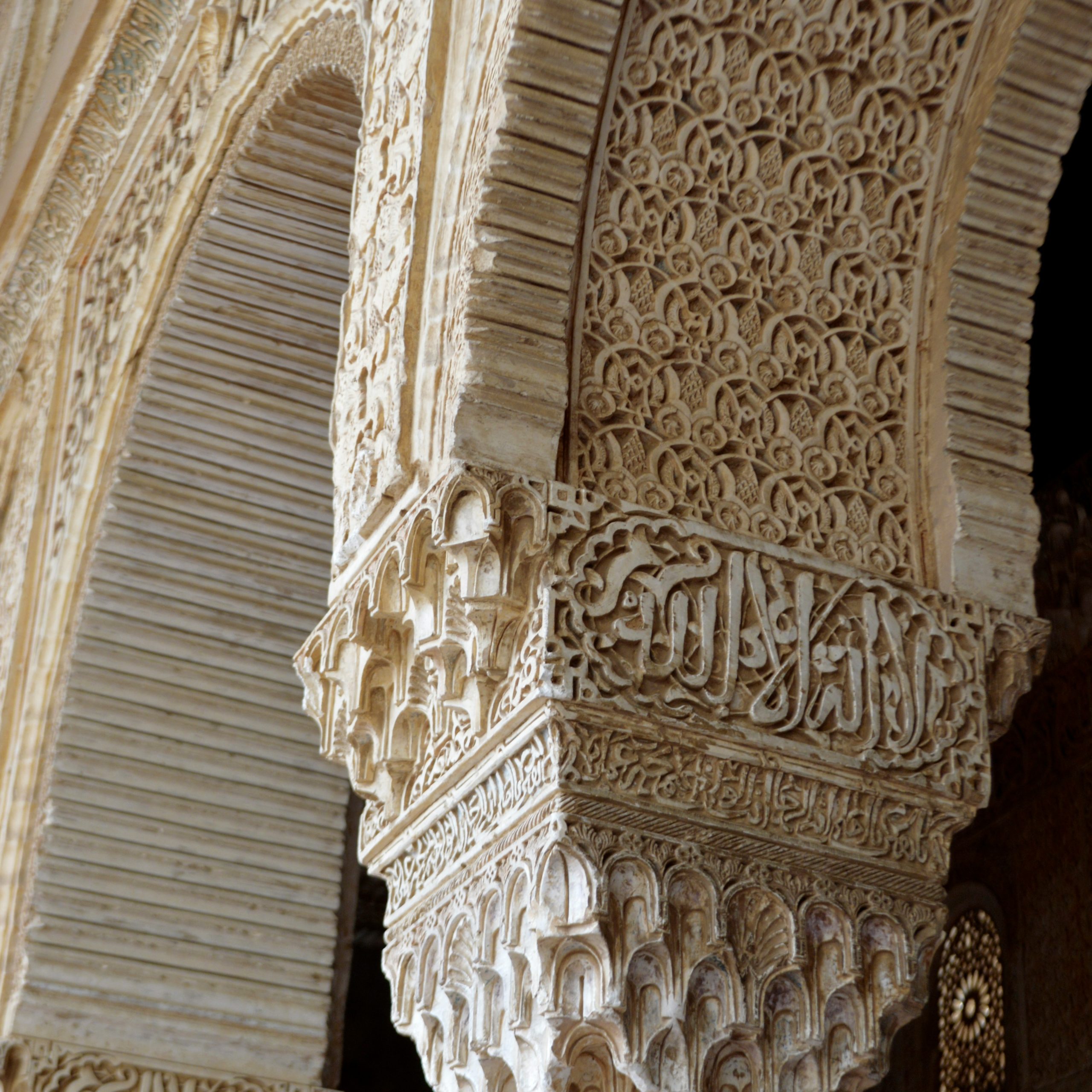
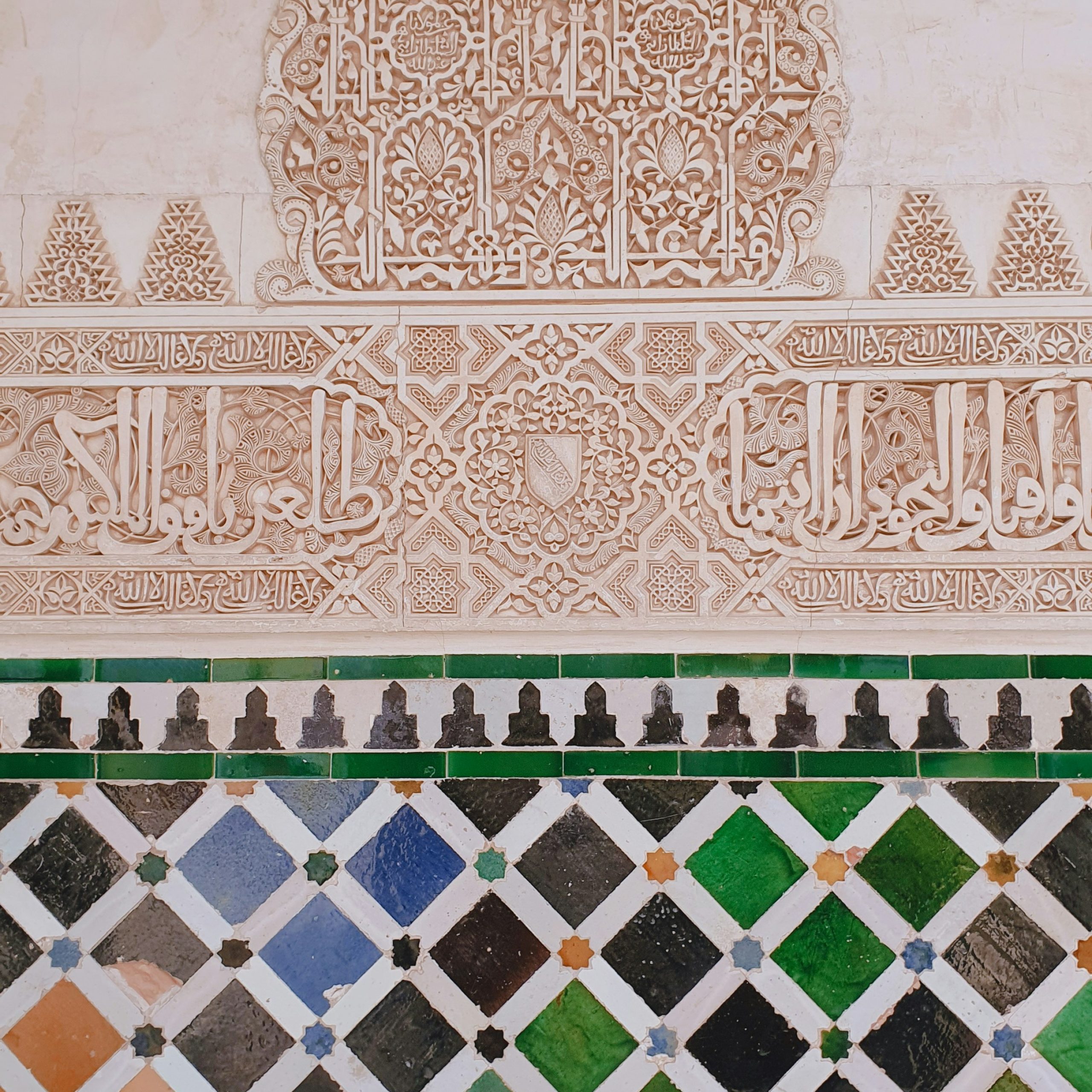
The Alhambra is not a palace. It is a poem — written in stucco, water, light, and geometry. Every wall is covered in Arabic calligraphy: verses from the Qur’an, lines of poetry, and the dynasty’s own motto — Wa la ghalib illa Allah, “There is no victor but God” — repeated thousands of times, a whisper of humility carved into the very height of artistic achievement. Nothing you have read or seen in photographs prepares you for standing inside it.
The Nasrid Granada tour gives you two or three unhurried days to experience the last kingdom of Al-Andalus. You will spend an entire morning inside the Alhambra and the Generalife, guided by a historian who will decode the mathematics hidden in the muqarnas, the poetry inscribed on the walls, and the hydraulic engineering disguised as art. You will descend into the Albaicín, the old Moorish quarter where narrow streets have barely changed in five centuries and where the call to prayer has returned after 500 years of silence. You will explore the Alcaicería — the old silk market — and the Madrasa of Yusuf I, the Islamic university founded in 1349.
On the three-day option, your journey takes you south into the Alpujarras — the Sierra Nevada mountain villages where Moorish refugees sought shelter after the fall. Here, the flat-roofed houses, the North African chimneys, and the acequia irrigation channels still follow designs laid down by Muslim engineers over a thousand years ago. The Alpujarras are living proof that Al-Andalus did not vanish — it retreated to the mountains and wove itself into the landscape.
Granada is a city that lives between beauty and melancholy. The Alhambra catches the last light of the day and turns it into gold. The Albaicín holds the memory of a world that was lost. And in the Alpujarras, that world still breathes, quietly, in the rhythm of water flowing through ancient channels.
This is the tour for anyone who has ever looked at a photograph of the Alhambra and felt something they could not quite name. Come. Stand inside it. Let the walls speak to you.
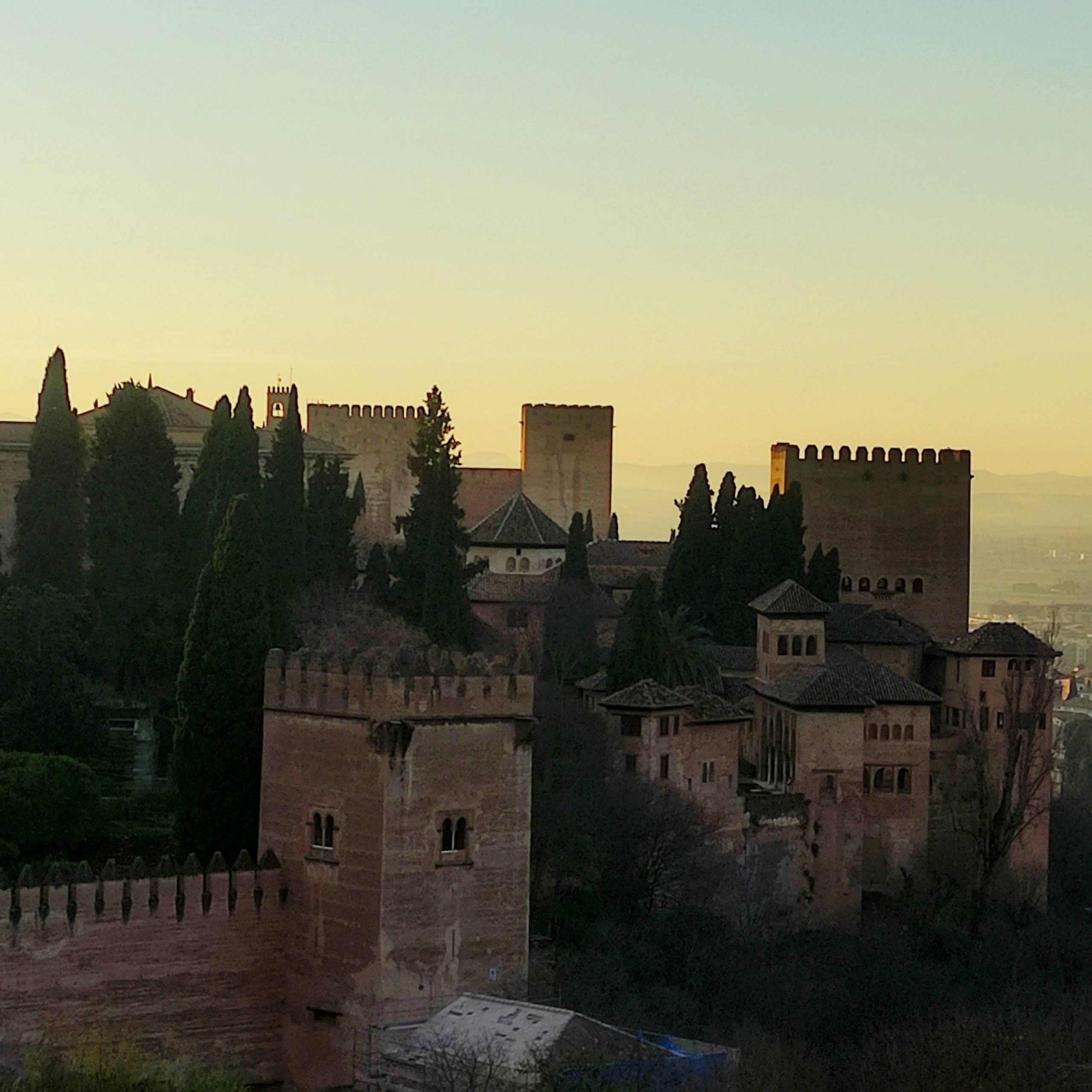
"Stand inside the poem that the Nasrids wrote in stone, water, and light"
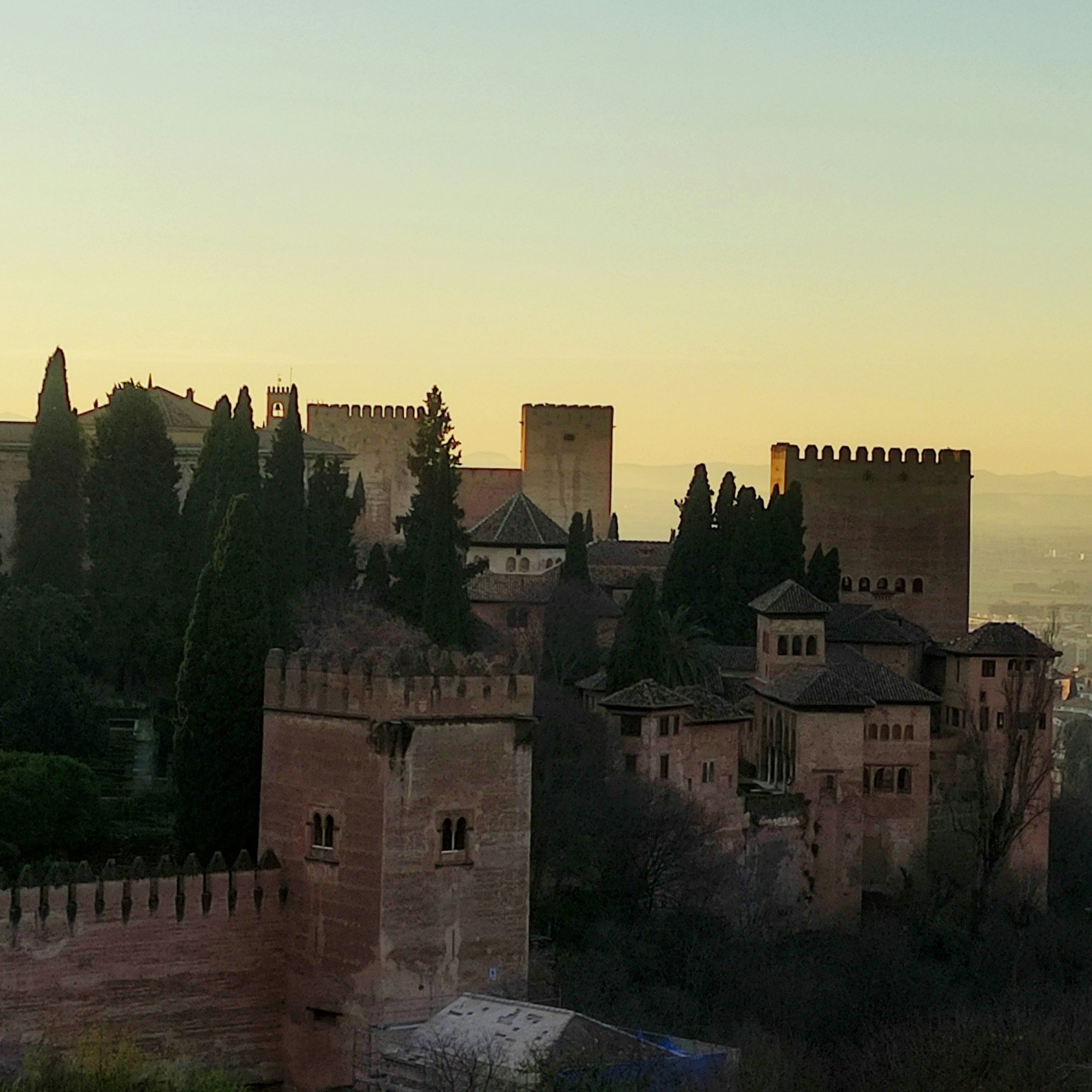
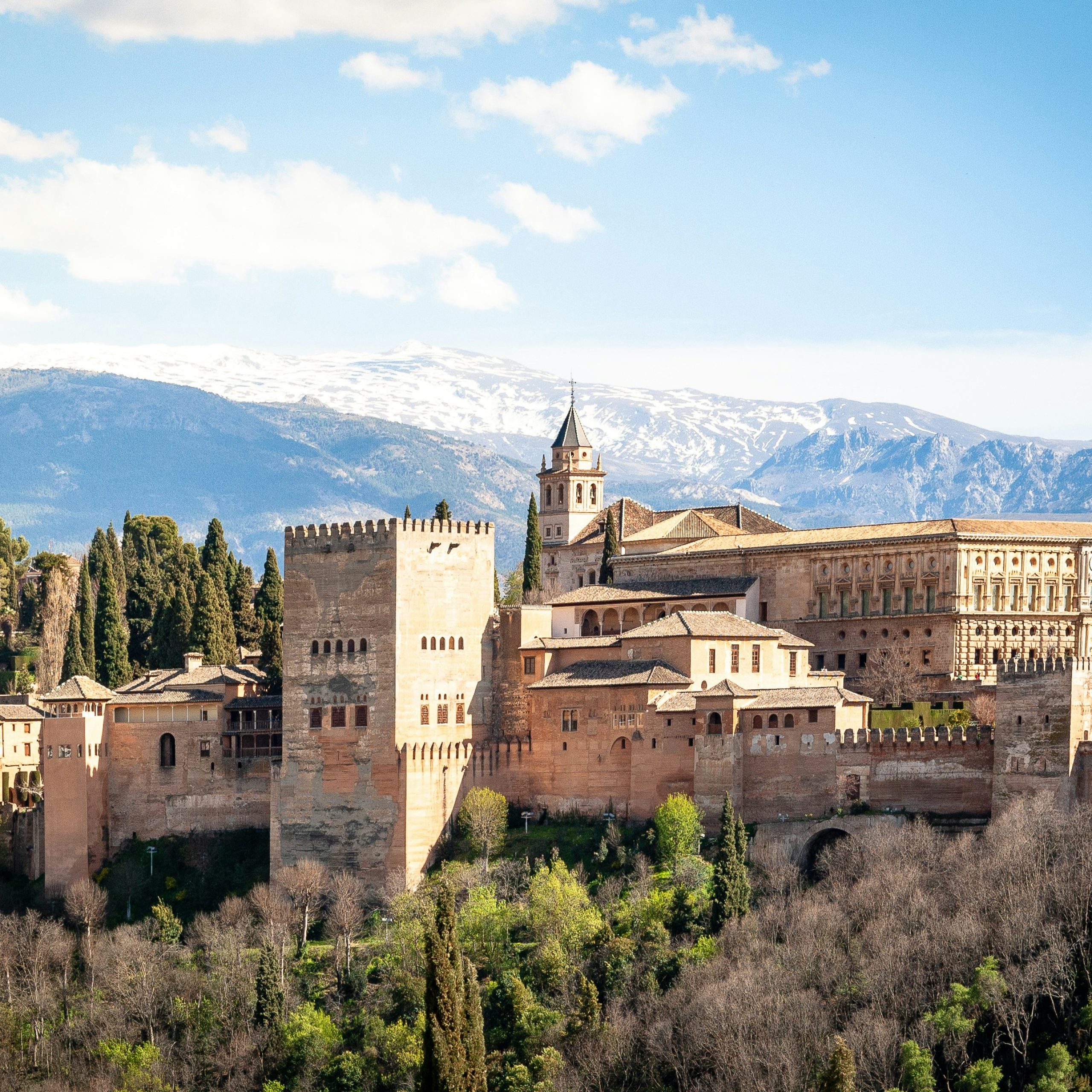
Morning: Your guide meets you early — because the Alhambra in the morning light is an experience that cannot be replicated at any other hour. You enter through the original gate and begin in the Alcazaba, the oldest part of the complex, the military fortress from which the Nasrid sultans surveyed their kingdom. From the Torre de la Vela, the views stretch across the city, the Albaicín, and the snow-capped peaks of the Sierra Nevada.
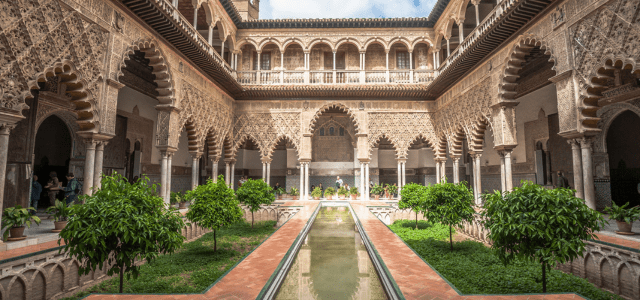
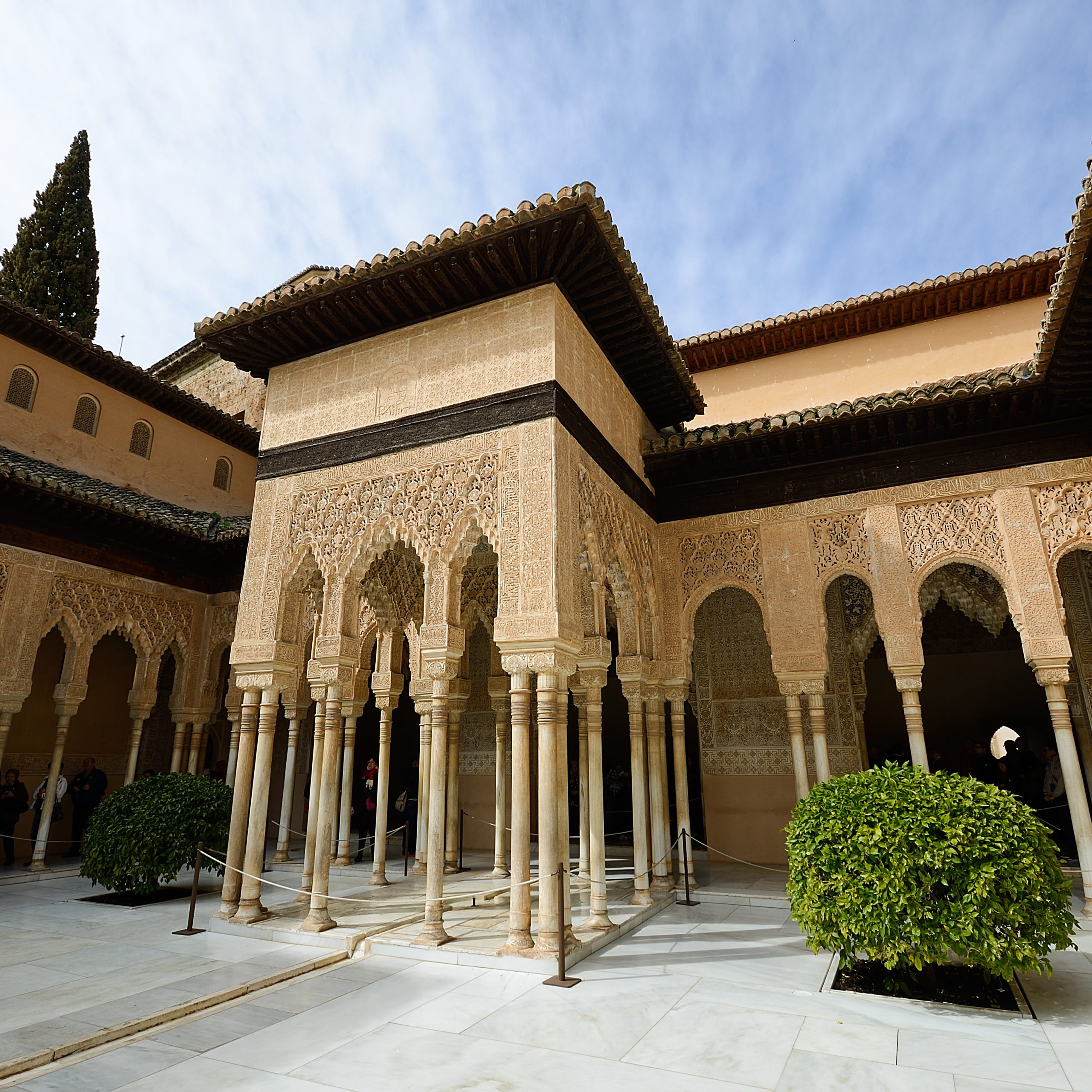
Then the Nasrid Palaces — and nothing prepares you for this. Every surface in these rooms is covered in decoration, but "decoration" is entirely the wrong word. What you see is language. Arabic calligraphy flows across every wall: verses from the Qur'an, lines of poetry, praises of the sultans, and the Nasrid motto — Wa la ghalib illa Allah — repeated so many times that it becomes a kind of architectural breath, a constant exhalation of humility at the peak of human artistry.
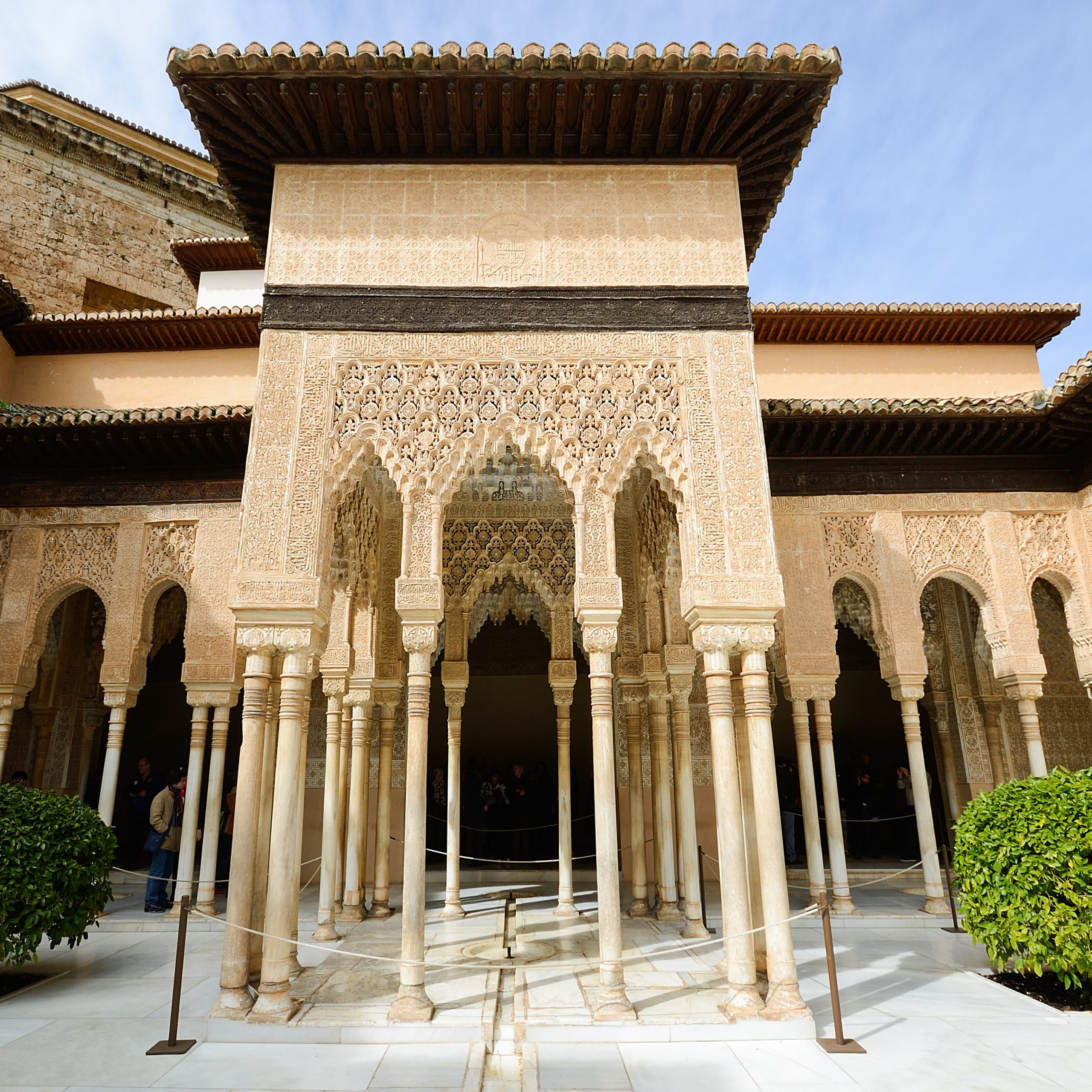
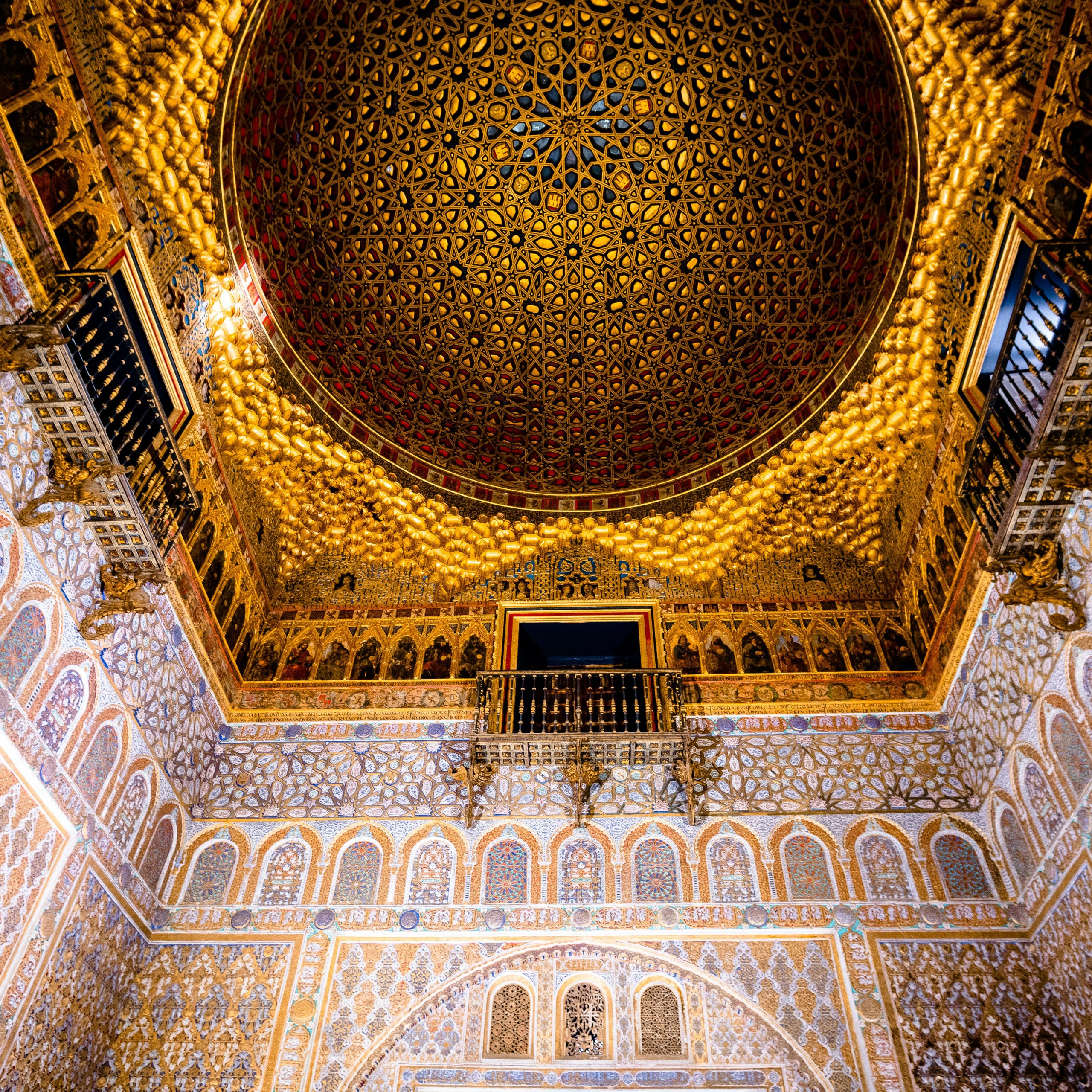
Your guide will walk you through the Mexuar (the council hall), the Comares Palace (the throne room, where the ceiling's 8,017 pieces of inlaid cedarwood represent the seven heavens of Islamic cosmology rotating around a central star), and the Palace of the Lions — the private quarters, centred on the famous courtyard where twelve marble lions support a fountain that functioned as a sophisticated hydraulic clock, marking the hours through the flow of water.
In the muqarnas — the honeycomb-like vaulted ceilings — your guide will reveal the mathematics. These are not random shapes. They are based on geometric principles that Islamic mathematicians had been developing for centuries: tessellations, star patterns, and fractal-like recursion that anticipate mathematical concepts the Western world would not formalise until the 20th century.
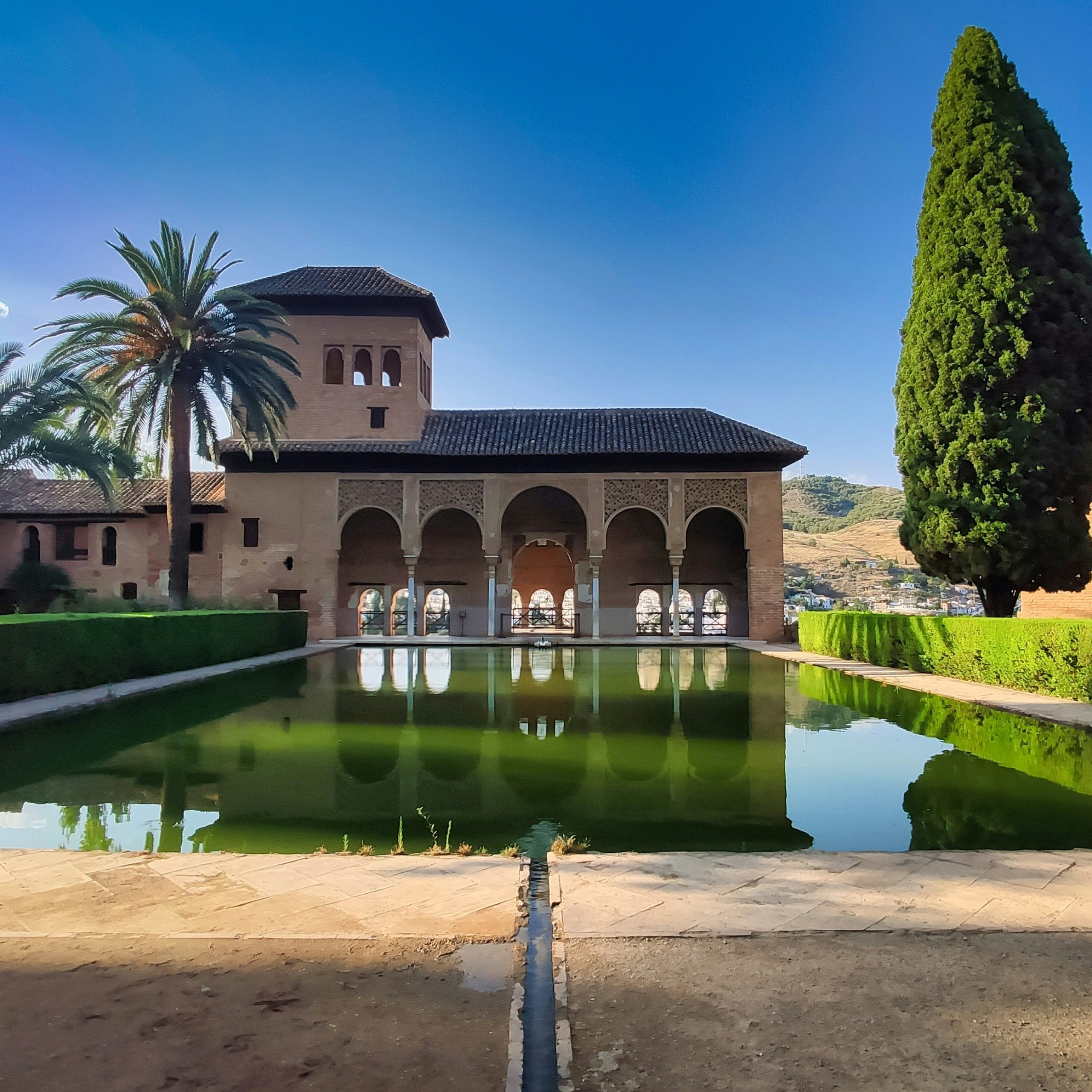
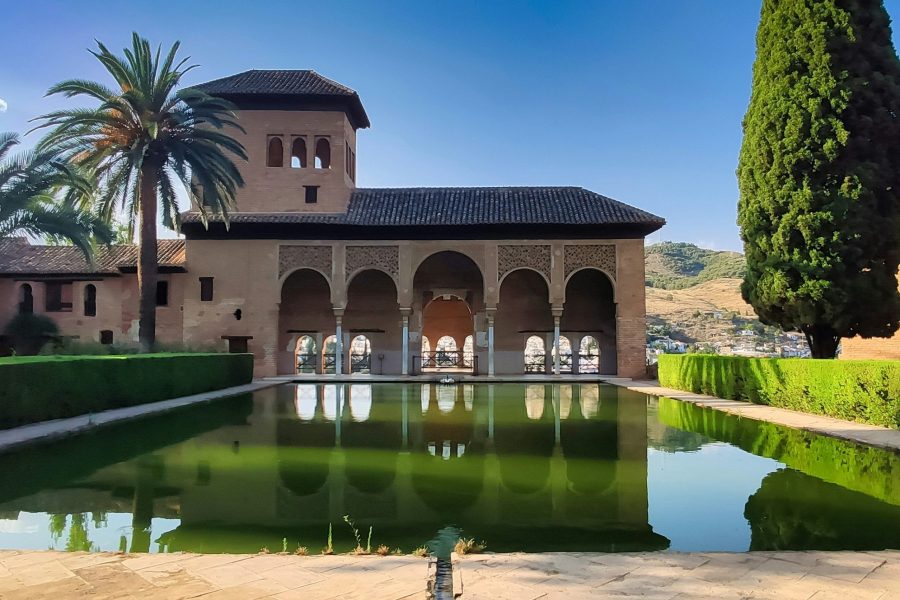
Continue to the Generalife — the summer palace and gardens of the sultans. Here, water is not just for irrigation. It is architecture. Channels run through the centre of walkways, fountains create rhythm, and reflecting pools turn the sky into a floor. The Generalife demonstrates one of the most profound principles of Islamic garden design: that paradise is not a destination but an experience that can be built, here and now, with water, light, and the scent of jasmine.
Afternoon: Descend from the Alhambra and explore the Alcaicería, the reconstructed silk market that once sold the finest textiles in the Western Mediterranean. Nearby, visit the Madrasa of Yusuf I, the Islamic university founded in 1349. The prayer hall — the only surviving Nasrid-era room — retains its original carved stucco and painted ceiling, a small but exquisite jewel that most visitors walk past without knowing it exists.
Walk through the old town. Visit the Hammam Al Ándalus or Hammam Spa Granada (included in Silver and Gold packages) — a traditional Arab bath experience in beautifully restored surroundings beneath star-pierced vaulted ceilings that evoke the bathhouses of medieval Al-Andalus.
End the day at the Mirador de San Nicolás as the sun sets behind the Alhambra. Watch the palace turn from white to gold to amber against the Sierra Nevada. Understand why the Nasrid poets wrote that Granada was "a piece of the sky that fell to earth."
Did you know? The Court of the Lions is not just art — it is engineering. The twelve marble lions originally functioned as a hydraulic water clock: each lion would spout water during a different hour, allowing the courtyard to tell time through the movement of water alone. The mechanism no longer works, but the channels are still visible.
Overnight in Granada
"Walk the streets of the old Moorish quarter — where the adhan has returned after 500 years"
Morning: Enter the Albaicín, Granada's old Moorish quarter and a UNESCO World Heritage Site. This hillside neighbourhood, directly facing the Alhambra across the valley of the Darro River, preserves the urban fabric of the medieval Islamic city more completely than almost any other site in Spain.
Walk through narrow streets that wind uphill past whitewashed houses with hidden gardens — the famous carmenes — behind their walls. Your guide will point out the Islamic details that survive: the street layout, which follows the organic logic of a Moorish medina; the cisterns and fountains that were part of the neighbourhood's water supply; and the carved doorways that once marked the entrance to private homes, mosques, and schools.
Visit the Mezquita Mayor de Granada — the mosque inaugurated in 2003 in the heart of the Albaicín, the first purpose-built mosque in Granada since 1492. Stand on the terrace and hear the call to prayer — an echo of the hundreds of muezzins who once called from minarets across this city, returned to the Albaicín after five centuries of silence. Whether Muslim or not, this is a profoundly moving moment — the sound of history coming full circle.
Explore the surrounding streets. Visit the Aljibe del Rey, the largest Islamic cistern in Granada, and the Casa del Chapiz, a 16th-century Morisco house that preserves the transition between Islamic and Christian Granada.
Afternoon: Free time for final exploration. Walk along the Carrera del Darro, the street that follows the river beneath the walls of the Alhambra — often called the most beautiful street in Spain. Visit the Corral del Carbón — the only surviving Nasrid-era caravanserai (merchants' inn) in the Iberian Peninsula, built in the 14th century. Browse the teterías (tea houses) in the old town, where the flavours of North Africa and the Middle East meet the streets of Granada.
Or simply sit. Granada is a city that speaks to those who are still enough to listen.
Did you know? The word carmen — the name for the traditional walled garden-houses of the Albaicín — comes from the Arabic karm (كرم), meaning "vineyard" or "garden." The carmenes preserve the Islamic tradition of the private garden: an interior paradise hidden from the street, visible only to those who are invited inside.
Departure or overnight in Granada
"White villages in the mountains, where Moorish architecture and irrigation still shape daily life"
Morning: Drive south from Granada into the foothills of the Sierra Nevada (~1.5 hours). As the road climbs, the landscape transforms — from the fertile Vega of Granada into terraced hillsides dotted with white villages that seem to grow from the mountainside itself. These are the Alpujarras — and they hold the final chapter of Al-Andalus.
After the fall of Granada in 1492, many Muslims remained — outwardly converting to Christianity but privately maintaining their customs, language, and traditions. They became the Moriscos, and many settled in these remote mountain villages, far from the watchful eyes of the Inquisition. The architecture they built here — flat roofs called terraos, cylindrical chimneys identical to those in the Rif Mountains of Morocco, thick-walled houses designed for mountain winters — is visibly different from anything else in Spain. It is the fingerprint of a civilisation that refused to be erased.
Visit Pampaneira, Bubión, and Capileira — the three villages of the Barranco de Poqueira, perched at increasing altitudes on the slopes of the Sierra Nevada. Walk through the narrow streets. Notice the acequias — the irrigation channels that carry snowmelt from the peaks down through the terraces. These channels follow the original designs laid down by Muslim engineers over a thousand years ago, and they are still the primary source of agricultural water in the region. UNESCO has recognised the acequia system as one of the most important examples of historical water management in Europe.
Your guide will explain how this engineering works: gravity-fed channels that not only irrigate crops but recharge underground aquifers, ensuring year-round water supply in a region that would otherwise be arid. A system so well designed that no one has found a reason to change it in a millennium.
Afternoon: Enjoy a traditional lunch in one of the villages — local cuisine that carries traces of the Moorish table: almonds, honey, mountain herbs, and dishes whose names echo Arabic.
Begin the journey back. Depending on your departure plans, transfer to Granada (~1.5 hours) or continue south to Málaga Airport (AGP) (~2 hours).
Did you know? The Morisco rebellions of 1568–1571, known as the Rebellion of the Alpujarras, were the last major armed resistance by Spain's Muslim population. After the rebellion was suppressed, the Moriscos were gradually expelled — but their architectural and agricultural legacy endures in these mountains to this day.
Transfer to Granada, Málaga, or departure
Two days give you the full Granada city experience — the Alhambra, the Albaicín, and the old town. Three days add the Alpujarras — the mountain villages where Al-Andalus survived beyond 1492. If the idea of a living legacy moves you, choose three days.
Entirely different. An independent visit means walking through the Alhambra without understanding the Arabic calligraphy, the mathematical systems, or the stories embedded in every surface. Our historian reads Arabic, understands Islamic geometry, and has spent years studying the Nasrid period.
Absolutely. The Nasrid Granada pairs naturally with The Umayyad Córdoba and The Almohad Seville — together covering all three golden dynasties of Al-Andalus.
At least 8–12 weeks. The Alhambra is the bottleneck — the earlier you book, the better your time slot.
Yes. The Alhambra is one of the greatest achievements in human art and architecture. Our tour enriches everyone who experiences it.
No. The hammam is a cultural and wellness experience — warm pools, steam, and relaxation in a setting inspired by traditional Arab baths. Enjoyed by travellers of all backgrounds.

Member Since 2026