
2-3 Days Relax
Specific Tour
Unlimited
English, Espanol
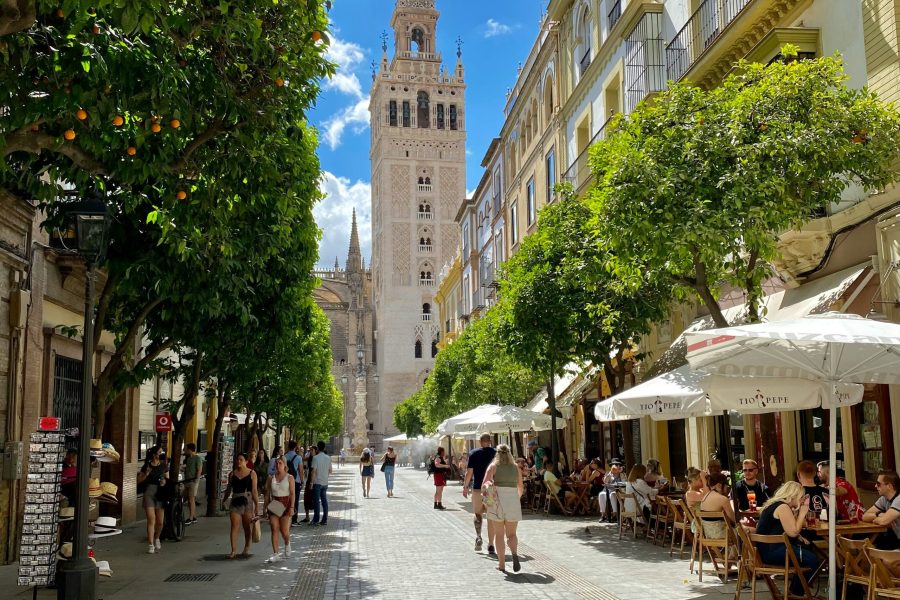
In the late 12th century, the Almohad caliphs chose Seville as the capital of their Iberian empire — and they set about making it worthy of the title. They raised a minaret so perfectly proportioned that the Christian armies who conquered the city sixty years later could not bring themselves to destroy it. Instead, they added a bell tower on top and called it La Giralda. It still stands — the most recognisable silhouette in Seville and one of the most beautiful towers ever built.
But La Giralda is only the beginning.
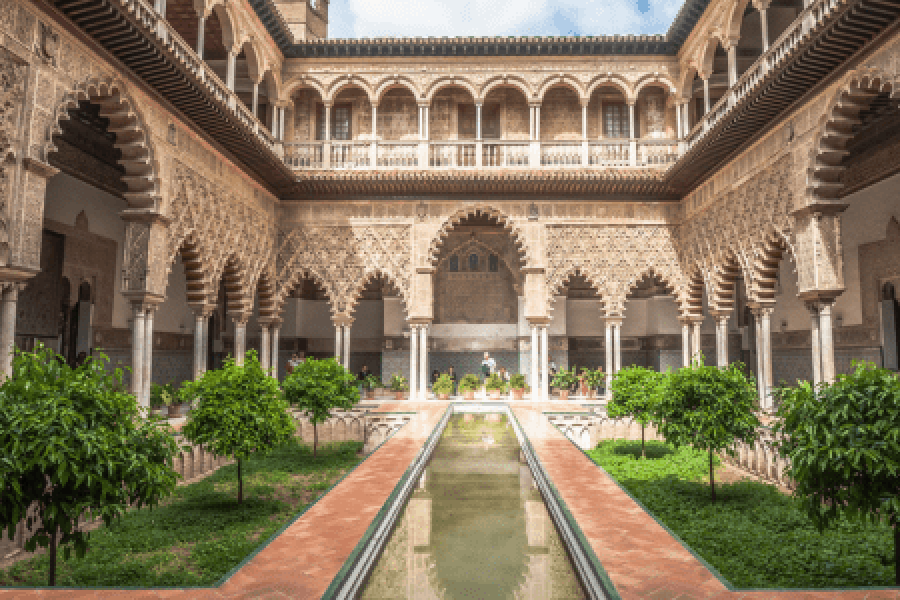
The Almohad Seville tour takes you beneath the surface of one of Europe’s most captivating cities — past the tapas bars and flamenco shows to the Islamic foundations that shape everything you see. You will climb the Giralda via the horse ramp the muezzin once rode to the summit. You will walk through the Real Alcázar, where Christian kings so admired Islamic art that they hired Muslim craftsmen to build their palace — creating a Mudéjar masterpiece that blurs the line between cultures so completely that scholars still debate where one ends and the other begins.
You will stand beside the Torre del Oro, the golden watchtower the Almohads built to guard the Guadalquivir. You will explore Barrio Santa Cruz, the old Jewish quarter, where narrow alleys and hidden courtyards preserve the rhythm of a city that once held three faiths in fragile balance. And on the three-day option, you will drive to Itálica — the Roman city where emperors Hadrian and Trajan were born — to understand the classical foundations upon which Al-Andalus was built.
Seville is a city that hides its Islamic heritage in plain sight. The orange trees? Planted by the Almohads. The courtyard gardens? Islamic design principles. The very street pattern of the old city? A Moorish medina, still intact beneath the modern surface. Without a guide who knows where to look, you could walk past all of this and never know it was there.
This tour ensures you see the real Seville — the one that existed before the cathedrals, before the conquistadors, before the tourists. The city the Almohads built. The city that still carries their fingerprint on every street.
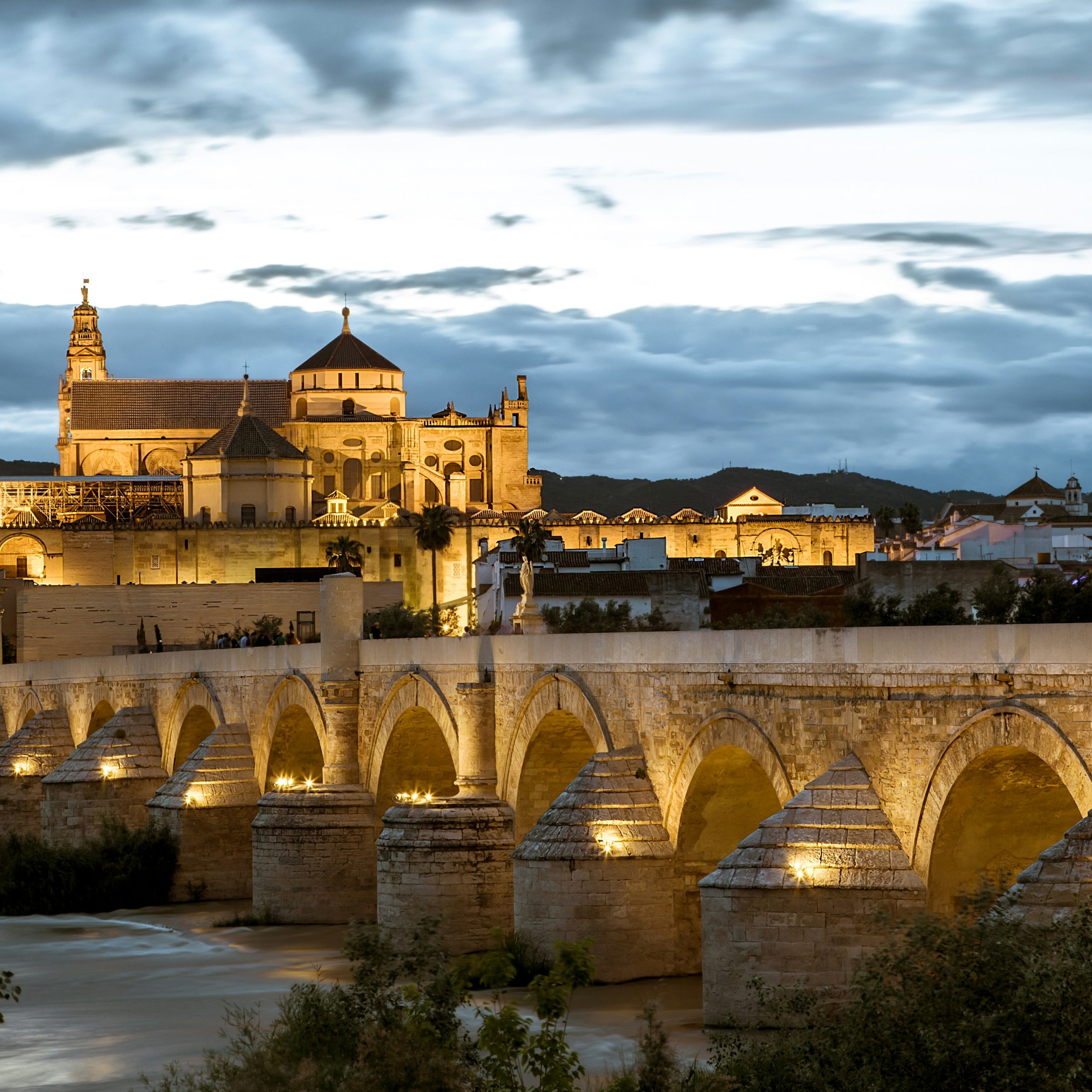
"Enter the forest of columns and step into a world that changed the course of architecture"
Morning: Your guide meets you at your hotel and the journey begins at the Mezquita-Catedral — the Great Mosque of Córdoba. This is not a quick visit. Over the course of two hours, your historian guide will walk you through the building's extraordinary evolution: from the original mosque of Abd al-Rahman I (785 AD), who recycled Roman and Visigothic columns to create a space that deliberately echoed the Great Mosque of Damascus, through the expansions of Abd al-Rahman II, Al-Hakam II (whose mihrab is considered one of the masterpieces of Islamic art), and the ambitious final enlargement by Al-Mansur.
You will learn why the double arches — red and white, stacked like the ribs of a great animal — were an engineering breakthrough that allowed the builders to raise the ceiling height without thicker columns. You will see how the mihrab's gold mosaic was a gift from the Byzantine Emperor — a diplomatic gesture between two empires that respected each other's power. And you will stand in the oldest section and feel the weight of a building that has been in continuous use for over 1,200 years.
After the Mezquita, cross the Puente Romano — the Roman Bridge that has spanned the Guadalquivir for over 2,000 years. Visit the Torre de la Calahorra, now a museum that tells the story of the three cultures — Muslim, Jewish, and Christian — that coexisted in medieval Córdoba.
Afternoon: Explore the Jewish Quarter (Judería) — a labyrinth of narrow streets, whitewashed walls, and hidden courtyards. Visit the Synagogue, one of only three medieval synagogues surviving in Spain, its walls covered in Mudéjar plasterwork. Stand outside the house of Maimonides — the Jewish philosopher, physician, and rabbi who was born here in 1138, educated under Muslim scholars, and went on to write works that influenced both Jewish and Christian thought for centuries.
Your guide will also share the story of Averroes (Ibn Rushd), the Córdoban philosopher whose commentaries on Aristotle shaped European thinking and earned him the title "The Commentator" throughout the medieval Christian world.
End the day wandering the patios of the old city — the flower-filled courtyards that continue a tradition stretching back to the Roman and Islamic periods.
Did you know? The mihrab of the Mezquita — the prayer niche indicating the direction of Mecca — is considered one of the finest examples of Islamic decorative art anywhere in the world. Its gold mosaics were crafted by artisans sent by the Byzantine Emperor Nikephoros II Phokas.
Overnight in Córdoba
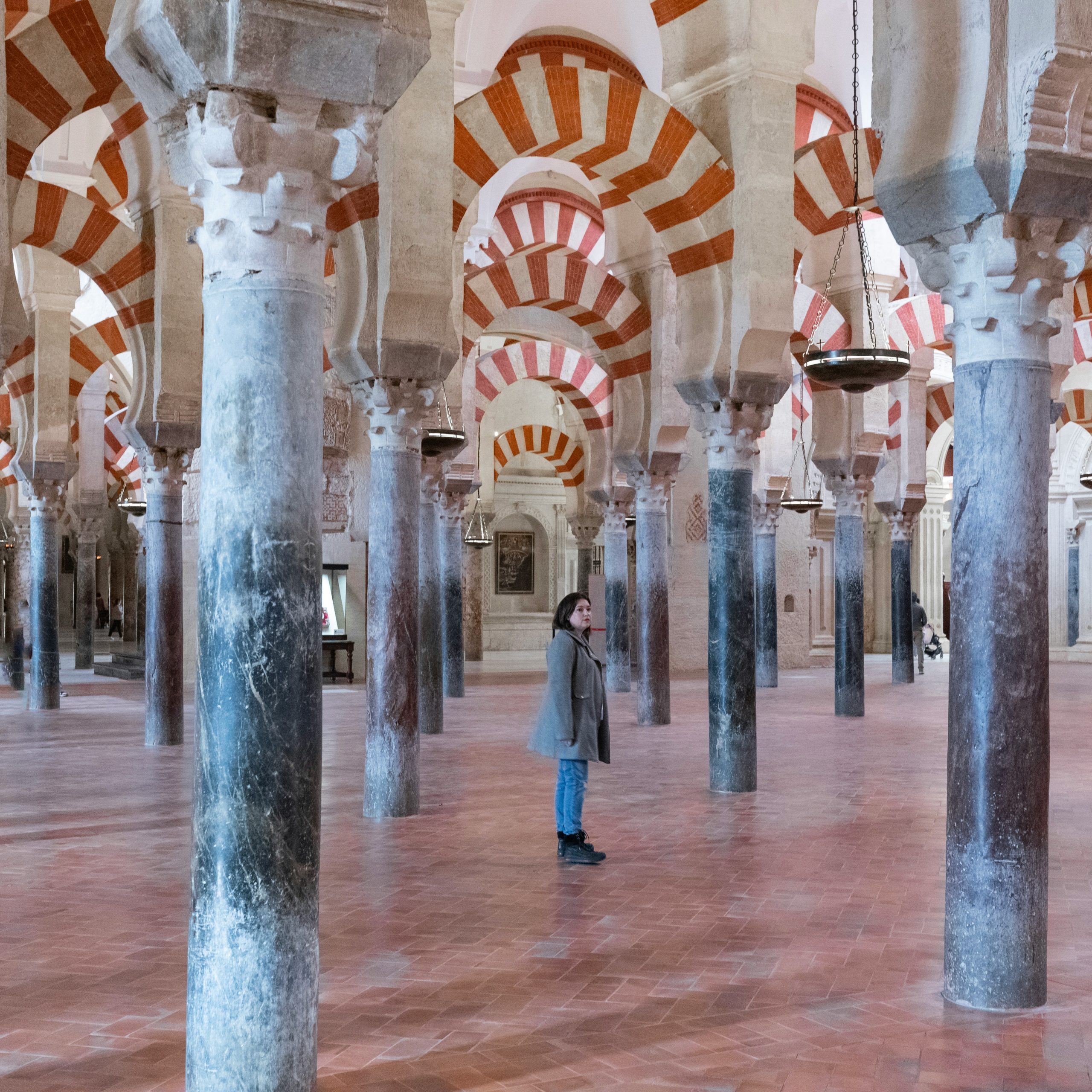
"The palace-city that rivalled Baghdad — and was lost to the earth for a thousand years"
Morning: Drive to Medina Azahara (Madinat al-Zahra), approximately 8 km west of Córdoba. This UNESCO World Heritage Site is one of the most extraordinary and poignant archaeological sites in Europe.
In 936, Caliph Abd al-Rahman III ordered the construction of a new administrative capital — a statement of power designed to demonstrate that the Caliphate of Córdoba was the equal of Baghdad. Over 10,000 workers laboured for decades. The city stretched across three terraces on the slopes of the Sierra Morena: the highest for the caliph's residence, the middle for gardens and government buildings, the lowest for the city's population. Reception halls had walls of translucent marble and crystal. Gardens featured mechanical fountains. A famous pool of quicksilver could be agitated to scatter sunlight across the ceiling like liquid stars.
In 1010, during the fitna (civil war) that destroyed the Caliphate, Medina Azahara was sacked, burned, and systematically stripped of its materials. Soil and vegetation slowly buried the ruins. For nearly a thousand years, the greatest palace complex in Western Europe simply ceased to exist in human memory. It was rediscovered in 1911, and today only about 10% has been excavated — meaning that beneath the ground, an entire city still waits.
Your guide will walk you through the excavated sections — the grand reception hall (Salón Rico), the gardens, the residential quarters, and the new museum that displays artefacts recovered from the site.
Afternoon: Return to Córdoba. Free time for a final walk through the old city, or departure.
Did you know? When the ambassador of the Holy Roman Emperor Otto I visited Córdoba, he had to wait three years before being granted an audience with the Caliph. When he was finally received at Medina Azahara, the display of wealth and culture reportedly left him speechless.
Departure or overnight in Córdoba
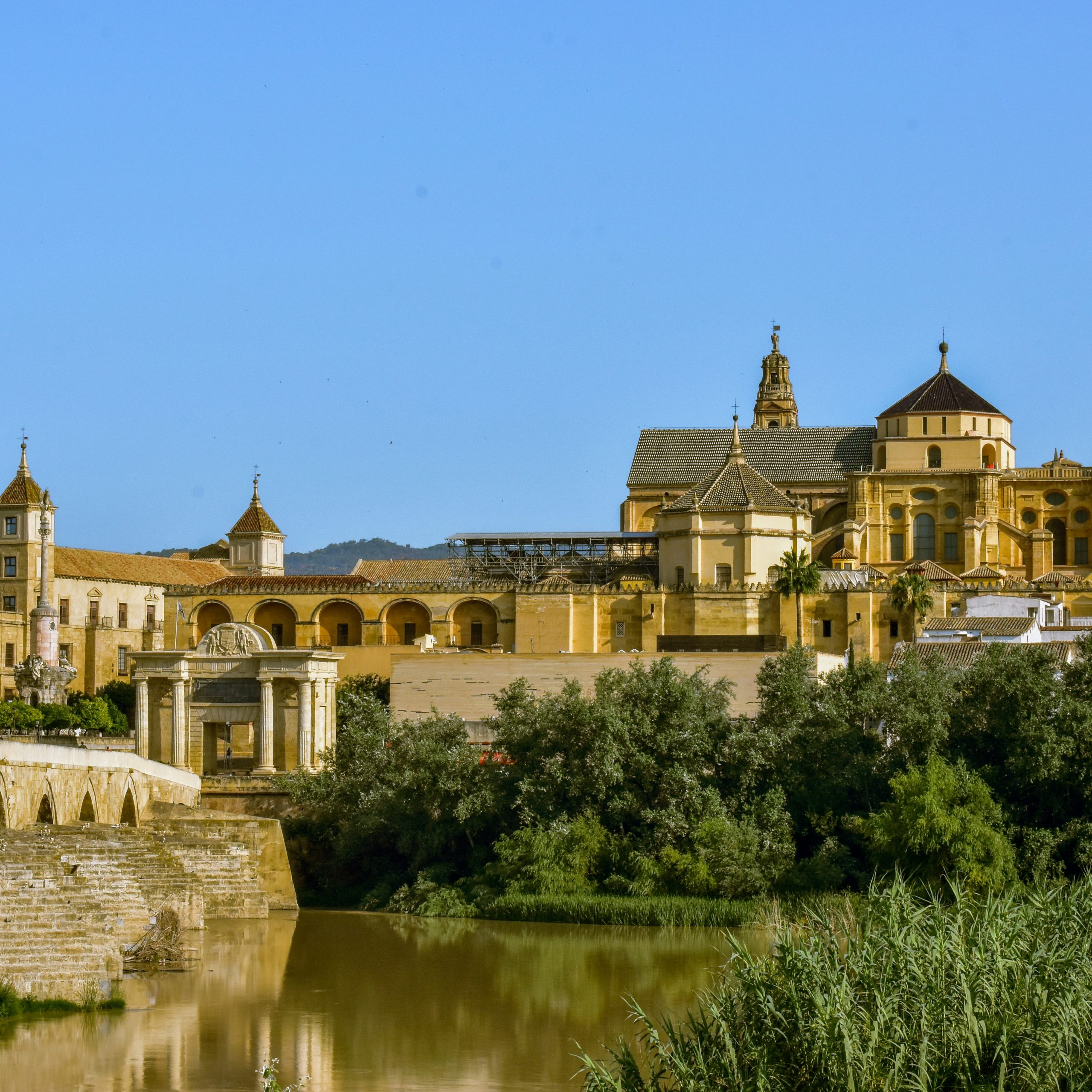
"The layers beneath the layers — and a royal fortress that tells the story of three civilisations"
Morning: Visit the Alcázar de los Reyes Cristianos (Fortress of the Christian Monarchs). While the building dates to the 14th century, it stands on the site of earlier Roman and Islamic fortifications. Its gardens — designed with Islamic principles of water channels, symmetry, and structured beauty — are among the finest in Andalusia. Your guide will explain how the fortress served as the seat of the Inquisition and, before that, as a Moorish palace — another layer in Córdoba's endlessly layered history.
Spend the late morning exploring parts of the old city your guide has been waiting to show you — the lesser-known courtyards, the hidden remains of the city walls, the spots where the 10th-century street layout is still visible in the modern plan.
Afternoon: Free time. This is your day to revisit the Mezquita without a group, to wander the streets at your own pace, to sit in a courtyard café and write in your journal, or to explore the Palacio de Viana — the "Patio Museum" — with its twelve interconnected courtyards spanning five centuries of design. Your guide will be available for recommendations but the afternoon is yours.
Optional: Evening walk along the Guadalquivir at sunset, or a cooking class featuring Andalusian dishes whose recipes trace back to the Islamic period.
Did you know? The word aceite (oil) in Spanish comes directly from the Arabic az-zayt. The olive oil tradition that defines Andalusian cuisine today was systematised and expanded by Muslim agriculturalists who transformed the region into the largest olive-producing area in the world — a title it still holds.
Departure from Córdoba
Two days cover the essential Almohad Seville — La Giralda, the Alcázar, and the old city. Three days add Itálica (the Roman foundation of Al-Andalus) and more free time. If you love history and want to understand the full story, three days is the richer experience.
Yes. The Almohad Seville pairs naturally with The Umayyad Córdoba and The Nasrid Granada for a custom multi-city journey.
Almost certainly. Most visitors to Seville see the cathedral, the Alcázar, and the tapas bars — but miss the Islamic heritage hidden in plain sight. This tour reveals a completely different city.
Absolutely. The Almohad legacy is a chapter of European history that enriches everyone.

Member Since 2026